
MBG Partners Protest Plan to Revoke Rp6 Million Daily Incentive for SPPG
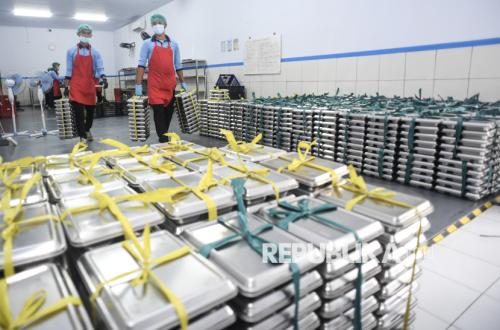
The Central Executive Board (DPP) of the Nutritious Lunch Movement Kitchen Partners Association (HMD Germas) has raised several concerns regarding the proposed revocation of the Rp6 million daily incentive for Nutrition Fulfilment Service Units (SPPG). HMD Germas believes that the plan to withdraw this incentive will negatively impact the operations of the Nutritious Lunch Movement (MBG).
Secretary General of DPP HMD Germas, Yusuf Supriadi, explained that the Rp6 million incentive policy was an internal decision by the National Nutrition Agency (BGN). Initially, the incentive was provided based on a per-portion rate of Rp2,000. However, as the programme developed, the scheme was changed to a fixed incentive of Rp6 million.
When the policy was first implemented, numerous partners serving varying numbers of portions accepted the Rp6 million incentive without objection. Yusuf noted that the current issue is not merely about the nominal amount, but rather a change in policy that has not been adequately communicated to partners.
“Regarding the current situation, when the change from Rp2,000 per portion to Rp6 million occurred, it was certainly calculated internally by the BGN,” Yusuf told Republika on Friday (19/06/2026).
Yusuf highlighted the emergence of complaints from several SPPGs following the policy change and the issuance of the latest circular from the BGN. He argued that such changes need to be explained transparently, including the underlying reasons and considerations.
“The issuance of implementation guidelines and technical instructions should be preceded by mature studies and should involve partners in the discussion and socialisation process,” said Yusuf.
Regarding the incentive change, Yusuf emphasised that the Rp6 million daily incentive has been viewed as a return on the investment made by partners to support the MBG programme. Consequently, he requested that the BGN conduct an internal evaluation before implementing any new policies. Such an evaluation is deemed essential to ensure that newly issued regulations do not conflict with existing laws.
Yusuf also urged the BGN to involve partners and other stakeholders more extensively in the policy-making process. He criticised the difficulty in establishing formal communication with the BGN under the leadership of both Dadan Hindayana and Nanik S. Deyang.
“We hope that every policy issued involves partners and relevant components, accompanied by sufficient socialisation so as not to cause confusion on the ground,” Yusuf stated.
Furthermore, Yusuf criticised the temporary suspension of SPPG activities during school holidays. He noted that volunteers and MSMEs involved in the MBG would be affected, especially since the programme serves as a vital source of income for daily needs and business continuity.
“I am being questioned by volunteers, ‘Sir, we need this for school fees.’ We are also being asked by MSMEs, ‘Why must we be stopped, when our businesses must continue and cannot be interrupted,’” Yusuf said, echoing the grievances of SPKG volunteers and MSME partners.
Yusuf also questioned the administrative and financial governance of the MBG implementation. He noted that foundations signing the Cooperation Agreements (PKS) are responsible for account management, reporting, and SPPG administration, even though these foundations merely receive orders and invoices from suppliers to pass on to the relevant parties.
“If administrative issues, financial accountability, or other problems arise, it is the foundation that will be held responsible,” Yusuf added.
Previously, the BGN has been attempting to implement efficiency measures within the MBG programme, one of which involves discontinuing the flat Rp6 million daily incentive for all Nutrition Fulfilment Service Units (SPPG).