
MBG Controversy, BGN Leadership, and Indonesia's Green Economic Disruption
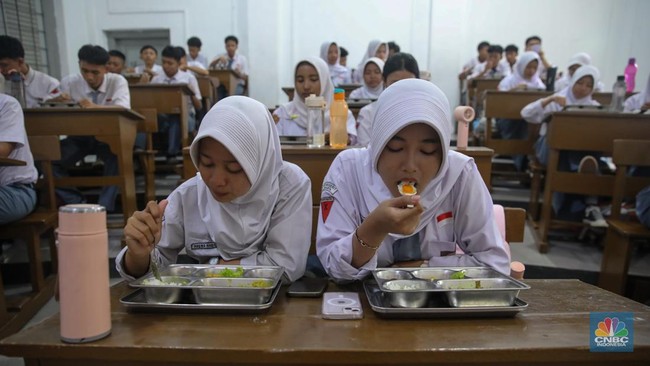
Amidst the dynamics of new leadership at the National Nutrition Agency (BGN) and waves of student demonstrations rejecting the Free Nutritious Meal (MBG) programme, the public space continues to be filled with various polemics surrounding the programme. The public seems to be led towards a simplistic logic that when governance is problematic, the programme must be stopped. In fact, behind all the recent uproar, MBG actually holds enormous economic potential for Indonesia. This is the biggest challenge for the new BGN leadership: improving governance without losing the grand direction of national economic transformation and the food system. Indonesia is currently running one of the largest food policy experiments in its modern history. In public policy practice across many countries, it is not uncommon for strategic programmes to experience serious turbulence in the early phases of implementation, ranging from budget leakages and weak supervision to a crisis of public trust. What distinguishes developed countries from failed states is not the absence of problems, but the ability to fix governance without killing the long-term transformation potential. This is where MBG becomes interesting to study. Behind all the controversy, this programme holds several novelties in Indonesian public policy design, one of which is the potential to develop into a green disruptive innovation capable of fundamentally changing the national food ecosystem and economy.
In Clayton Christensen’s disruptive innovation theory, disruption occurs when a new system emerges and fundamentally alters the old structure. The question is, has the MBG programme moved in that direction? To answer this, there are at least four important indicators in the synthesis of the Green Disruptive Innovation concept that can be used to read the position and direction of the MBG programme’s transformation. A monitoring and evaluation report on the MBG supply chain in 2026 by the National Economic Council (DEN) can serve as an important reference for assessing this disruptive potential. DEN surveyed 800 Nutritional Fulfilment Service Units (SPPG) across 20 districts/cities in 15 provinces with a margin of error of 5%. At the time of the survey, the total number of national SPPGs was recorded at 26,487 units. In the report, DEN estimates that MBG food spending reaches Rp120.8 trillion per year. Of that amount, around Rp79.2 trillion is circulated through local supply chains within the same district/city. This means MBG is not just a feeding programme but is simultaneously becoming a new economic engine. The report also shows MBG’s effect on local economic activity. Farmers gain a more certain market, food SMEs get demand certainty, cooperatives and village-owned enterprises (BUMDes) begin entering the supply chain, and local workers are absorbed on a large scale. DEN recorded that around 127,400 small suppliers have been involved in the MBG ecosystem. Furthermore, the programme’s operations absorb around 1.2 million volunteers, the majority of whom come from local communities. This is not a small figure. This is an economic multiplier effect that has never appeared in previous national food policies. These findings indicate that the implementation of MBG is beginning to create a national-scale ‘public food market’ that previously did not exist in Indonesia. The state no longer acts solely as a food regulator, but also as a market shaper. In Christensen’s perspective, this can be read as a form of New Market Disruptive Innovation.
One thing that makes MBG unique compared to free meal programmes in many other countries is the entry of an ecological dimension into the policy design. BPS Regulation Number 1 of 2026 incorporates the management of food residue and food waste into the MBG system. Meanwhile, BPS Regulation Number 4 of 2026 strengthens the national food safety system through hygiene supervision, temperature control, and a food quality assurance system. This step is crucial because the larger the scale of food distribution, the greater the risks posed, from food waste, domestic waste, and food contamination to distribution emissions and the potential for mass food poisoning. Many large-scale food programmes in various countries have experienced serious problems not because their policy objectives were bad, but due to weak operational governance and food safety supervision. Therefore, MBG is no longer moving solely as a social assistance programme, but is beginning to show a direction as a Green Policy-Driven Innovation, namely a transformation of the national food system based on public policy that simultaneously integrates social, economic, food safety, and environmental sustainability aspects. In this context, the state is not only trying to feed the public but is also building a new foundation for a national food system that is safer, low-emission, sustainable, and based on green governance.
One of the most interesting findings from the DEN study is that around 64.9% of SPPGs use main suppliers from the same district/city area. This finding shows that MBG is beginning to build a localized food supply chain based on regional proximity. Why is this important? Because a shorter supply chain can reduce logistics costs, suppress transport emissions, maintain the freshness of food ingredients, and simultaneously strengthen the local economy. In a green economy perspective, this approach is far more sustainable than a long-distance food distribution system that is energy-inefficient and more vulnerable to distribution disruptions. Gradually, MBG is beginning to form a national short food supply chain model based on regions.
Source: jawawa.id (https://jawawa.id/newsitem/mbg-controversy-bgn-leadership-and-indonesias-green-economic-disruption-1782831160)
Originally published by CNBC Indonesia (https://www.cnbcindonesia.com/opini/20260630191905-14-746963/kontroversi-mbg-kepemimpinan-bgn-disrupsi-hijau-ekonomi-ri), translated from Indonesian