
MBG: Catalyst for the Revival of the People's Economy
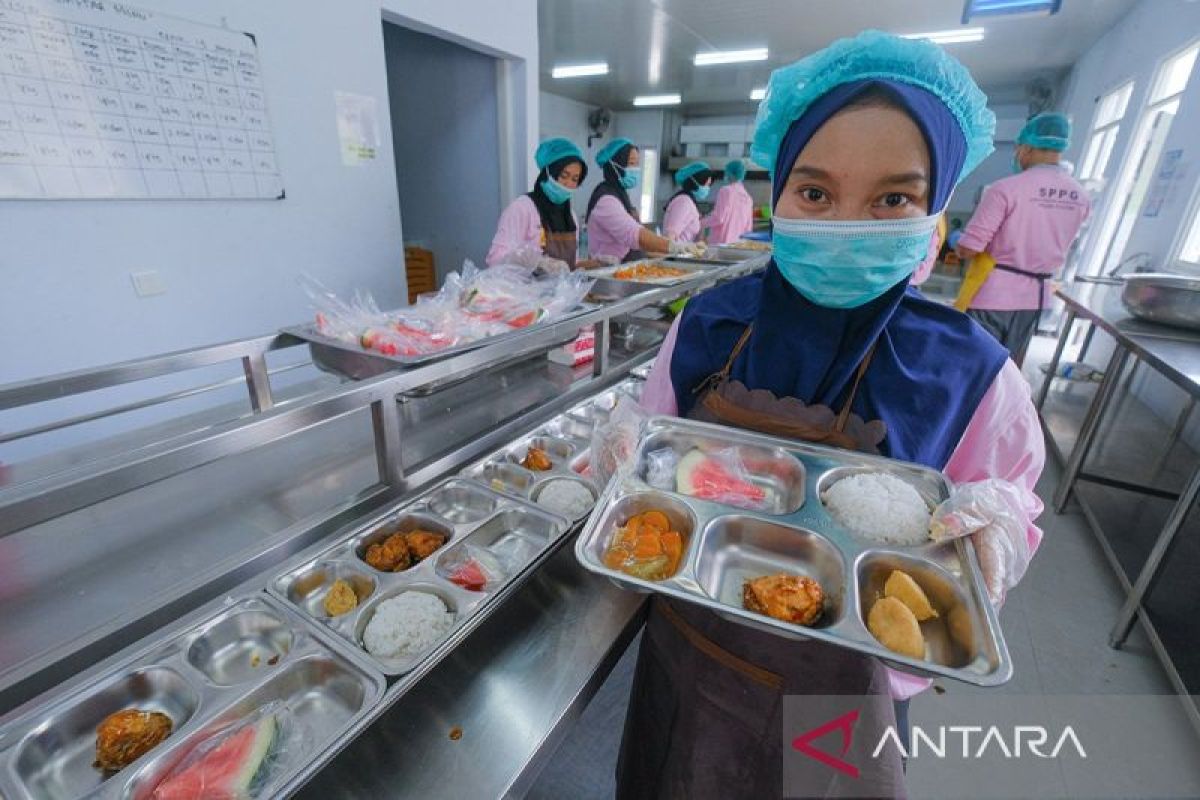
MBG can become a real catalyst for the revival of the people’s economy in Indonesia. Jakarta (ANTARA) - Strengthening the people’s economy is increasingly an urgent need amid global dynamics full of uncertainty. Geopolitical pressures, global economic slowdowns, and fluctuations in food prices demand that the state present policies that are not only protective but also productive. In this context, the Free Nutritious Meals Programme (MBG) emerges not merely as a social intervention, but as a strategic instrument capable of mobilising the people’s economy from upstream to downstream. The government is allocating a budget for MBG in the range of Rp400 trillion–Rp450 trillion gradually over several initial years of implementation (estimates from various fiscal planning documents 2025–2029). In the initial phase of the current year, the effective allocation is projected at around Rp70 trillion–Rp100 trillion per year, making it one of the largest social spending programmes in the state budget structure. In comparison, this value is equivalent to about 2.5–3.5 percent of total state expenditure, while approaching 0.3–0.4 percent of Gross Domestic Product (GDP). With this scale of fiscal impetus, MBG has a very significant economic driving force, particularly for people’s economy sectors such as agriculture, fisheries, livestock, and food MSMEs. This is the starting point for transforming MBG from a mere consumption programme into a catalyst for the people’s economy. Local Chain One of the main strengths of the MBG Programme lies in its ability to create stable aggregate demand for domestic food products. With a target of more than 70 million schoolchildren and vulnerable groups as beneficiaries, the daily need for food raw materials becomes enormous. As an illustration, if one serving of food requires raw materials worth Rp10,000–Rp12,000, the potential daily economic circulation could reach Rp700 billion to Rp840 billion. In one year, this figure could penetrate Rp250 trillion–Rp300 trillion, most of which has the potential to be absorbed by local economic actors. Data from the Central Statistics Agency shows that the agricultural sector absorbs around 29 percent of the national workforce, while its contribution to GDP is in the range of 12–13 percent. With MBG, demand for agricultural products such as rice, vegetables, eggs, and animal proteins will increase significantly. This has the potential to improve farmers’ terms of trade, which have tended to stagnate. In addition, around 64 million micro, small, and medium enterprises (MSMEs) in Indonesia contribute more than 60 percent to GDP and absorb 97 percent of the workforce. If the MBG supply chain is integrated with local MSMEs starting from catering, food processing, to its distribution chain, the economic impact will be far more inclusive and touch the structural transformation of the people’s economy as hoped. Furthermore, in distribution efficiency, economic value added can be created through shortening the logistics distribution chain. This is done based on a region-based approach, so that logistics costs, which have so far contributed up to 14–23 percent of Indonesia’s GDP, can be minimised as much as possible. This means more economic value remains circulating at the local level and the quality of the menu’s resilience in the MBG Programme can also be increasingly maintained. Double Impact
Source: jawawa.id (https://jawawa.id/newsitem/mbg-catalyst-for-the-revival-of-the-peoples-economy-1774861300)
Originally published by Antara (Indonesian) (https://www.antaranews.com/berita/5500562/mbg-katalisator-kebangkitan-ekonomi-kerakyatan), translated from Indonesian