
MBG and KDMP: Strengthening Policy, Correcting Its Course
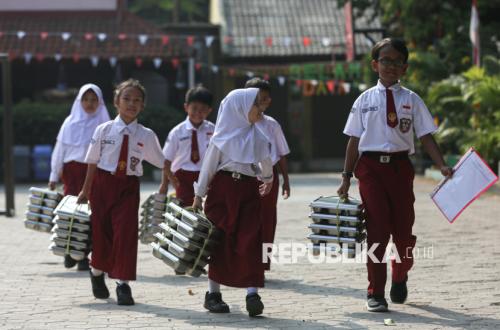
In the life of a nation, we need to distinguish between understanding government and having state consciousness. Government operates through authority, programmes and policies, while the state is built upon ideals, the constitution, law, the interests of the people and the sustainability of collective life. Therefore, regarding major government policies, especially those that use substantial state resources, our question should not stop at whether we agree or disagree. The more important questions are: for what purpose was the policy made, whether its objectives align with constitutional ideals, how the policy is implemented, who benefits, who bears the risks, and whether the policy ultimately leads the people towards a better life.
From a legal perspective, these matters cannot be adequately assessed solely on formal legality. Indeed, every government action must have a basis of authority and must not contravene the law. However, the rule of law does not only concern legality. It also concerns justice, protection of rights, public interest and legitimacy. A policy may have a legal basis, but its implementation still needs to be tested from the perspective of justice and utility. Therefore, a distinction must be made between actions that violate the law and actions that substantively have the potential to reduce the rights or opportunities of the public. The former concerns legality, while the latter touches upon legitimacy. Law, therefore, must not only ask, ‘Is the government permitted to do this?’, but must also ask, ‘Is this method fair and do its benefits reach the people?’
It is within this framework that the Free Nutritious Meal Programme (MBG) should be read. Providing nutritious food to Indonesian children is a highly noble policy. The state indeed has a responsibility to build healthy, intelligent and high-quality human beings. This objective aligns with the constitutional ideals of advancing the intellectual life of the nation and promoting general welfare. Therefore, criticism of MBG should not be directed at its fundamental purpose. What needs to be critiqued is how the programme is constructed so that the substantial state budget does not merely produce food for children, but also generates broader economic benefits for society.
MBG is fundamentally not just a food programme. With its large-scale requirements for rice, eggs, chicken, fish, vegetables, fruit, milk, spices, transportation, processing and labour, MBG in fact creates a very large market. Therefore, the important question is: who enjoys that market? Does most of its economic value return to farmers, livestock breeders, fishermen, MSMEs and rural communities, or is it instead more concentrated among business actors who already possess capital and networks? This question is not an accusation against any particular group. It is a question about the justice of distributing state resources.