
MBG 2.0: Food Sovereignty and the Geopolitics of Welfare
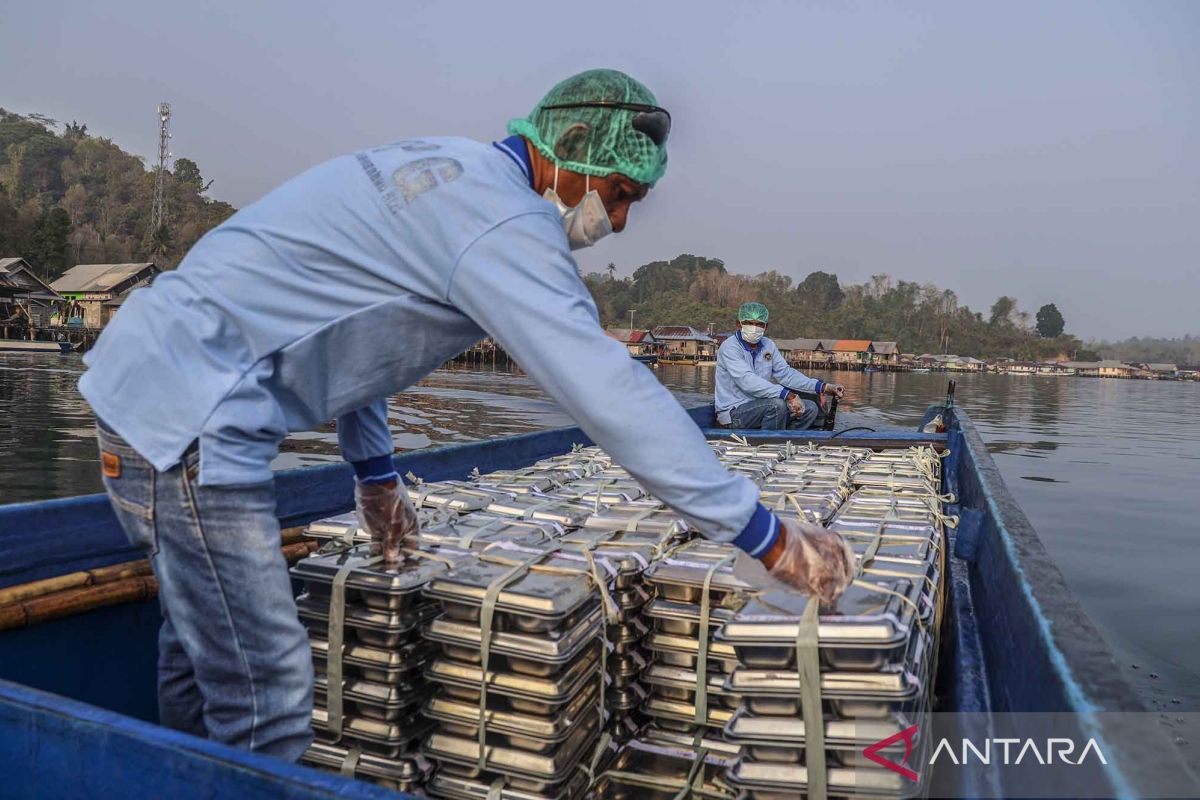
MBG 2.0 could prove that the national development narrative must not stop at political slogans at the macro level.
Jakarta (ANTARA) – The National Nutrition Agency (BGN)’s launch of the MBG 2.0 roadmap, presented by BGN head Sudaryono on Thursday, 29 October 2026, marked 100 days of his leadership. The initiative deserves recognition as a commitment by the state to improve MBG governance.
This transformation marks an important shift in the relationship between the state’s institutional capacity, sovereignty over domestic supply chains, and Indonesia’s repositioning in the geopolitics of welfare.
Public policy studies have long noted that large-scale nutrition interventions such as MBG often face bureaucratic challenges. When the initial MBG programme was launched with the ambition of reaching tens of millions of beneficiaries, the greatest challenge, beyond ensuring sufficient funding, was how central technocratic logic would contend with sociological complexity at the local level.
MBG 2.0 is built on three main pillars: eradicating corruption, improving governance and digital oversight, and creating opportunities for collaboration. This offers a new perspective on what political sociology describes as the rescaling of the state’s presence. Under this approach, the state is not only a provider of funding, but also a regulator and guide for social and economic development down to the smallest communities.
Under the new framework, BGN will not merely make administrative improvements; it will also use MBG 2.0 as an instrument to consolidate national nutrition policy. Integrating hygiene standards, budget accountability and community involvement is crucial to ensuring that social justice is reflected in every meal served.
Human security
In global political literature, the concept of security has long shifted away from a military focus towards human security. This concept places individuals at the centre of safety, with food security and health protection as key measures.
When the programme’s initial phase encountered food poisoning, the widespread involvement of illegal intermediaries and the threat of processed food products from large manufacturers entering the supply chain, the state was in effect facing structural vulnerabilities. Failure to maintain the hygiene and quality of a single meal tray is not merely a technical kitchen issue. It also undermines the basic human security that the state is constitutionally obliged to guarantee.
That is why tighter food safety standards under MBG 2.0—including mandatory Hygiene and Sanitation Eligibility Certificates (SLHS), AI-enabled CCTV monitoring and labelling of consumption times—are more than administrative sanitation measures. They demonstrate the state’s capacity to intervene precisely in domestic settings to protect human capital from vulnerability to global risks.
Another notable aspect of MBG 2.0 is its effort to reshape supply chains. From the perspective of international political economy, global food systems are often dominated by multinational corporations and ultra-processed food industries that rely on imported commodities and economies of scale. Dependence on foreign supply chains often leaves developing countries vulnerable to price volatility and global food crises.
BGN’s policy of breaking up problematic intermediary chains, setting a ceiling on operating costs, and prioritising at least 80 per cent of supplies from local small and medium-sized enterprises, livestock producers and farming groups near nutrition service units (SPPGs) is a practical expression of food sovereignty.
This transforms a social programme from a simple safety net into a vehicle for redistributing wealth within local economies. By linking school kitchens directly to local agricultural production, the state is building a domestic food security buffer that is less vulnerable to global commodity price fluctuations and supply-chain crises. MBG 2.0 revives the principle of economic localisation amid the surge of globalisation in the food sector, while strengthening the link between village resilience and the national development agenda.
Public trust
The success of a large-scale public policy such as MBG also depends heavily on building social capital and public trust. The discovery of hundreds of duplicate accounts, savings of tens of trillions of rupiah through adjustments to the incentive scheme, and the launch of a digital monitoring platform represent radical transparency.
Rent-seeking in large public programmes is a persistent problem in many developing countries. By openly acting against failures to report daily funds and restricting the scope for problematic intermediaries, BGN is restoring the state’s sociological legitimacy.
Digital governance is not simply a display of technology; it is a tool for reducing information asymmetry between programme managers at the centre, kitchen operators in the regions and the public as beneficiaries.
Open data and clear distribution channels are key to rebuilding communities’ social capital, so that government policy is not seen as a one-way instrument imposed from above, but as a shared programme with the full support of local communities.
MBG 2.0’s transformation should therefore be understood in a broader framework: the contest over the geopolitics of welfare. Countries that escape the middle-income trap are those able to transform social interventions from charitable measures into structured, inclusive and measurable investments in human development.
The successful consolidation of a vast nutrition programme with strict safety standards, sound budget accountability and a commitment to local economies will set a new benchmark for countries around the world, particularly in the Global South. This model shows that social protection can go hand in hand with strengthening the economic self-reliance of ordinary people.
MBG 2.0 could prove that the national development narrative must not stop at political slogans at the macro level. The true test of a nation’s sovereignty and governance lies in the consistent quality, safety and fairness of the meals served to schoolchildren throughout the Indonesian archipelago.
Source: jawawa.id (https://jawawa.id/newsitem/mbg-2-0-food-sovereignty-and-the-geopolitics-of-welfare-1793595344)
Originally published by Antara (Indonesian) (https://www.antaranews.com/berita/5825759/mbg-20-kedaulatan-pangan-dan-geopolitik-kesejahteraan), translated from Indonesian