
Mbappe Apologises, but Strict Censorship Leaves Chinese Public Asking What Happened
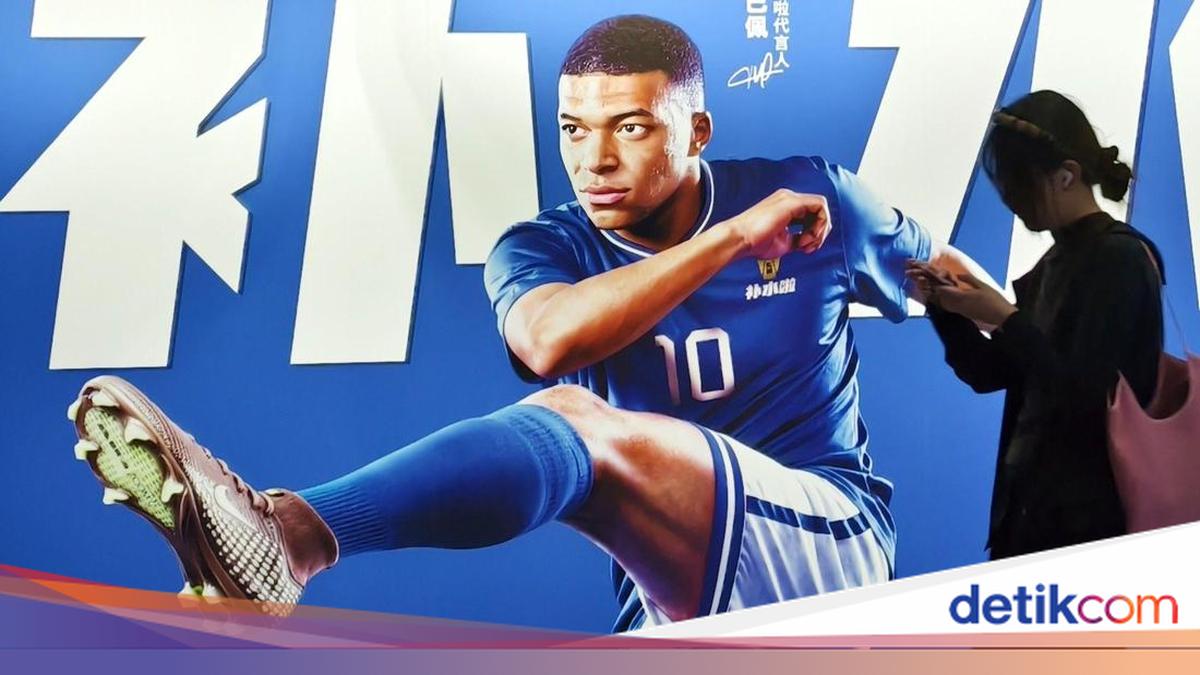
The footballer’s comment about a “Chinese leader” provoked public anger, but strict censorship has left many people wondering what actually happened.
On Monday evening, while Kylian Mbappe was attending the Ballon d’Or ceremony in London, he was also at the centre of a major social media controversy in China.
Football fans found a video clip in which Mbappe joked about a meme that he described as the one that had made him laugh the most.
In the meme, his face had been superimposed on the figure of a “Chinese dictator” resembling Mao Zedong, who led the country through one of the bloodiest periods in its history.
The controversy spread rapidly.
Several Chinese brands ended their partnerships with him one by one, while China Media Group, the parent organisation of state broadcaster CCTV, suspended broadcasts of La Liga matches.
A spokesperson for China’s Ministry of Foreign Affairs said: “Words and actions that hurt the feelings of the Chinese people will naturally face collective rejection from all sectors of Chinese society.”
Yet on the Chinese internet, few people openly mentioned the remarks or actions at issue, or even used Mao’s name. He is still regarded as an almost sacred figure in the country.
China’s sophisticated censorship system, which cuts its 1.4 billion people off from the global internet, has left many unsure about what actually happened.
The accusation of having “hurt the feelings of the Chinese people” alone appears to have been enough to spark a major wave of anger. Social media algorithms and a tightly controlled internet amplified it, while many people were reluctant to take a view that differed from the majority opinion.
Soon afterwards, Mbappe, one of the world’s biggest football stars, said he “sincerely apologised” for his comments, describing them as “a lapse in judgement”.
His club, Real Madrid, and the Spanish football league operator, La Liga, also apologised. China is a huge market for the world’s most popular sport.
Beijing later confirmed that it had taken the footballer’s apology “seriously”.
However, China Media Group has yet to say whether La Liga matches will be broadcast again.
Despite this, online anger has not subsided.
“An apology is the bare minimum he should have done, but I do not forgive him. I support banning him,” read one of the most popular comments on Weibo.
Mbappe did not mention Mao by name in the interview. But many believe any joke involving the founder of communist China crossed a line.
“Do you know whom you have offended? He is the spiritual pillar of the Chinese people,” read one Weibo comment that received more than 700 likes.
“He is the most important figure in our history. Do you think a simple apology can make everything all right?” another user wrote.
Weibo users shared the video clip with the meme blurred, and removed or censored references to Mao.
Ironically, amid the intense condemnation, many Chinese social media users were still asking what the French striker had actually said.
Some tried to find out through AI chatbots. But because those services are subject to the same censorship system as the Chinese internet, they received no clear explanation.
Other users tried to provide context while avoiding Mao’s name directly.
Instead, indirect references emerged, such as “the person whose face is on the 100-yuan note” or “teacher”, a title Mao once used for himself.
Screenshots of the meme and interview also circulated widely, but the word “dictator” and Mbappe’s face were deliberately blurred.
Neither China’s Ministry of Foreign Affairs statement nor the apologies issued by Mbappe, Real Madrid and La Liga mentioned Mao directly.
Mao, who led the Chinese Communist Party to victory in the civil war and went on to establish the People’s Republic of China, died in 1976.
Despite the turmoil of his rule, including the Great Leap Forward and the Cultural Revolution, which caused a famine that killed tens of millions and prompted violent political purges across society, Mao remains a highly revered figure in China.
His special status in the state’s official narrative means that criticism, satire or jokes deemed offensive to him are often treated as highly sensitive, even decades after his death.
Insulting or slandering Communist Party martyrs and war heroes is illegal in China.
A portrait of Mao overlooks Tiananmen Square in Beijing, reflecting how central he remains to the imagination of modern China.
Unlike the remains of other former Chinese leaders, Mao’s embalmed body is displayed to the public there and attracts tens of thousands of visitors each day.
In recent years, interest in him has also grown again among young people, who read his works and watch clips of him on social media.
Chinese history books generally play down the destruction caused during Mao’s rule.
The Chinese Communist Party’s official position is that Mao’s achievements outweighed his mistakes.
In the party’s view, he was “a great revolutionary and a great Marxist”.
Outside China, however, history regards Mao not only as a revolutionary but also as a dictator.
As a result, reactions from the Chinese diaspora—including political dissidents and people whose families left China decades ago after Mao’s rule—have been very different.
“You do not need to apologise, because you did nothing wrong,” read one Chinese-language comment that received widespread support beneath Mbappe’s statement on X.
“The CCP (Chinese Communist Party) is the one that should apologise; it is holding the Chinese people hostage and brainwashing them,” another Chinese-language user wrote.
On X and Threads, which are not freely accessible in China, the controversy generated still more memes.
Some put Mbappe’s face on other images featuring Mao, while others went further, placing his face on the body of China’s current leader, Xi Jinping.
Dairy company Mengniu, an official FIFA World Cup sponsor, ended its partnership with the footballer after the wave of criticism emerged.
Some internet users outside both camps were simply bewildered.
“Honestly, this is hard to understand… It seems people aren’t allowed to criticise their leaders. And they expect the whole world to think the same way? This is ridiculous,” read one of the most popular comments beneath Real Madrid’s apology on Instagram.
“How dare you call a dictator a dictator? How terrible,” another user wrote sarcastically on X.
Source: jawawa.id (https://jawawa.id/newsitem/mbappe-apologises-but-strict-censorship-leaves-chinese-public-asking-what-happened-1793332311)
Originally published by detikcom (https://news.detik.com/bbc-world/d-8730590/mbappe-minta-maaf-tapi-sensor-ketat-bikin-warga-china-bertanya-apa-yang-terjadi), translated from Indonesian