
Mbah Suhan's 'Scrap Rice Field' in Gunungkidul: Low Cost and Hassle-Free
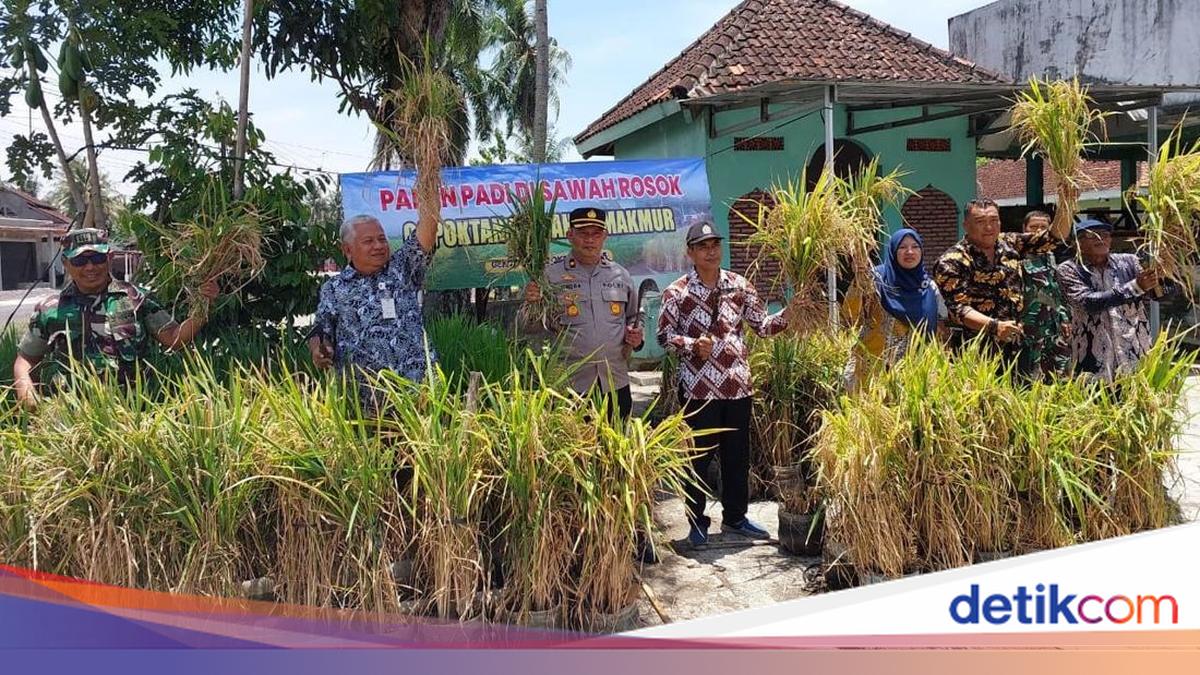
Grandfather Suhantara, 82, has developed a rice field using discarded cans and gallons at his home. The field, which he calls ‘sawah rongsok’ (scrap rice field), has already been harvested four times.
Suhan began planting rice in used gallons and cans in 2025. The resident of Susukan II, Genjahan, Ponjong, Gunungkidul, started planting rice in scrap materials after noticing that accidentally spilled rice seeds could grow fertile.
“Then I brought the dry unhusked rice home and it turned out some had spilled on the ground. The spilled grains grew into seedlings,” Suhantara said when met at his residence in Susukan II, Genjahan, Ponjong, Gunungkidul, on Tuesday (7/7/2026).
He then tried planting the Inpari-24 rice variety using used cans as a growing medium. The plants he tended grew fertile. From there, he expanded the size of the containers using used gallons. He began hunting for gallons and filling them with soil, manure, chemical fertiliser, and then the rice seeds.
He placed his scrap rice field in an area that receives sufficient sunlight. After about three months, the rice was ready to harvest.
“The harvest from one gallon with three rice plants can produce around 130 grams of dry unhusked rice. For the hybrid rice variety that was tried, it grows more densely with one seedling able to produce up to 30 tillers, and that is before harvest age. When harvested, it could yield 300-400 grams of dry unhusked rice per gallon,” said the Chairman of the Genjahan Makmur Farmers’ Group Association.
Suhantara admitted that the cost of farming with used gallons is relatively low. He spent around IDR 2,000 for one used gallon. This scrap rice field is also water-efficient as it does not need watering every day and uses whatever soil is available.
“The most you spend is on buying fertiliser, both manure and chemical fertiliser. As for water, everyone has water, and you don’t need to water it every day. So this (planting rice in gallons) is very, very affordable,” he said.
He mentioned that planting rice using used gallons and cans eliminates the need for hoeing and ploughing the land. Furthermore, pest monitoring is also easier.
“Another advantage is that pests and diseases can be monitored directly. For example, if there are planthoppers or rats, we can immediately know and take action,” he said.
Suhantara also revealed that the used gallons can be reused. Likewise, the growing medium can be used twice.
“There is no need for hoeing. Then, when it is dry (post-harvest), you just turn over the growing medium, add fertiliser, and it can be planted again. Besides that, the gallons are also durable, not single-use,” he said.