
Mayotte Underwater Volcano Spews Ancient Lava Dating Back 4.5 Billion Years
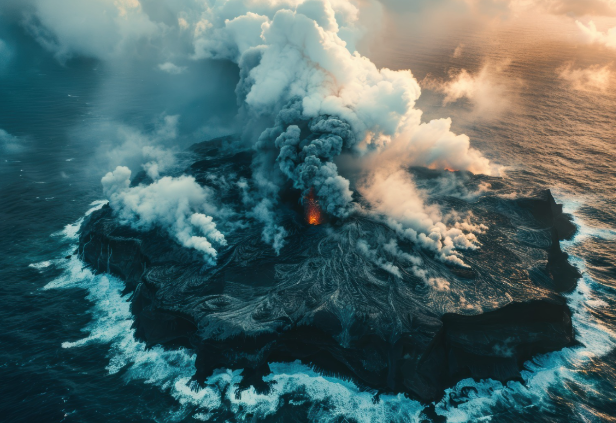
An underwater volcano near the island of Mayotte in the Indian Ocean is enabling scientists to trace back the earliest chapters of Earth’s formation. A recent geological study reveals that lava spewed by the Fani Maoré Volcano most likely originates from primordial magma material that has been tightly stored since approximately 4.5 billion years ago, precisely when Earth was still in its initial stages of formation. The discovery has drawn the attention of geologists because material from that period is exceedingly difficult to find. Geological activity over billions of years has altered most of the Earth’s surface, meaning traces of the ancient planet’s conditions have been almost entirely erased. The Fani Maoré Volcano first attracted global attention after a major earthquake struck Mayotte in 2018, revealing the existence of a new underwater volcano about 50 kilometres from the island. The eruption, one of the largest underwater eruptions ever recorded, expelled a massive amount of volcanic material, allowing scientists to analyse rock samples and find indications that some of the lava originated from an ancient magma source dating back to the early history of Earth. According to research cited by IFLScience, the magma material from the Fani Maoré Volcano is suspected to come from the Hadean period around 4.5 billion years ago, when Earth was still extremely hot with extreme volcanic activity and an unstable surface. The existence of this ancient lava helps scientists study the conditions of Earth’s interior during its early formation. The period around 4.5 billion years ago is a crucial time in the history of the solar system, as it is estimated to be when the Moon was formed following a collision between the young Earth and a large object named Theia. Material ejected from that event later coalesced to form the Moon. Although the lava from the Mayotte Volcano is not directly material that formed the Moon, its composition can provide clues about the conditions of ancient Earth and the magma environment at the time the Moon-forming process was underway. To uncover the origins of the lava, researchers conducted analyses of rock samples from the Fani Maoré eruption. They examined the mineral content, chemical elements, and isotopic characteristics stored within the rocks. This analysis helps scientists determine whether the material originated from recent geological processes or is a remnant of magma that has survived for billions of years within the Earth’s mantle. The findings from the Fani Maoré Volcano offer new opportunities to understand our planet’s early history. A volcano previously viewed as a natural threat now also serves as a ‘geological archive’ preserving a record of Earth’s journey since its formation. Further research on this underwater volcano is expected to answer major questions about the origins of Earth, the evolution of the planet’s interior, and the processes that shaped the environment where life developed.