
May Day: Momentum to Accelerate the Enactment of the Gig Workers Bill
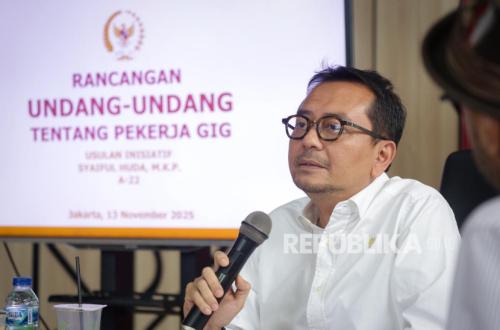
On the occasion of International Labour Day (May Day) 2026, the initiator of the Gig Workers Bill and DPR RI member from the PKB faction, Syaiful Huda, has urged the government to immediately discuss and enact the Gig Workers Bill. This step is deemed crucial to provide legal clarity for gig workers and employers amid the massive digitalisation of the economy.
“The May Day momentum must serve as a reminder that gig workers are part of the labour force that deserves state attention and protection. We need specific regulations that differ from conventional rules because their characteristics are very unique,” said Syaiful Huda in a written statement in Jakarta on Friday (1/5/2026).
Huda highlighted that current labour elements’ attention to gig workers remains weak, tending to focus only on online motorcycle taxi (ojol) drivers. In fact, the gig work model has spread to various fields and is predicted to become one of the largest work models in the future.
“Currently, gig workers have expanded into various sectors such as content creators, YouTubers, film workers, music workers, programmers, game coders, hair stylists, to translators. They have been working based on contracts that sometimes place the employer as the dominant party,” he said.
Huda explained several key points why this bill is urgent to be enacted. Firstly, to date, there is no legal umbrella that ensures the safety, protection, and welfare of gig workers.
“The definition of workers in the current Manpower Law only covers formal workers and outsourcing with different characteristics, thus making gig workers vulnerable to exploitation,” he said.
This PKB DPP Chairman revealed that his initiated Gig Workers Bill contains several key elements such as clarity on the rights and obligations of workers and employers. Among them are clear net income limits, transparent work contracts, and adequate social security for those independent app-based workers.
“One breakthrough in this bill is the demand for algorithm transparency, which has been a major obstacle so far. In addition, this regulation will provide a fair and adaptive dispute resolution medium between workers and employers (platforms),” he said.
In line with the labour demands during May Day 2026 regarding ojol fares, Huda supports the presence of the state to control fare deduction policies. Nevertheless, this protection must be realised through regulatory clarity so that there is legal certainty for workers and employers.
“The state must not be absent. We need fair and adaptive regulations to the dynamics of the digital economy. Do not let workers in this future sector continue to lack protection just because our legal rules are lagging behind the times,” said Huda.