
May Day 2026: Puan Urges Protection for Workers from Layoffs to Outsourcing
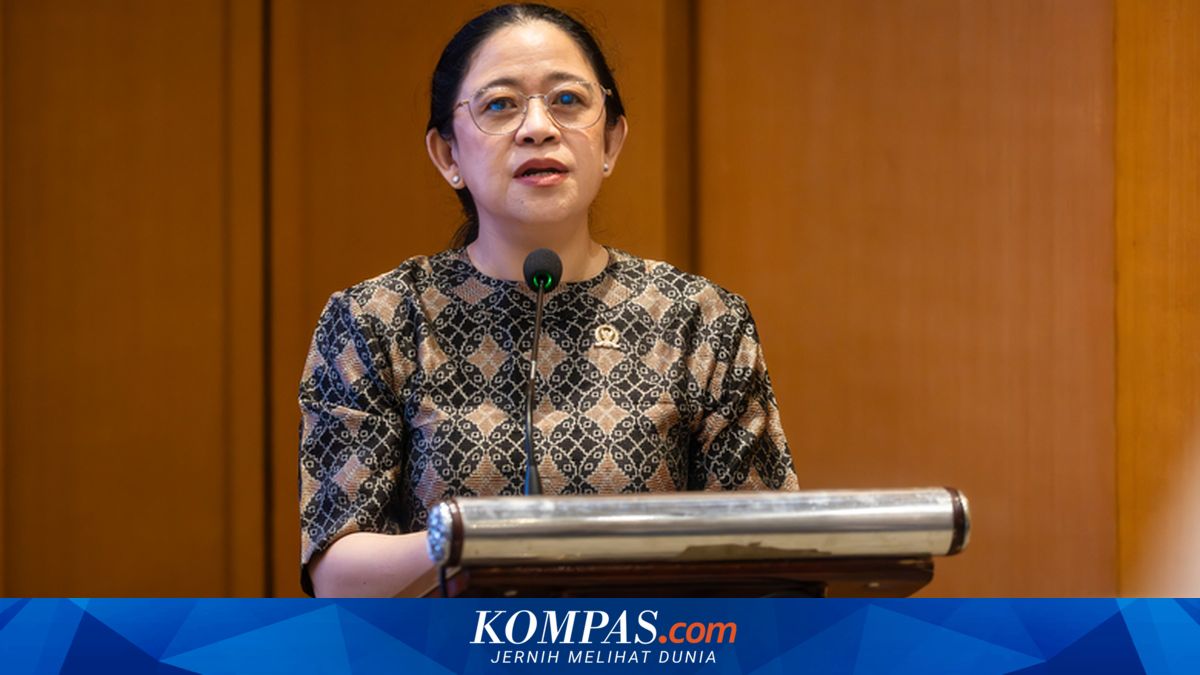
House of Representatives Speaker Puan Maharani has stressed the importance of improving worker protections during the International Labour Day or May Day 2026 commemoration.
She assessed that the state must be present in a tangible way to guarantee workers’ rights across various sectors and professions.
“Happy International Labour Day 2026 to all workers. The May Day commemoration serves as a momentum to ensure that all workers in Indonesia receive their rights, including state protection guarantees,” Puan said in a press release received by Kompas.com on Friday (1/5/2026).
In this year’s May Day commemoration, labour groups brought 11 demands. Some of them include the abolition of outsourcing, rejection of low wages, anticipation of potential layoffs (PHK), ratification of a new Employment Law, and a reduction in online motorcycle taxi fare deductions from 20 per cent to 10 per cent.
Puan hopes that the Labour Day commemoration can proceed safely and peacefully, while also serving as a reminder for the government to strengthen worker protections.
“Changes in employment policies must not exacerbate uncertainty in people’s lives, but instead must improve workers’ welfare,” Puan stated.
She also highlighted the threat of a wave of layoffs in the national industrial sector due to global geopolitical conflicts. Labour groups estimate that around 9,000 workers could be affected in the near future.
“This serves as a warning signal that cannot be ignored. The target of creating 19 million jobs in five years will be difficult to achieve if the industrial foundation is not strengthened,” said the former Coordinating Minister for Human Development and Culture (Menko PMK).
Puan assessed that protection for labour-intensive sectors does not mean excessive protectionism, but rather an effort to maintain a balance between market openness and the sustainability of the national industry.
Regarding plans to form a Layoff Task Force (Satgas PHK), Puan views this step as important if it can identify sectors experiencing labour pressures early on.
“The state must not act after the wave of layoffs grows large, but must have quick anticipation instruments,” she said.
On outsourcing, Puan welcomes the issuance of Ministerial Regulation on Employment (Permenaker) Number 7 of 2026 on Outsourcing Work. One point of the regulation is the limitation of types of work in the outsourcing system.
According to her, the arrangement of these rules must ensure that work flexibility does not turn into vulnerability for workers to sudden job loss.
“Protection of income, certainty of employment relations, and social security guarantees for drivers of online transportation services are important matters,” Puan stated.
She emphasised that all employment policies must ultimately lead to a sense of security for workers and their families in the future.
“The Labour Day commemoration must be understood as a reminder that maintaining the quality of workers’ lives also means maintaining the social foundation that supports national development,” Puan concluded.