
May 2026 Trade Deficit Complicates BI's Efforts to Maintain Rupiah Stability
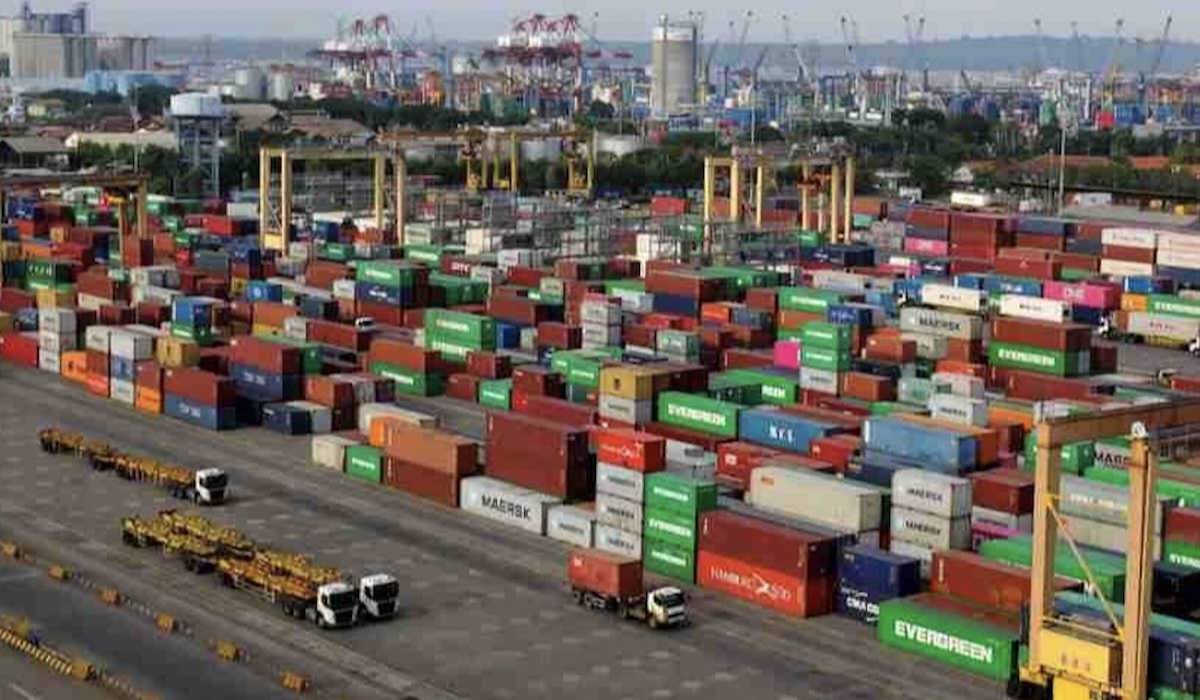
The Indonesian Central Statistics Agency (BPS) has reported that Indonesia’s goods trade balance experienced a deficit of US$1.61 billion, or approximately Rp28.89 trillion, in May 2026. This figure has drawn sharp scrutiny as it ends a surplus trend that had persisted for 72 consecutive months.
INDEF economist Didik J. Rachbini assesses that this condition creates dual pressure on the Rupiah exchange rate. According to him, the current weakening of the Rupiah reflects the fragility of Indonesia’s external sector, particularly as both the trade balance and the services balance are experiencing contractions.
“Previously, even though the trade balance was in surplus, we were heavy on the services deficit, meaning the strength of the Rupiah was inadequate. Now, with a trade deficit, we are facing two deficit items simultaneously: the services balance and the trade balance,” Didik told Media Indonesia on Wednesday (1/7).
Didik emphasised that an expanding current account deficit will make it more difficult for Bank Indonesia (BI) and the government to maintain exchange rate stability. As a short-term solution, he suggested that the government should immediately mobilise export potential from diverse natural resources, ranging from coal and nickel to fishery products, to restore a surplus.
In addition to focusing on trade, Didik reminded the importance of maintaining the credibility of fiscal policy. He highlighted the need for improvements in state revenue and expenditure during this semester.
“The Free Nutritious Meal (MBG) programme must exercise restraint, and the State Budget (APBN) must be directed towards productive sectors,” he stated.
Internal political factors were also noted as playing a vital role in maintaining market confidence. Didik argued that if policy credibility is maintained, the opportunity to sustain economic growth at the 5% level, or even reach 6%, remains wide open through the development of investment and industrialisation.
However, he provided a critical note that without concrete steps to encourage exports and maintain fiscal stability, the 5% economic growth target will be very difficult to maintain amidst current global and domestic pressures.
Finance Minister Purbaya Yudhi Sadewa assessed that the US$1.61 billion trade deficit in May 2026 was triggered by a surge in oil and gas imports due to global oil prices.
A yellow light has begun to flash for the Indonesian economy. Following the recording of a trade deficit in May 2026, national manufacturing activity has also entered a contraction zone.
Hosianna Evalita Situmorang, an economist at PT Bank Danamon Indonesia Tbk, provided observations regarding Indonesia’s trade balance performance in May 2026, which recorded a deficit of US$1.61 billion.
Despite the deficit in May 2026, the Indonesian Central Statistics Agency (BPS) reported that the cumulative trade balance for the January-May 2026 period remained in surplus at US$4.03 billion.