
Maximising the Database in the Quest to Find Fiscal Treasure
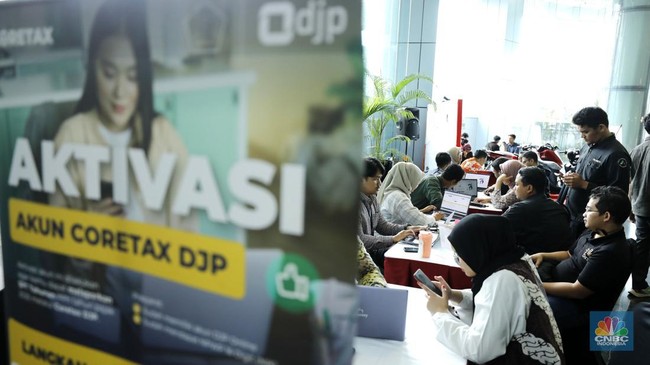
Current global uncertainty is impacting many countries, including Indonesia. The rise in world oil prices is affecting Indonesia’s trade stability, especially for raw materials heavily dependent on imports, resulting in a decline in domestic consumption. Furthermore, the weakening of the rupiah exchange rate and the collapse of the Jakarta Composite Index (IHSG) are accumulating challenges for the Indonesian economy. Consequently, a decline in the investment climate is occurring as a negative response from investors to domestic economic instability. The domino effect is a decrease in consumer purchasing power for goods circulating in the market, ultimately reducing tax contributions. Amid this turmoil, the government faces the heavy task of maintaining state spending without increasing additional burdens on society. Geopolitics poses a threat to the country’s economic sustainability. The government’s attention to the sustainability of a decent life for all its citizens is an obligation, but fulfilling this obligation requires a sufficient budget that is realised effectively. Tax, as the main source of state revenue, has contributed maximally as the largest backbone in determining the spending budget in every State Budget (APBN). However, with these challenging economic conditions, the government must be cautious in taking action on fiscal policy, such as raising tax targets or creating new sources of tax revenue as a final solution to accommodate state spending. The increase in tax revenue targets each year must be parallel to the economic conditions of all business sectors, but tax increases do not have to involve introducing new types of taxes or new tax rates as an alternative path. The government can use persuasive policies to collect the country’s largest revenue by maximising the database owned by the government through the Directorate General of Taxes (DJP). Following the implementation of the NIK as NPWP, domestic economic transactions have become more transparent in revealing the economic capacity of the public. This integration provides the government with a strong database to determine the direction of the country’s fiscal policy from the perspective of supervising taxpayers, especially passive taxpayers who have not yet contributed but have received benefits in this country. The implementation of the coretax system is also an important breakthrough to improve the database. This integration has provided narrow space for taxpayers to commit tax evasion because all transactions are required to use official state identities, ultimately allowing all economic transactions conducted by active taxpayers and potential taxpayers to be supervised systematically. Both can provide a source of fiscal treasure for the state to achieve revenue targets through an existing but higher-quality database. The higher the quality of the database, the more the government can maximally carry out supervision and compliance testing for taxpayers who have not yet fulfilled their tax obligations. In addition, support from third parties (ILAP data), including financial institutions, can perfect the quality of the taxpayer database to be more optimal. Before this integration, the tax database could not accurately present the real condition of taxpayers. Many shadow economy activities were still running under the radar of tax regulations and even the law. These actors have received many benefits from these transactions and enriched their asset ownership without contributing to the state. Beneficial owners who have been hiding in the shadow economy are priority subjects that must be escalated following the NIK and coretax implementation because they are behind the scenes of economic transactions yet enjoy the most dominant benefits from these transactions. Besides revenue, increasing the reporting compliance target is also a benchmark for the percentage of active taxpayers out of the total registered taxpayers. In directing tax contributors to complete their tax obligations, the government can use a curly effort strategy. In the world of taxation, the term curly effort is often used to describe an approach that is not rigid and does not always rely on legal force to direct taxpayers to fulfil their tax obligations. This strategy has proven effective with a positive response. Based on DJP data, as of the end of May 2026, the achievement of Annual Tax Return compliance reached 89 percent of the target. For a new system, this achievement provides evidence that to increase the quantity of Annual Tax Returns, taxpayers do not need to be immediately confronted with various complex tax regulations and haunted by fines and sanctions, but rather start with persuasive actions through massive communication and education conducted by the tax office. If both actions are successful, they will create a quality taxpayer population with a high understanding of tax regulations. This strategy can also be implemented by utilising Compliance Risk Management (CRM), where the DJP can group taxpayer criteria into various categories based on risk levels, ranging from education to audit. This CRM will provide a signal of taxpayer compliance to be followed up according to the risk level. This grouping will provide time efficiency for supervision while producing equally good data quality. Expanding the database is also a necessity due to economic dynamics that create potential taxpayers.