
Maulid, Congress, and the Future of NU
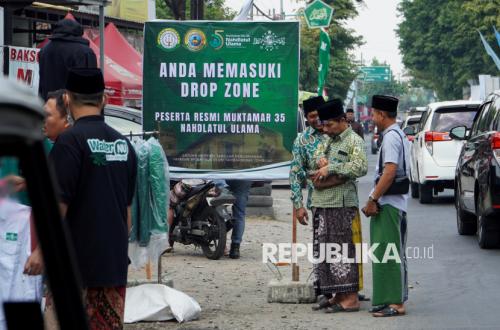
Starting today, Thursday, 27 August 2026, the attention of Nahdlatul Ulama members turns to Tambakberas, Jombang, where the 35th NU Congress opens as the organisation enters its second century. The congress is not merely a large gathering or an agenda for leadership succession, but the organisation’s highest forum for electing the Rais Aam and General Chairman of PBNU while formulating strategic decisions that will determine NU’s future direction. Therefore, what the community awaits is not only who receives the mandate, but also what ideas emerge and what path NU will take in facing the future.
Such expectations are reasonable because NU’s second century arrives alongside increasingly complex challenges. Digital technology is changing how people communicate and acquire knowledge, artificial intelligence is affecting how people work and learn, social change is giving rise to new forms of religiosity, while economic, environmental, and geopolitical issues are increasingly intertwined. In such circumstances, NU cannot merely be a large organisation with a large following; it must remain able to read change, preserve tradition, and offer solutions to the problems of the ummah, the nation, and humanity.
History shows that NU has never fully distanced itself from the nation’s problems. In various phases of Indonesia’s development, NU has been present to nurture religious tradition, safeguard national unity, and help find solutions when the state faced major challenges. Therefore, this congress should not be read solely as a contest to determine who leads, but also as a moment to determine NU’s readiness to face the challenges of its second century.
The question worth asking is not merely who is strongest in securing support, but who is most prepared to carry the mandate and keep NU relevant for the future.
Leadership for a Changing Era
This question matters because an organisation as large as NU requires more than just a manager of structures. In transformational leadership theory, a leader is required to read change, build vision, mobilise the organisation, and bring members towards a better state. A leader, therefore, is not only a guardian of past heritage but also a determinant of future direction.
For this reason, whoever becomes a candidate and whoever ultimately receives the mandate from the congress should ideally possess complementary qualities: religiously learned, intellectual, humble, of integrity, spiritually mature, courageous in decision-making, open to differences, and possessed of a far-reaching vision.
Religious learning is the foundation because NU grew out of the pesantren tradition and the scholarship of ulama. The classical texts, chains of transmission, bahtsul masail, and Islamic intellectual heritage are not merely a legacy to be preserved but a source of values for reading new problems. Yet religious learning alone is insufficient, because an NU leader must also be intellectual and able to understand developments in science, technology, economics, politics, and social change.
An NU leader must know where this organisation comes from while understanding where it is heading. Therefore, tradition and renewal need to be brought together: tradition is preserved without making the organisation afraid of change, texts are understood without ignoring context, and the pesantren remains the root without causing NU to lose sight of the wider world.
NU needs a leader with strong roots but a broad horizon. Such capability must be accompanied by humility. In the pesantren tradition, humility is not merely a modest attitude but an awareness that human beings have limitations. In leadership studies, this attitude is close to the concept of intellectual humility, namely the willingness to accept criticism, listen to differing views, and not feel oneself to be the most correct.
This attitude is important for NU, which lives amid diversity of ulama, pesantren, generations, organisational structures, and local traditions. A leader must be able to listen to senior kiai without ignoring the younger generation, pay attention to the centre without forgetting the regions, and safeguard the organisation without distancing himself from the grassroots community.
The next quality is integrity. From the perspective of ethical leadership, a leader is judged not only by what is achieved but also by how those goals are achieved. Power must be used responsibly because office is essentially a trust, not a space for enlarging personal or group interests.
This principle is in line with NU’s tradition of service and the pesantren: the higher a person’s position, the greater their responsibility to bring benefit. A leader is measured not by how many people serve them, but by how much benefit they bring.