
Maths Genius Who Rejected MIT to Become a Monk Now Sells Online
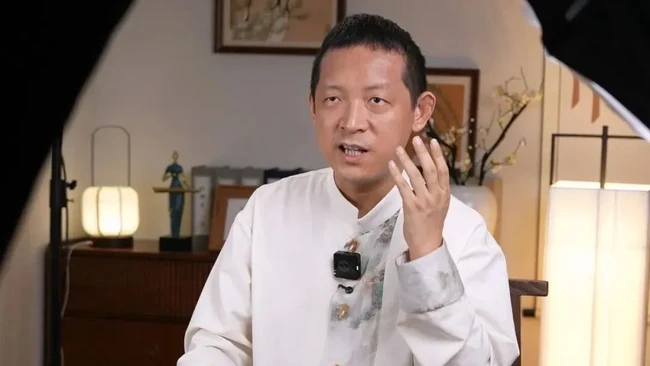
Jakarta, CNBC Indonesia – Liu Zhiyu was once known as one of China’s mathematics prodigies. He won a gold medal at the International Mathematical Olympiad (IMO), rejected the chance to study on a full scholarship at the prestigious Massachusetts Institute of Technology (MIT) in the United States, and chose instead to become a Buddhist monk.
Now, Liu’s path in life has changed again. After leaving monastic life and starting a family, the 38-year-old works more than ten hours a day through livestreaming to support his family.
According to VN Express on Tuesday (15/9/2026), Liu’s name returned to public attention after Deng Yu and Wang Hong became the first Chinese nationals to win the Fields Medal in July 2026. The Fields Medal is one of the most prestigious awards in the world of mathematics.
That achievement led Chinese society to revisit Liu’s story and the path his life has taken since leaving mathematics. Born in Wuhan, China, Liu showed extraordinary mathematical ability from a young age.
In 2006, he won a gold medal with a perfect score at the International Mathematical Olympiad. The achievement earned him direct admission to the mathematics programme at Peking University, one of China’s most prestigious universities.
After graduating, Liu received an offer of fully funded study from MIT. However, instead of pursuing postgraduate studies in the United States, Liu made a decision that surprised many. He chose to leave academia and become a Buddhist monk.
After years of monastic life, Liu officially returned to secular life in 2022. He then moved into the field of psychology.
A year later, Liu began building his own business combining psychology and traditional Chinese culture through livestreaming and online courses. In the same year, Liu married. He and his wife were blessed with a son in 2024.
According to the Chinese media outlet The Paper, Liu now works from a one-bedroom flat of less than 30 square metres in Beijing, which has been converted into a studio. His routine begins at around 07:00 to 08:00 in the morning. At 09:00, Liu starts livestreaming.
Apart from around three hours of meals and rest at midday, he works until about 21:00. His total working time can exceed ten hours a day.
His work is also not limited to appearing on camera. Liu has to plan video topics, check scripts, record course material, manage staff, and run in-person psychology workshops.
He admits he has not yet been able to significantly reduce his workload because the business he is building is still in its early stages.
“The entire internet industry has a culture of extremely fierce competition. If you don’t move forward, you’ll be left behind,” Liu said in an interview with The Paper in September.
“When everyone is trying so hard to get ahead, sometimes you have no choice but to compete as well,” he continued.
Liu’s business journey did not immediately yield large profits. When he first started out, his financial situation was quite tight.
He and his wife lived in the flat that is now used as a studio. Meanwhile, his first livestream was broadcast from his parents-in-law’s bedroom using a simple backdrop and table.
After about three years as an entrepreneur, Liu said his business has indeed not made him rich. However, at the very least, the venture is no longer loss-making.
Liu and his wife, who also works in the business, now live with their son in a rented two-bedroom flat. Their former home is now used entirely as a studio.
Marriage and fatherhood have also changed Liu’s views on money. When he was only responsible for himself, Liu said he once thought he could survive on just 1,000 yuan, or about US$140, a month. At current exchange rates, that amount is equivalent to roughly Rp2 million.
Even in the worst-case scenario, he felt it would not be a problem if he had to sleep under a bridge. That view changed after he had a wife and child.
“Supporting a family requires money. You have to buy groceries, cook, and eat better,” he said.
Liu’s decision to earn money from his knowledge has also drawn criticism online. Some internet users have questioned why a former maths prodigy and Buddhist monk now sells courses and products through livestreaming.
However, Liu sees no contradiction between his past life and his current work. According to him, selling products is legitimate work as long as the goods are chosen carefully and genuinely benefit consumers.
“If we sincerely want to help others, we also need to earn a living and make our work sustainable,” Liu told Jimu News in an interview in August.
Despite the pressures of running a business and the responsibility of supporting his family, Liu said he is content with his life now.
“What I do every day is meaningful, and it is something I am genuinely interested in,” he said.