
Mataram Agriculture Department Inspects Sacrificial Animals Ahead of Eid al-Adha, Finds Cow with Eye Infection
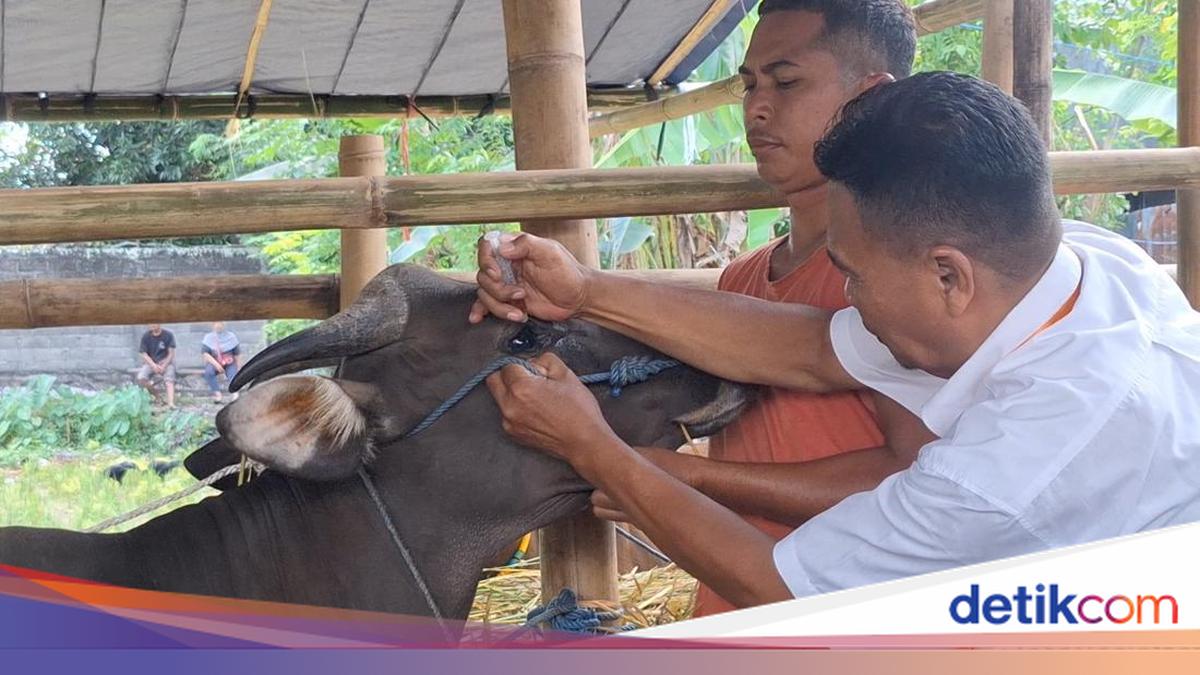
The Mataram City Agriculture Department (Distan) carried out a surprise inspection to check the health of sacrificial animals ahead of Eid al-Adha. A total of 36 personnel were deployed to various points to ensure that the sacrificial animals being sold by residents are free from dangerous diseases.
The Head of the Mataram City Agriculture Department, Lalu Johari, explained that his team combed through 70 sacrificial animal sales points during the inspection. According to him, the team found one sacrificial cow in a condition of eye infection.
“This inspection will continue until one day before Eid al-Adha,” said Johari when interviewed after the inspection in Mataram on Wednesday (13/5/2026).
According to Johari, Distan Mataram aims to ensure that the animals sold for sacrifice are of sufficient age, have non-watery eyes, and are not lame. The inspection is intended to detect foot-and-mouth disease (FMD) and anthrax in the animals.
“Healthy animals will be given a sticker or special mark as proof that they have passed the inspection,” said Johari.
“In addition, we also conduct inspections of the animals’ internal organs, such as the liver. This is done to ensure there is no liver fluke contamination,” he added.
Most of the supply of sacrificial animals in Mataram City comes from East Lombok and Central Lombok. Observations showed that Distan Mataram applied a special liquid to the cow with the eye infection on Jalan Dakota, Rembiga, Mataram City.
Ardi, one of the animal stall keepers in the area, stated that the prices of sacrificial cows this year vary. The prices range from Rp13.5 million to Rp18.5 million per head.
“Only five cows have been sold so far, with the average weight of the cows here around 250 kilograms,” said Ardi.