
Master's Pathway Opened for Professionals Without Bachelor's Degrees
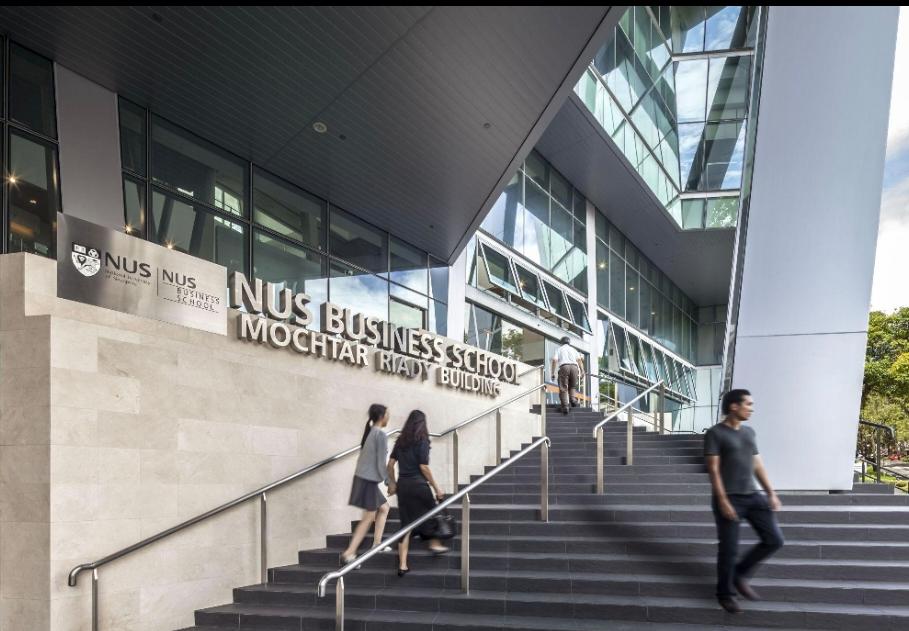
Changes in global labour market requirements and an increasing productive lifespan are driving the emergence of more flexible educational models. Responding to this trend, NUS Business School has introduced the Executive Master of Science in Management (EMIM) programme, aimed at experienced professionals, including those without conventional bachelor’s degrees.
The programme is designed to support the concept of lifelong learning, which is becoming increasingly relevant amidst global demographic shifts. Declining birth rates and rising life expectancy mean many individuals have longer working lives, making the continuous updating of skills essential.
“The EMIM programme is designed for individuals who have spent 20 to 30 years in various key roles—whether in the military, public sector, non-profits, entrepreneurship, or caregiving professions—but still have 15 to 20 years of productive life ahead and lack formal business training,” said Rose, as quoted in a press release.
The EMIM programme runs for 24 months in a part-time hybrid format, combining online and face-to-face learning. The curriculum covers essential modern business fields, such as finance, business analytics, digital marketing, strategic negotiation, and cross-cultural management.
According to Rose, many professionals aged 40 to 50 face significant shifts in the workplace, as educational backgrounds obtained decades ago may no longer align with current economic needs. “Our focus is not to ask them to undergo a lengthy undergraduate programme, but to assess whether they are ready to undertake the latest and more relevant business education,” she stated.
A unique feature of this programme is an admissions system that emphasises competence over formal credentials. Unlike typical master’s programmes, participants are not required to hold a bachelor’s degree as a primary prerequisite. Instead, candidates are assessed through gateway courses in financial accounting and business analytics. Those who meet the academic standards after completing these introductory modules can proceed to the EMIM programme.
This approach opens opportunities for professional groups that have historically struggled to access postgraduate education, including small and medium enterprise (SME) owners, entrepreneurs, and women returning to the workforce after career breaks for family care.
Rose noted that business and analytical skills are becoming increasingly vital across various sectors. Understanding financial statements, cost of capital, and present value is no longer exclusive to managers or finance professionals. “Financial accounting remains the primary language of business. The ability to understand balance sheets and profit and loss statements is a vital foundation for adapting to a changing economic environment,” she added.
The programme is also considered relevant for Indonesia, which faces challenges in improving human resource quality. With a workforce exceeding 146 million people, the demand for talent with structured managerial and leadership capabilities is rising alongside national economic transformation.
EMIM serves as an educational experiment to expand learning access for mid-career professionals. The inaugural cohort consists of participants from diverse ages, professions, and educational backgrounds. Notably, approximately one-quarter of the participants were admitted without formal bachelor’s degrees. Despite the alternative entry route, the academic standards remain equivalent to the existing Master’s in Management programme.
Applications for the January 2027 intake are currently opening in stages, with selection results scheduled for announcement in October 2026.