
Mastering AI Alone Is Not Enough, University Graduates Need Wisdom and Soft Skills
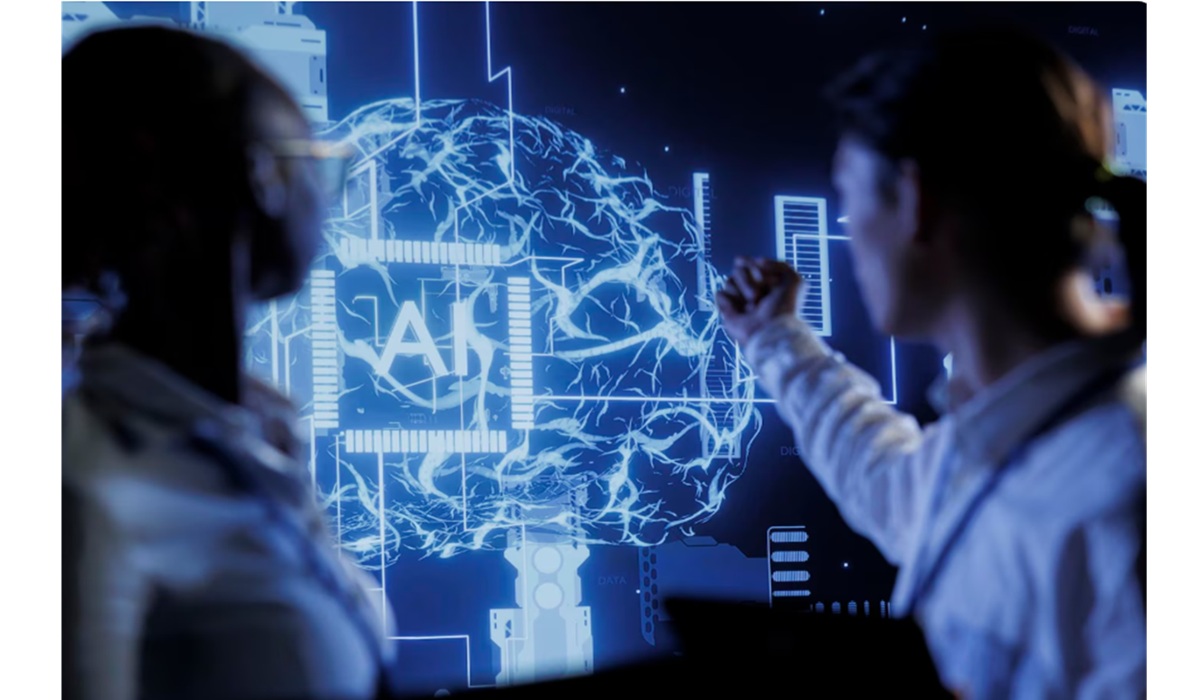
The ability to master artificial intelligence (AI) is considered insufficient to prepare university graduates for the increasingly rapid changes in the world of work. Higher education institutions are now required not only to teach the use of technology but also to build deep thinking skills, character, and soft skills.
This view was expressed by the Executive President of Xi’an Jiaotong-Liverpool University (XJTLU), Professor Youmin Xi, during an XJTLU Media Session in Jakarta on Wednesday (24/6). According to him, AI should be positioned as a tool to strengthen the learning process, not to replace the role of education or humans.
"This year is our university’s 20th anniversary. The future world needs a new pillar, namely individuals who can work alongside AI," said Professor Xi.
He explained that the introduction of AI at XJTLU is carried out in stages from the beginning of the study period. In the first year, students learn what AI is, how to use it, and AI ethics. Entering the second year, students begin to be directed to use AI appropriately in various disciplines, such as Mathematics, Engineering, or Social Sciences. In the third year, AI is utilised to assist the research process so that students’ understanding deepens.
Professor Xi stressed that XJTLU’s educational philosophy is not to make AI the centre of learning. The technology is placed as an instrument to improve the quality of education. "We use AI to support education, to upgrade, restructure, and reshape. But we do not want to use AI to replace education. If there are humans, education will survive throughout the ages. Our philosophy is X plus AI, not AI plus X," he said.
With this approach, students are not only directed to become technology users but are also able to understand the context, limitations, and ethical impacts of AI use. This is considered important so that graduates can adapt to the ever-changing needs of the global job market.
In addition to equipping students with technological literacy, XJTLU also emphasises the importance of comprehensive thinking skills. Professor Xi stated that higher education needs to help students build wisdom, namely the ability to think deeply and exercise prudence in decision-making.
"Our education model is how we can help students grow with the ability to think quickly and full of wisdom. They can develop various abilities, even collaborate in developing knowledge," said Professor Xi.
He added that the development of this wisdom is carried out by integrating knowledge from Western and Eastern perspectives. This combination is expected to shape graduates who are not only academically capable but also able to see issues from various viewpoints.
This educational approach is applied in a multicultural campus environment. XJTLU has teaching staff from more than 60 countries and regions, while its students come from nearly 100 countries and regions. "XJTLU has teaching staff from more than 60 different countries and regions from all over the world. And our students also come from nearly 100 different countries and regions, so students on our campus are accustomed to an atmosphere of diverse cultures," said Professor Xi.
This cross-cultural learning environment is considered an important part of shaping students’ communication, collaboration, and adaptation skills. These competencies are increasingly needed amidst a job market that demands flexibility and openness to change.
Currently, XJTLU offers more than 100 study programmes in various fields, ranging from science, engineering, and business to finance, architecture, urban planning, languages, and culture. All programmes are taught in English, except for general and basic courses. Undergraduate students earn two degrees simultaneously, namely a degree from XJTLU recognised by the Chinese Ministry of Education and a globally recognised degree from the University of Liverpool. Meanwhile, postgraduate students earn a degree from the University of Liverpool. All academic departments also offer doctoral programmes as part of strengthening the university’s research.
The development of non-academic competencies is also felt by Indonesian alumna Tuty Julfa. According to her, the learning experience at XJTLU not only improved academic abilities but also shaped character and interpersonal skills useful in the world of work. "I feel very fortunate to have studied at XJTLU, primarily because it was not only hard skills but also soft skills for my career development. So it is not just the academic field but also interpersonal skills, how we hone persistence and perseverance," said Tuty, who now runs a business in the fashion retail sector.
According to Tuty, seemingly simple things like persistence, perseverance, and the ability to interact actually play a major role in shaping graduates’ readiness to face the world of work.
Interest among Indonesian students in XJTLU’s educational approach also continues to increase. Indonesia is currently the largest international market for XJTLU, with around 700 Indonesian students currently studying. For the September 2026 intake, the number of undergraduate programme applications from Indonesia has exceeded 1,500, or about 38 per cent of total international applications.
Along with this growing interest, XJTLU is strengthening its presence in Indonesia. After opening an official representative office in 2024, the university added recruitment staff in June this year to expand services for prospective students. XJTLU is also establishing partnerships with several universities in Indonesia, including Binus University, the University of Indonesia, and the Bandung Institute of Technology.