
Massive Deregulation as Government Accelerates Multi-Commodity Food Self-Sufficiency
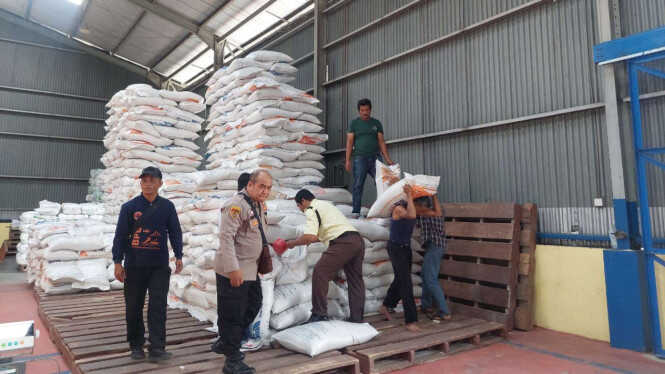
Jakarta, VIVA – The government’s efforts to strengthen multi-commodity food self-sufficiency have drawn praise from various quarters. Strategic measures in the form of regulatory and deregulatory packages are regarded as a crucial foundation for accelerating production, improving trade governance, and strengthening central-regional coordination across the national food supply chain.
Muhammad Sirod, Deputy Secretary-General of the DPN HKTI for Nutrition and Head of the Business Division, stated that the government has taken significant structural steps.
“The government issued a package of 25 regulations throughout 2025–2026 as a strategic measure to strengthen the food self-sufficiency agenda whilst simultaneously driving agricultural downstream processing. These policies encompass one Government Regulation, three Presidential Regulations, two Presidential Decrees, seven Presidential Instructions, as well as a number of Ministry of Agriculture Regulations and Decrees,” he said in a statement on Wednesday, 18 February 2026.
According to Sirod, the policies do not stand in isolation. The government has also revoked approximately 547 internal regulations as part of the policy reform.
“The revocation of hundreds of internal regulations is considered essential to reduce overlapping subsidiary rules. Previously, a single food programme often had multiple guidelines and circulars running simultaneously, thereby increasing coordination costs and slowing decision-making,” he explained.
Sirod assessed that the deregulation is directed at strengthening the structure of the modern food supply chain from upstream to downstream. The focus encompasses simplification of internal rules, acceleration of production licensing, reorganisation of technical institutions, restructuring of import trade governance, and strengthening of central-regional coordination through Presidential Instructions.
At the production level, amendments to the Minister of Agriculture Regulation concerning the naming and registration of plant varieties are said to clarify service criteria.
“This certainty of timeframes has a significant impact on seed innovation, because in a modern food supply chain, the speed of variety registration determines how quickly technology can be adopted by farmers,” he remarked, referring to a maximum service deadline of 17 working days through a digital system.
Meanwhile, Minister of Agriculture and concurrent Head of the National Food Agency (Bapanas), Andi Amran Sulaiman, stated that national self-sufficiency achievements demonstrate concrete results of government policy.
“Our production is high, our stocks are plentiful. We have already achieved self-sufficiency in nine commodities, with three still outstanding. Even those three commodities that are not yet self-sufficient have abundant stocks,” said Amran.
Based on the food balance sheet through April 2026, Indonesia has achieved self-sufficiency in nine strategic commodities, namely rice, consumer sugar, large chilli, bird’s eye chilli, maize, cooking oil, chicken meat, chicken eggs, and shallots. Meanwhile, commodities still undergoing production strengthening include garlic, soybean, beef and buffalo meat, as well as industrial sugar.