
Massive Capital Influx 'Explodes', This Project Becomes the New Money Machine
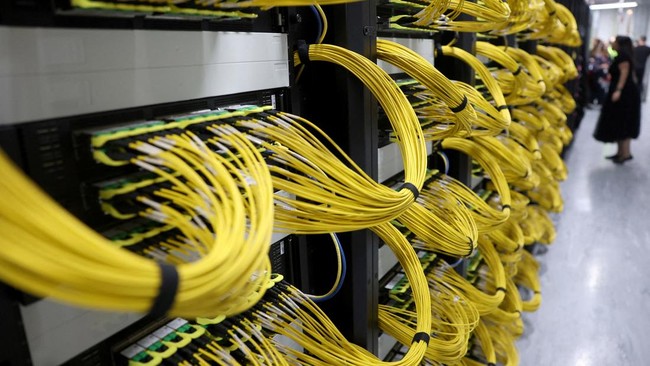
Global investment flows in the first half of 2026 indicate a strong shift towards digital infrastructure and Artificial Intelligence (AI). Throughout the first half of 2026, the value of greenfield foreign direct investment (FDI)—investments in new project developments—reached approximately US$538 billion.
The communications sector has become the primary magnet for foreign capital, with realised investments reaching US$139.3 billion during the January-June 2026 period. Of this total, the largest portion flowed into data centre projects, with values exceeding US$131 billion, representing more than 94% of all investment in the communications sector.
This achievement in the data centre sector is equivalent to 24.5% of the total global greenfield FDI capital expenditure plans for the same period. fDi Intelligence data recorded this proportion as the highest ever recorded in fDi Markets, for both semi-annual and annual scales.
According to the fDi Intelligence report, the following are the top 10 sectors with the largest global greenfield FDI values based on capital expenditure allocation in the first half of 2026:
Communications: US$139.3 billion
Renewable energy: US$73.3 billion
Coal, oil, and gas: US$44.7 billion
Semiconductors: US$38.8 billion
Transport & warehousing: US$24.9 billion
Real estate: US$23.9 billion
Metals: US$23.7 billion
Industrial equipment: US$14.6 billion
Electronic components: US$13.7 billion
Software & IT services: US$13.7 billion
The scale of data centre investment is reflected in several jumbo-scale projects. In May 2026, SoftBank announced an investment commitment of €45 billion, or approximately Rp919.6 trillion, over five years to build AI infrastructure in France. The project will feature a data centre capacity of 3.1 gigawatts spread across three locations. This investment value has the potential to expand to €75 billion. Reuters described the initial project as one of the largest investments in AI infrastructure in Europe.
Other sectors are also being pulled into the AI investment wave. Renewable energy became the second-largest greenfield FDI sector in the first half of 2026, attracting approximately US$73.3 billion, which is about US$28.6 billion higher than investments in coal, oil, and gas, which reached US$44.7 billion. Renewable energy investment primarily flowed into solar power projects, followed by hydrogen, clean technology, and wind power.
The impact of the AI investment explosion is also visible in the semiconductor sector. Investment in this sector reached US$38.8 billion in the first six months of 2026, including a US$24 billion commitment from Micron to build NAND flash production facilities in Singapore. These chips are essential components in AI infrastructure.
Transport and warehousing attracted US$24.9 billion, while industrial equipment reached US$14.6 billion. Meanwhile, electronic components and software & IT services each recorded US$13.7 billion in investment.
The electricity requirements to support AI are also driving investment in fossil fuels. Approximately US$33 billion of the coal, oil, and gas sector investment originated from plans by SoftBank subsidiary, SB Energy Corp, to build a 9.2 gigawatt gas-fired power plant in Ohio, USA. The plant is designed to supply electricity to the data centre complexes currently under development.
This massive capital influx is a key factor in the rapid development of the AI ecosystem. Technology companies are not only allocating funds to develop AI models but are also building the necessary computing capacity to train and utilise these technologies at scale. The scale far exceeds that of conventional data centre construction. PwC estimates that global data centre capital expenditure will reach approximately US$800 billion per year in 2026 and could potentially increase to US$1.8 trillion per year by 2050. Cumulatively, PwC predicts that global AI infrastructure investment could reach US$31.6 trillion by 2050.
Behind every increasingly large AI model, there are massive investments in building data centres, chips, power grids, and various supporting infrastructures. Consequently, the surge in AI investment is not only transforming the technology industry but is also beginning to shape the direction of global capital flows and driving the development of energy and digital infrastructure on an unprecedented scale.