
Mass Shark Graveyard Discovered in the Middle of the Desert Unearths the Past
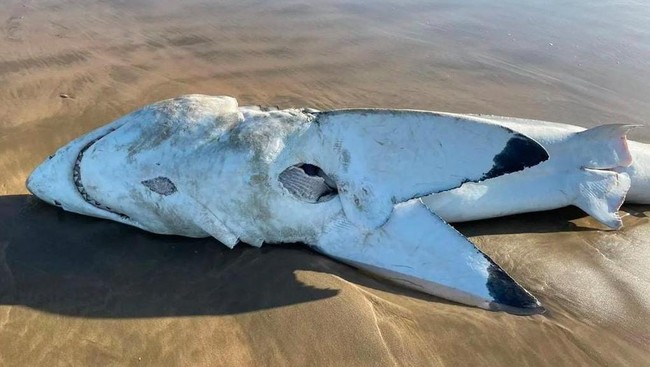
In the barren desert of Egypt, researchers have discovered something unexpected: a collection of ancient shark teeth dating back tens to hundreds of millions of years.
IFLScience reports that the find proves the area, now a scorching desert, was once a seabed teeming with life.
The valuable discovery was made on the Abu-Tartur Plateau in Egypt’s Western Desert, about 650 kilometres southwest of Cairo. A research team led by Tarek Yassin from Cairo University collected 14 fossilised teeth of ancient sharks from rock layers dating to the Late Cretaceous period, around 100.5 to 66 million years ago.
From these teeth, the team identified at least five extinct shark species. Two of them had never been recorded before in Egypt, and one species is likely the first record on the entire African continent.
Finding shark teeth in the middle of a desert may sound strange, but millions of years ago much of what is now Egypt lay beneath an ancient sea. The area was part of a shallow seabed rich in nutrients, making it home to various fish, sharks and other marine creatures.
Seven shark species found at a single location indicate that the ancient marine ecosystem there was extremely rich and diverse. They ranged from medium-sized predatory sharks to giant apex predators such as Cretoxyrhina, which reached 7–8 metres in length, larger than the biggest great white sharks alive today.
Sharks have lived on Earth for 450 million years — older than trees and even older than dinosaurs. A shark’s skeleton is made of cartilage that easily decomposes, so complete fossils are rare. However, shark teeth are composed of extremely hard minerals, allowing them to survive intact for tens to hundreds of millions of years buried in rock.
For this reason, shark teeth serve as one of the most durable ‘notebooks’ of Earth’s history. Teeth found in the Egyptian desert, in caves in Kentucky in the United States, and in the depths of the ocean show that places now far from the sea were once ocean floors.
For researcher Tarek Yassin, this discovery is only the beginning.
‘There is still so much we do not know about this region. This discovery is just one part of a much larger story, and we hope to continue exploring it,’ he said.
Not far from the shark tooth site lies a location called the Valley of the Whales, where hundreds of 40-million-year-old ancient whale skeletons have been found. From sharks to whales, Egypt’s desert holds evidence that vast seas slowly receded and transformed into the land we know today.
Source: jawawa.id (https://jawawa.id/newsitem/mass-shark-graveyard-discovered-in-the-middle-of-the-desert-unearths-the-past-1788011803)
Originally published by CNBC Indonesia (https://www.cnbcindonesia.com/tech/20260827135642-37-762759/kuburan-massal-hiu-muncul-di-tengah-padang-pasir-bongkar-masa-lalu), translated from Indonesian