
Masela Block After 28 Years and the Commitment to Strengthening Energy Security
There is an irony that has clung to Indonesia’s national development for years. We are known as a country rich in natural resources, yet not always capable of converting that wealth into economic strength. Many strategic projects were born with great optimism, only to be stalled by bureaucracy, policy changes, tug-of-war interests, and investment uncertainty. The Masela Block is one of the most tangible examples of this irony.
Since the Production Sharing Contract (PSC) was signed in 1998 and the giant gas reserves of the Abadi Field were discovered in 2000, the Masela Block has repeatedly been projected to become the backbone of national energy security. However, that hope continually shifted into a waiting game. Changes in the development concept from a floating refinery to an onshore refinery, shifts in the investor composition, lengthy negotiation processes, and policy dynamics nearly turned this project into a symbol of how Indonesia often loses momentum in managing its own strategic resources.
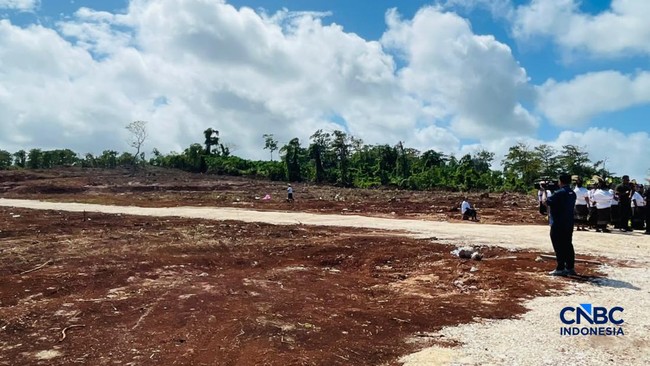
Therefore, the groundbreaking ceremony for the Abadi LNG Project in the Masela Block by President Prabowo Subianto carries a significance far greater than a mere construction ceremony. It symbolises that a project which, for nearly three decades, existed mostly in documents has finally truly entered the implementation phase. In the investment world, the decision to commence physical construction is often a more critical turning point than a series of announcements or agreement signings.
The project’s significance cannot be underestimated. Its investment value is estimated to reach approximately US$20.9 billion, or more than Rp340 trillion, making it one of the largest energy projects in Indonesia’s history. The Abadi Field holds gas reserves of about 6.97 trillion cubic feet (TCF), with a production capacity of around 9.5 million tonnes of LNG per year, approximately 150 million standard cubic feet of gas per day for domestic needs, and around 35 thousand barrels of condensate per day. The project is also designed to use Carbon Capture and Storage (CCS) technology, making it one of the LNG projects beginning to accommodate the demands of the global energy transition.
More important than the sheer scale of these figures, however, are the strategic benefits they entail. The Masela Block will strengthen the national energy supply at a time when gas demand is increasing for industry, power generation, fertiliser, petrochemicals, and various manufacturing sectors. Amidst the global trend positioning natural gas as a transition fuel towards a low-carbon economy, Masela’s presence will reinforce Indonesia’s position as an energy producer while safeguarding its industrial competitiveness.
From a fiscal perspective, the project has the potential to provide additional state revenue through oil and gas profit sharing, taxes, non-tax state revenue, and export proceeds. From a regional development standpoint, the project’s presence will serve as a new engine of economic growth for the Tanimbar Islands and Maluku. Port infrastructure, roads, industrial zones, and business opportunities for local communities will develop in tandem with the industrial activity generated. The multiplier effect extends far beyond the oil and gas sector.
This is where leadership becomes a determining factor. No matter how great the natural resources, they will not yield benefits if the state fails to provide policy certainty. President Prabowo appears to understand that energy security is not solely about discovering new reserves, but also about ensuring that long-delayed strategic projects are finally executed. The push to move Masela into the construction phase demonstrates the political courage to complete a task inherited across multiple administrations.
Similarly, the role of the Minister of Energy and Mineral Resources, Bahlil Lahadalia, has been notable. What is interesting about Minister Bahlil’s leadership is not only his ability to manage the energy sector, but also his background as a former Minister of Investment, which gives him an understanding of how investors think. This experience seems to influence his approach at the Ministry of Energy and Mineral Resources. He does not only speak about regulations, but also actively builds communication with business actors, local governments, relevant ministries, and the public. In an investment of Masela’s scale, communication is almost as important as policy. Investors need certainty that the government has a consistent direction. Local governments need assurance that the project will bring benefits to their communities. The public also needs to be convinced that the nation’s natural resource wealth will truly contribute to their welfare. It is at this juncture that communication skills become a strategic asset.
Minister Bahlil has successfully played this role. His straightforward, open style that directly addresses core issues has made the government’s communication on energy projects easier to understand. He is able to bridge the gap between the technocratic language of the oil and gas sector and a simpler public discourse without losing substance. In a situation where many strategic projects fail due to weak coordination and a lack of trust among stakeholders, the ability to build cross-interest communication is an asset that cannot be underestimated.
Of course, this success must not stop at the groundbreaking ceremony. The biggest challenges begin afterwards. The government must ensure that construction proceeds on schedule, local content increases, the people of Maluku become part of the project’s economic chain, environmental standards are maintained, and the economic benefits are truly felt by the people. The success of the Masela Block will ultimately not be measured by the grandeur of its inauguration, but by when the first LNG is successfully produced and how much it contributes to the economy.