
Masela and the Long Road to Unlocking Indonesia's Gas Treasure
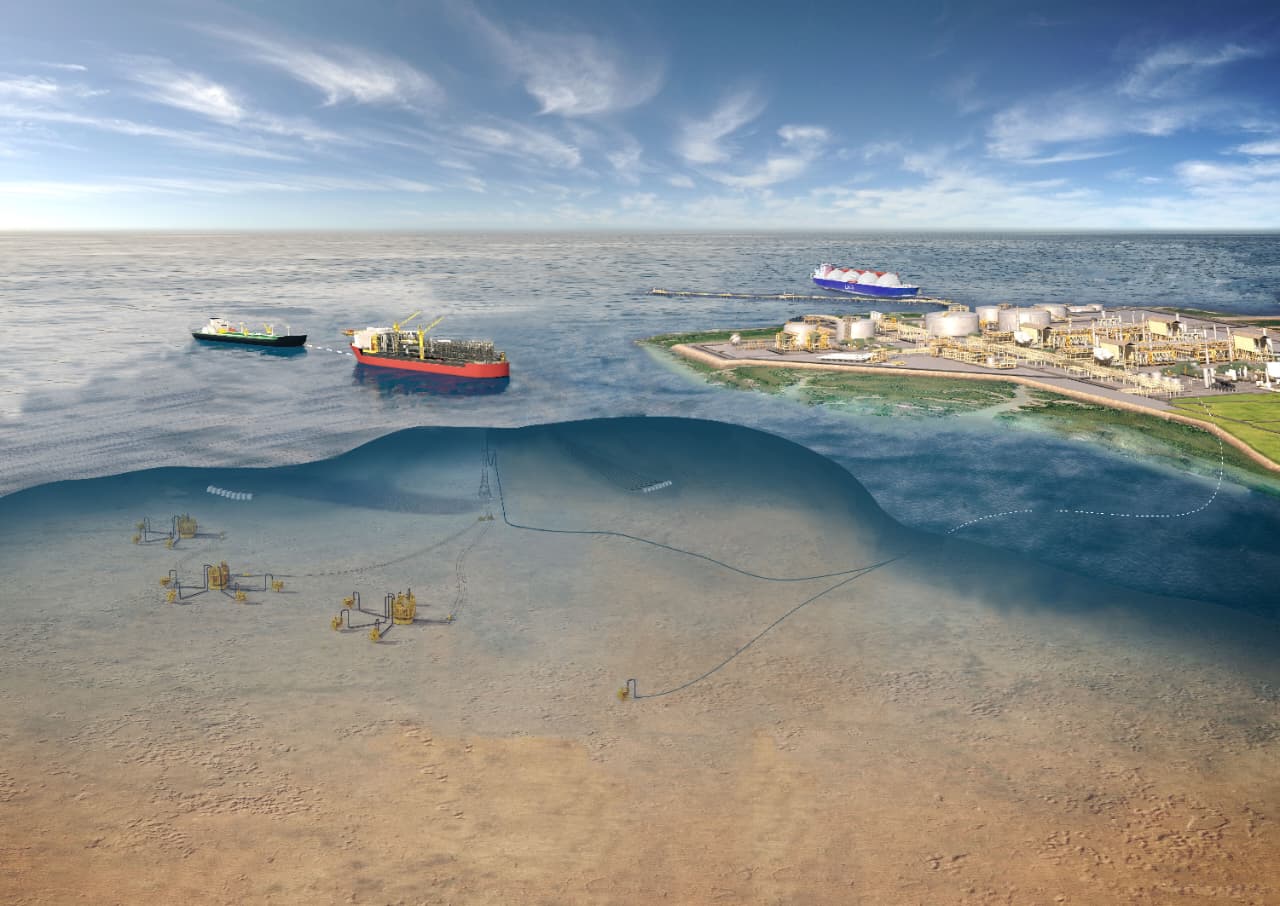
The Abadi Masela LNG project has entered the construction phase after its groundbreaking on 16 July 2026, marking a significant milestone since the cooperation contract was first signed in 1998. The development of the gas field is projected to produce 1.75 BSCFD, strengthening national energy supply while driving economic activity in Eastern Indonesia.
Komaidi Notonegoro, Executive Director of the ReforMiner Institute, stated that the continuation of the Abadi Masela field development sends a positive signal for energy security and the national gas balance in the coming years. “The total gas reserves of the Abadi Masela field reach approximately 18.54 TSCF. This amount is equivalent to 53.30% of the total national proven gas reserves in 2025,” Komaidi said on Wednesday (12/8/2026).
From a production perspective, Masela’s gas is projected to reach around 34% of current national gas production. This scale makes the development of the field in Maluku strategically important for national gas supply. From an economic standpoint, the development of the Abadi Masela field also brings significant investment value. Based on a ReforMiner study, the project’s investment has the potential to create added value for the national economy of up to approximately Rp 2,363 trillion.
According to 2023 data from the Ministry of Energy and Mineral Resources (ESDM), the total cost of developing the Abadi Masela field over its lifetime is estimated at US$34.754 billion, or approximately Rp 590 trillion, assuming an exchange rate of Rp 17,000 per US dollar. This figure includes investment beyond the sunk cost of US$20.946 billion. In addition, operational costs are estimated to reach US$12.978 billion, with abandonment and site restoration costs of US$830 million. The total investment required for Masela is equivalent to 2.3 times the national upstream oil and gas investment realisation in 2025, which amounted to US$15.42 billion.
In terms of employment, ReforMiner estimates that the Masela project will require around 12,000 workers at the peak of construction. Of this number, approximately 30%, or 3,600 workers, are projected to come from the local community.
The presence of PT Pertamina Hulu Energi (PHE) in the Abadi Masela LNG consortium also provides strategic value for the project’s development. As part of Pertamina, the company is linked to the energy business ecosystem from upstream to downstream. Pertamina also controls the majority of gas distribution infrastructure and holds a large market share in the domestic gas trade. This position is considered capable of helping the Masela project reduce market risk through business chain integration. Through its subsidiaries, including PT Perusahaan Gas Negara Tbk (PGN) and PT Pertagas, Pertamina has access to transmission and distribution networks as well as domestic gas consumers.
Komaidi said Pertamina’s position in the consortium can be directed to strengthen relationships with prospective domestic gas buyers. Coordination with PT PLN, PLN Energi Primer Indonesia, PT Pupuk Indonesia, and other state-owned enterprises needs to be continued so that initial agreements can turn into definitive, bankable long-term gas sales contracts. “Certainty of domestic absorption can reduce the project’s exposure to spot LNG price volatility and help maintain the project’s long-term economic viability,” Komaidi said.
Integration of Pertamina through PHE in the upstream sector and PGN in the midstream to downstream sectors can also be directed to support domestic gas allocation. ReforMiner estimates that domestic absorption can be directed to at least 60% of Masela’s gas production. PGN currently manages a gas pipeline network of more than 35,000 kilometres serving markets in 17 provinces and 74 regencies/cities. The company also holds a strong position in downstream infrastructure and controls around 91.36% of the national gas trade.
Beyond market aspects, Pertamina’s position as a strategic state-owned enterprise is considered capable of helping coordinate between central government, local governments, operators, and other state-owned enterprises. This coordination includes licensing, land acquisition, meeting domestic component level requirements, major procurement, and supporting infrastructure development.
Komaidi also assessed that support from the Daya Anagata Nusantara Investment Management Agency (BPI Danantara) could strengthen the capital aspects and strategic decisions of Pertamina in the project. According to him, Danantara, as an institution that consolidates large state assets, can open wider financing access through banking syndication, debt instrument issuance, or working capital optimisation among state-owned enterprises. “This institutional financial support also reduces Pertamina’s credit risk in funding the Masela project, while providing strong confidence to international partners such as INPEX and external funders regarding the sustainability of the project’s cash flow,” Komaidi revealed.
Although the groundbreaking has been carried out, the development of Abadi Masela still faces several important stages before production begins. The project must still complete the front-end engineering design, reach a final investment decision targeted for the end of 2026, and then enter the engineering, procurement, and construction phase through to commissioning and first production. Komaidi said the status of Abadi Masela as a National Strategic Project makes policy consistency from the government crucial. According to him, the project’s long history shows that obstacles.