
Masela and Energy Transition Become Priorities in Indonesia-Japan Discussions
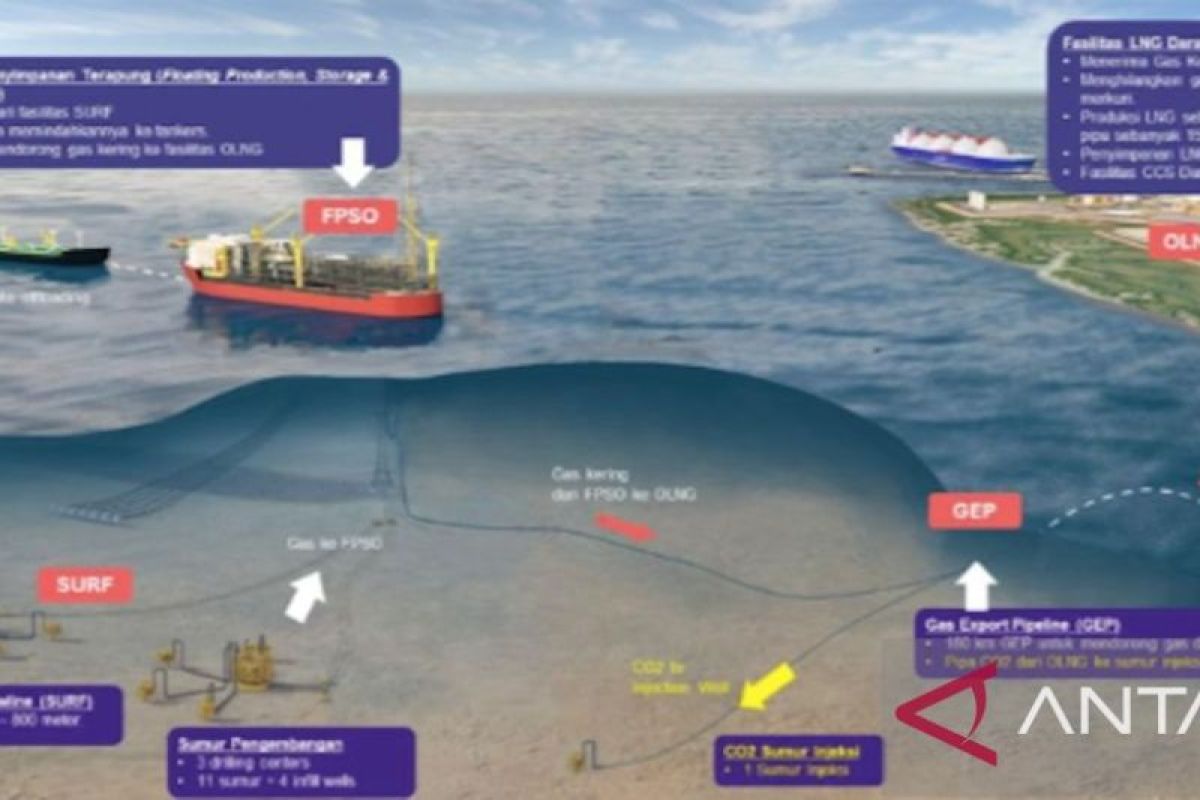
Jakarta (ANTARA) - The Minister of Energy and Mineral Resources (ESDM), Bahlil Lahadalia, stated that accelerating investments in the energy transition and resolving the strategic Masela Block project are priorities in discussions during his visit to Japan alongside the President of the Republic of Indonesia, Prabowo Subianto.
“Following directives from President Prabowo, I have been tasked with two matters. The first is to ensure the acceleration of investments in the energy transition. The second concerns Inpex and the Masela Block,” Bahlil said in his official statement, confirmed by ANTARA from Jakarta on Monday.
He explained that the Masela Block project, which has long been in the discussion phase, is now showing significant progress following intensive meetings throughout 2025.
The government has agreed on a development scheme for the project with an initial value of US$20.9 billion, which has the potential to increase in line with geopolitical dynamics and the addition of carbon capture and storage (CCS) technology.
Bahlil added that the overall investment value of the project is estimated to exceed Rp300 trillion, while emphasising the dominance of the ESDM sector in the incoming investment structure.
He stressed that the government is targeting the acceleration of the project’s implementation, including the execution of the Engineering, Procurement, and Construction (EPC) tender and the completion of the Front-End Engineering and Design (FEED) in 2026.
“Well, as the Minister of ESDM, in the President’s directives, when I met the President Director of Inpex with the President, he hopes that this project can be implemented quickly. And this year, 2026, we will conduct the EPC tender. The FEED will also be completed. And we request it to be accelerated,” he said.
Furthermore, he emphasised that accelerating this project will have a significant impact on national energy resilience, given that the Masela Block is one of the large-scale (giant) oil and gas projects that can strengthen Indonesia’s position as a global gas player.
The government is also encouraging the optimisation of gas utilisation for domestic needs to strengthen national energy downstreaming.
In addition to strengthening the oil and gas sector, the government continues to promote the use of non-fossil energy as part of the national energy transition strategy.
The utilisation of geothermal, hydropower, solar, and wind energy will continue to be encouraged as long as they are supported by efficient and competitive technology.
In this context, Bahlil affirmed that accelerating the energy transition is an important step to anticipate unpredictable global uncertainties.
“Because we never know when this geopolitics will end. So whether geothermal, water, sun, or wind, as long as there is efficient pricing technology, we will promote it,” he said.
He also assured that the government continues to conduct intensive communication and coordination across ministries, including with the Ministry of Foreign Affairs, to maintain investment certainty and the smooth running of national strategic projects amid geopolitical dynamics.
Through these various measures, the government is optimistic about strengthening national energy resilience while positioning Indonesia as a key player in the global gas and energy transition industry.