
Markets Shaken by MSCI, Indonesian Government Bond Yields Hit 7.4% as Finance Ministry Responds
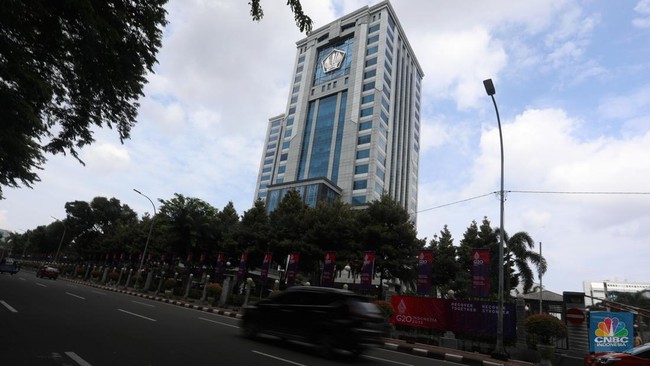
Jakarta, CNBC Indonesia — The Finance Ministry says yields on government securities (SBN) remain relatively safe, despite rising to 7% after Morgan Stanley Capital International (MSCI) raised the possibility of downgrading Indonesia’s stock market to standalone-market status.
The ministry said the yield remained competitive compared with those in European countries. Refinitiv data showed that on Wednesday (21 October 2026), the yield on 10-year Indonesian government bonds closed sharply higher at 7.446%. The yield on 10-year German government bonds stood at 3.3546%.
The sharp rise in yields indicates that investors are now demanding higher returns to hold government debt.
“Relatively, it is still safe. Compared with countries, particularly in Europe, which are in quite dire [or worrying] circumstances now, we should have confidence in Indonesia. We should believe in ourselves, because this is our country and we are a large nation,” Herman told reporters on Thursday (22 October 2026).
However, Herman did not say whether the higher yield remained affordable under the 2026 state budget (APBN). The government has set the 10-year SBN interest rate at 6.9%.
On Friday (16 October 2026), MSCI announced a consultation on whether to downgrade Indonesia’s stock market from emerging-market to standalone-market status.
MSCI highlighted several concerns in Indonesia’s equity market, particularly insufficient transparency over share-ownership structures, suspected coordinated trading, and a lack of demonstrably significant enforcement results.
Although Indonesia’s capital-market authorities have announced various improvements, MSCI said their results had not yet been consistently evident.
Indonesia now has time to demonstrate progress before a final decision on a possible status change is announced by 30 June 2027 at the latest.
The announcement immediately unsettled Indonesia’s stock market. The Jakarta Composite Index (IHSG) fell sharply over two trading days, while the rupiah remained under pressure against the US dollar.
Although MSCI’s warning was directed specifically at the stock market, the resulting concerns could spread to other financial instruments, including government bonds.
That is because foreign investors consider more than the returns a country offers. They also assess transparency, regulatory certainty and the government’s ability to maintain confidence in the investment climate.
Source: jawawa.id (https://jawawa.id/newsitem/markets-shaken-by-msci-indonesian-government-bond-yields-hit-7-4-as-finance-ministry-responds-1792673466)
Originally published by CNBC Indonesia (https://www.cnbcindonesia.com/market/20261022184357-17-778688/pasar-diguncang-msci-yield-sbn-ri-tembus-74-kemenkeu-buka-suara), translated from Indonesian