
Marketplace tax collection helps regulate digital economy: Economist
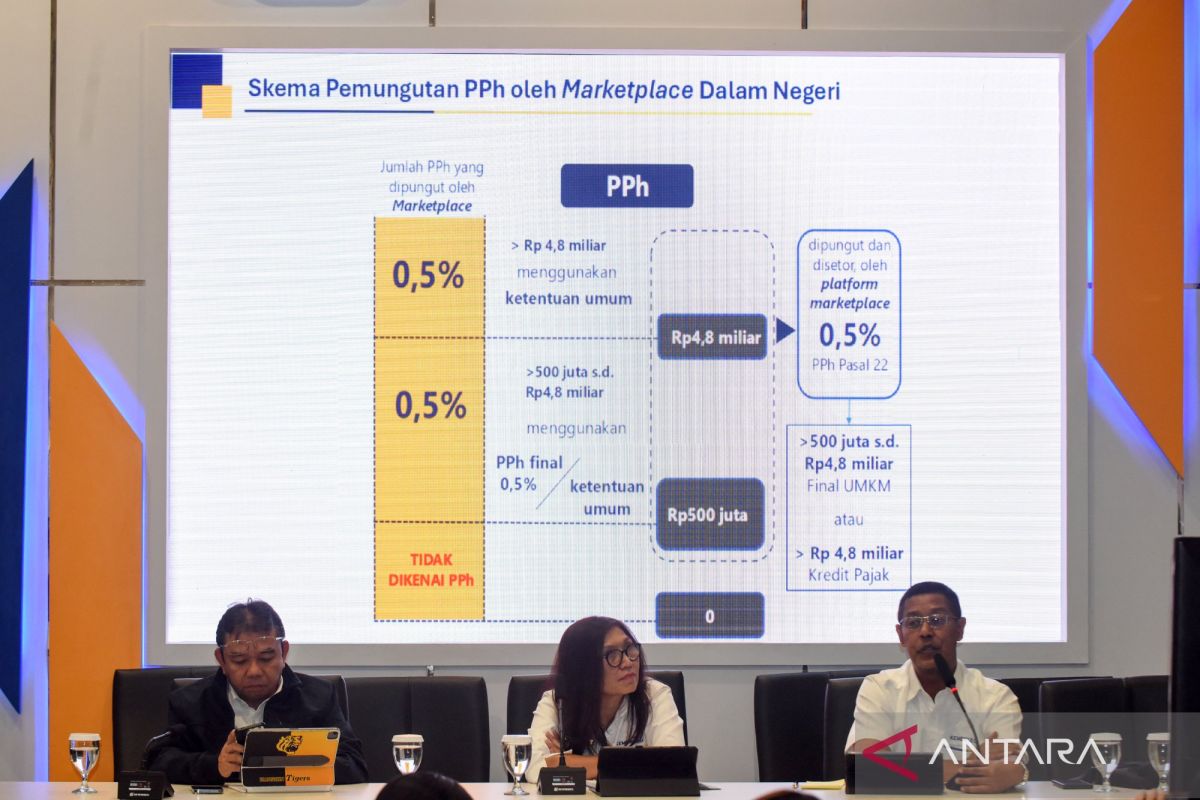
Jakarta - Economist Yusuf Rendy Manilet from the Center of Reform on Economics (CORE) has assessed that the policy of collecting Income Tax (PPh) Article 22 at a rate of 0.5 percent on marketplace transactions will help regulate the digital economy. He noted that the digital economy is growing rapidly, while a portion of transactions has so far relied on self-reporting, meaning compliance levels are not always optimal. “Through this mechanism, the government is seeking to broaden the tax base while creating fairer treatment between online and offline business operators,” Yusuf said when contacted in Jakarta on Thursday. Yusuf explained that this levy is not a new type of tax. The mechanism merely changes the collection method to be more automatic through platforms such as Tokopedia, Shopee, Lazada, and Blibli. “From an administrative perspective, this approach makes supervision more efficient and reduces the potential for unreported tax,” he said. Regarding micro, small, and medium enterprises (MSMEs), Yusuf highlighted the potential for selling price adjustments due to changes in entrepreneurs’ cash flow, especially for businesses with thin margins or high working capital requirements. However, he added, the government still provides protection for micro-enterprise operators. Traders with a turnover below Rp500 million who submit a statement letter to the marketplace are not subject to automatic collection, but must still have a Taxpayer Identification Number (NPWP) and file an Annual Tax Return (SPT). “This means the focus of this policy is not solely to increase state revenue, but also to build a culture of tax compliance from an early stage,” Yusuf stated. The biggest challenge lies in implementation, according to Yusuf. Many MSME operators still do not understand that this is a change in the administrative mechanism, not an additional tax burden. Therefore, Yusuf stressed that education needs to be a priority. “Marketplaces need to be involved in providing easy-to-understand guidance, while the Directorate General of Taxes’ system must allow traders to monitor tax deductions, credit taxes that have been collected, and apply for restitution in the event of overpayment,” he said. In addition, transaction data protection must also be a concern. Because marketplaces will share data with tax authorities, the government needs to ensure system security and provide certainty that the data will only be used for tax administration purposes. Yusuf said that the trust of business operators will be crucial. Overall, Yusuf assessed that the phased approach implemented by the government is quite appropriate. The Rp500 million turnover threshold provides protection for micro-enterprise operators, while collection is initially carried out through the four largest marketplaces that have adequate infrastructure. “After six to twelve months of implementation, the government should conduct an evaluation based on field data to see the impact on compliance, state revenue, and the sustainability of MSMEs before expanding the scope of the policy,” he said.