
Market Welcomes Prabowo's Economic Direction in 2027 Draft Budget
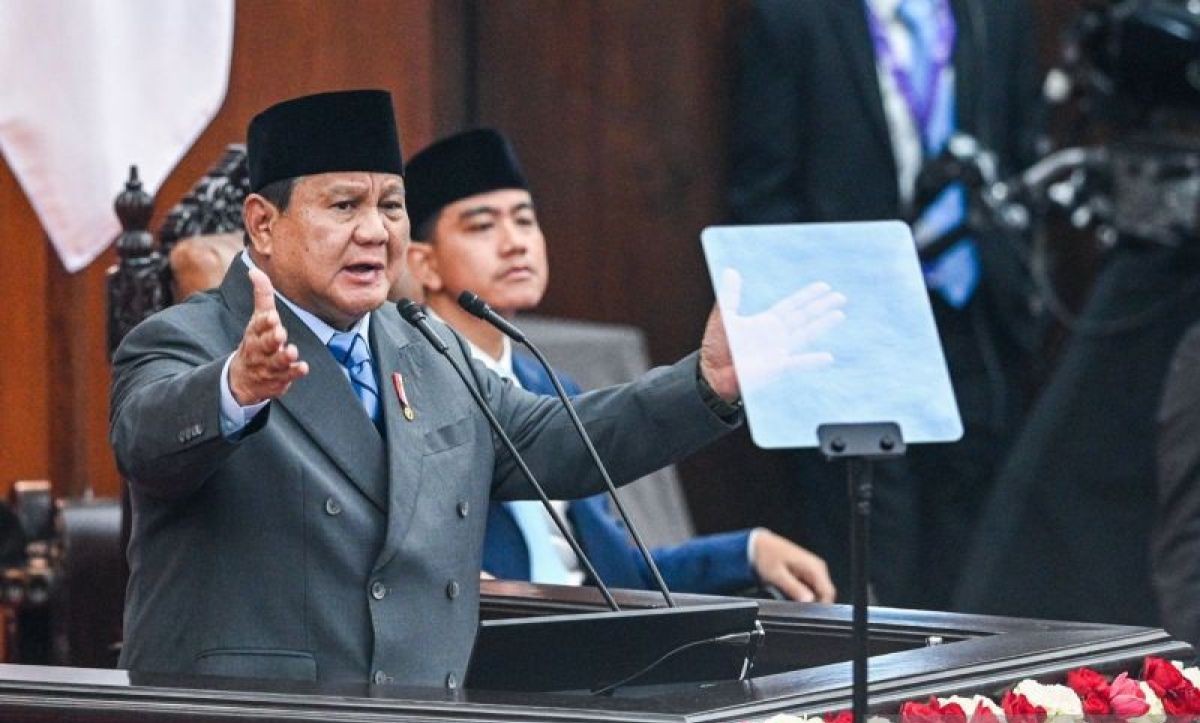
Financial markets have responded positively to President Prabowo Subianto’s delivery of the 2027 Draft State Budget (RAPBN) and its accompanying economic direction. The Jakarta Composite Index (IHSG) closed up 1.59% at 6,401, while the rupiah strengthened 0.28% against the US dollar on Friday (14/8).
Trimegah Sekuritas Indonesia Chief Economist Fakhrul Fulvian assessed that the President’s speech provided a clearer picture of Indonesia’s economic development path in the coming years. He noted that the positive market reaction was directly reflected in the strengthening of the IHSG and the rupiah exchange rate.
Fakhrul explained that the policy direction presented demonstrates an effort to unite various national economic forces to achieve higher growth, job creation, and equitable welfare. He highlighted that strategic initiatives such as Danantara Sumberdaya Indonesia (DSI), the Danantara Development Management Fund, the Indonesia Financial Center, the Strategic Commodities Exchange, and the Bullion Bank are all interconnected.
"These various policies share the same goal: to encourage Indonesia’s economic resources to work more productively and generate greater added value for society," he stated.
The government is now seen as positioning the business world, capital markets, the financial system, state-owned enterprises, natural resources, and the public as parts of the economic growth engine, rather than relying solely on the state budget. In this vision, the government’s role is to build the foundation and create a business climate, while the private sector and society become the drivers of investment, innovation, and business expansion.
Regarding the budget posture, Fakhrul highlighted the RAPBN 2027 deficit target of 2.40% of GDP, which he said demonstrates the government’s commitment to maintaining fiscal discipline amid an ambitious development agenda. He added that investors will scrutinise not just the deficit figure but also how the development agenda is financed and private investment is encouraged.
Although the development vision is increasingly clear, the market is still awaiting detailed implementation plans. The main challenge for the government is to ensure this vision is translated into consistent, measurable, and predictable policies for business actors. Fakhrul emphasised that strengthening export governance through DSI, developing downstream industries, and boosting productivity in strategic sectors will be key to long-term growth.
Meanwhile, House of Representatives Commission XI Chairman Mukhamad Misbakhun appreciated the presentation of the Macroeconomic Framework and Fiscal Policy Principles (KEM-PPKF) for 2027. The President is targeting economic growth of 5.8 to 6.5 percent, with state revenue set at 11.82 to 12.40 percent of GDP. Misbakhun noted that market participants will be watching closely to see how strongly the government can provide confidence regarding fiscal stability and debt management.