
Market Watches Perry Warjiyo's Resignation, Rupiah and IHSG Under Scrutiny
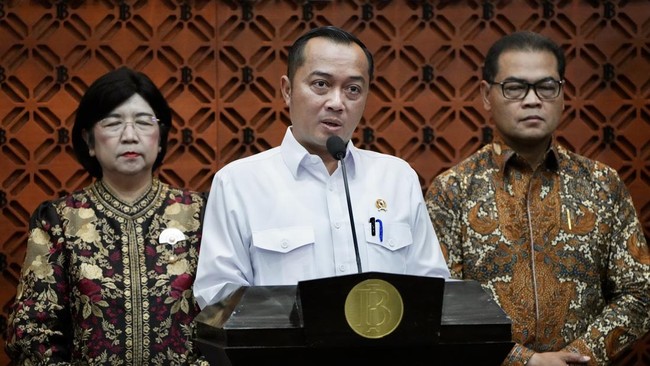
Jakarta, CNBC Indonesia - Perry Warjiyo has officially stepped down from his position as Governor of Bank Indonesia (BI) effective 25 July 2026. He submitted his resignation letter to President Prabowo Subianto after seven years leading the central bank.
Analyst Lukman Leong from Doo Financial Futures stated that this development could become a negative sentiment for the Indonesian capital market because it relates to the independence of BI as the country’s central bank. ‘I see this as potentially negative sentiment for the capital market and the rupiah. This is because it can be considered or linked to BI’s independence,’ he said when contacted by CNBC Indonesia on Monday (27/7/2026).
Meanwhile, MNC Sekuritas analyst Herditya noted that although the Jakarta Composite Index (IHSG) is technically expected to continue its correction, Perry Warjiyo’s resignation will influence monetary policy and the rupiah exchange rate. ‘The market will observe this transition and the continuity of monetary policy going forward, as well as the rupiah exchange rate,’ he stated.
However, Head of Research at Kiwoom Sekuritas, Liza Camelia Suryanata, views the resignation as a test of Bank Indonesia’s independence following the P2SK law, especially after the latest revision in 2026. ‘Perry’s resignation certainly cannot be immediately considered as evidence of intervention. But I think the P2SK has made the fence between BI, the government, and the DPR much thinner,’ she said.
According to her, de jure, BI remains an independent institution. The law still stipulates that BI must be free from interference by the government or other parties, and BI also has an obligation to reject intervention. ‘But what we need to monitor now is de facto independence, or how that independence is actually implemented in practice,’ she added. She noted that since the P2SK law, BI’s mandate has become much broader. BI is not only asked to maintain the stability of the rupiah, but also to support the stability of the payment system, the financial system, real sector growth, and even job creation.