
Market volatility affects life insurance industry investments
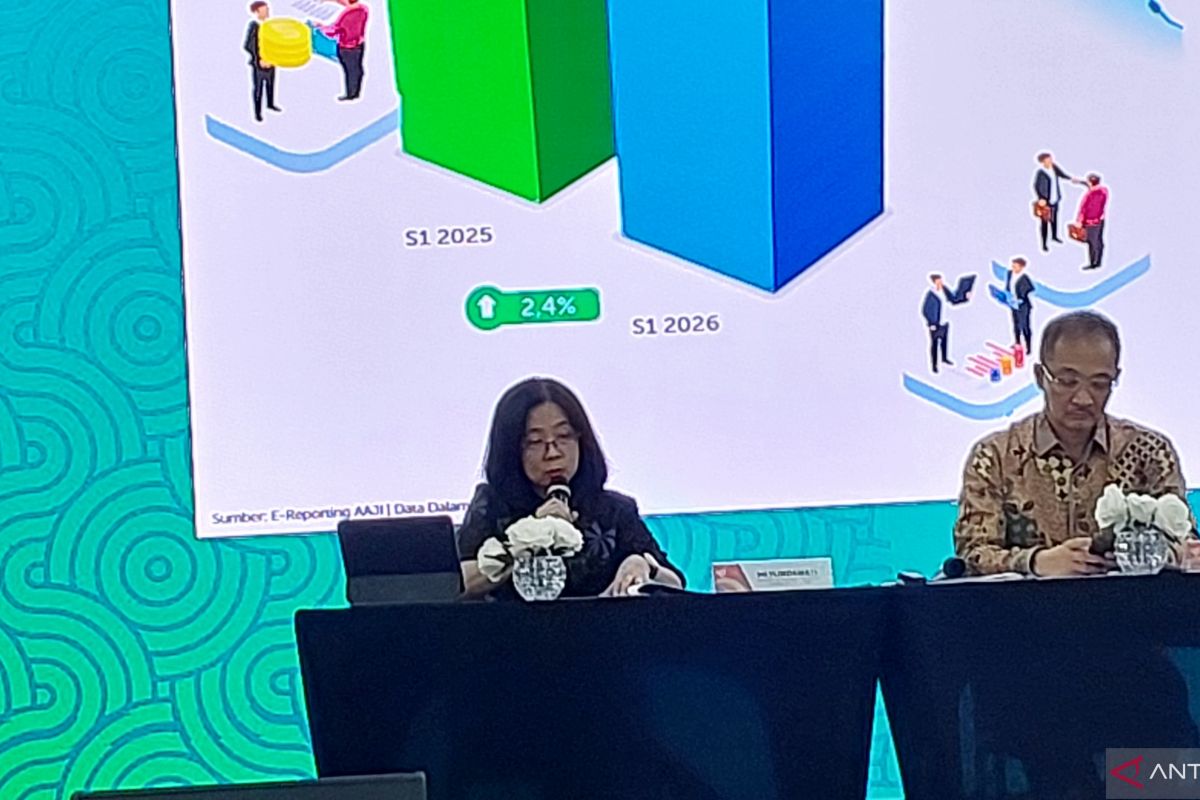
The Indonesian Life Insurance Association (AAJI) recorded the investment performance of the life insurance industry in the first half of 2026 at Rp564.42 trillion, representing a growth of 2.4 per cent despite facing financial market volatility.
Meylindawati Tjoa, AAJI’s Head of Finance, Capital, Investment, and Tax, stated that in response to market dynamics, the industry is maintaining investment strategies that consider risk profiles, long-term liability requirements, and the principle of prudence.
“Performance within a specific period alone cannot be used to draw conclusions about the overall market cycle. Therefore, the industry’s approach continues to prioritise the principles of prudence, diversification, and the matching of assets and liabilities,” Meylindawati said during a press conference for the Life Insurance Industry Performance Report for H1-2026 in Jakarta on Monday.
Meylindawati noted that total assets in the life insurance industry reached approximately Rp645.08 trillion in the first half of 2026, a 2.3 per cent increase compared to the same period the previous year.
Meanwhile, investment returns, which were recorded at a positive Rp16.19 trillion in the first half of 2025, turned negative at Rp2.47 trillion in the first half of 2026. AAJI stated that the change in investment returns during H1-2026 must be viewed within the context of financial market conditions and the long-term oriented nature of the life insurance industry’s investments.
She added that when facing market dynamics, the life insurance industry needs to implement strategies with a portfolio structure diversified across various investment instruments.
Government Securities (SBN) remain the largest placement, reaching Rp251.64 trillion, or approximately 44 per cent of the industry’s total investments. In addition to SBN, the industry maintains diversification through equities at approximately 18 per cent, mutual funds at 12 per cent, and corporate bonds at around 10 per cent. Other parts of the portfolio include deposits, land and buildings, and direct equity participations.
“The large placement in SBN is part of the industry’s effort to maintain portfolio stability, while simultaneously supporting government development financing,” she added.
Meylindawati stated that this composition shows the industry is strengthening its proportion of relatively stable instruments while maintaining diversification. For the life insurance industry, investment strategies are not only aimed at pursuing short-term returns but are also adjusted to meet liquidity needs and obligations to policyholders.
She noted that the life insurance industry maintains a strong capacity for managing long-term funds. The growth in assets and investments amidst market dynamics indicates that the industry’s financial foundation remains intact.
AAJI believes that the consistent application of the principles of prudence, portfolio diversification, and the matching of assets and liabilities is key to maintaining investment resilience in the face of changing market conditions, while also supporting the fulfilment of obligations to policyholders.