
Market Responds Positively to MSCI Announcement
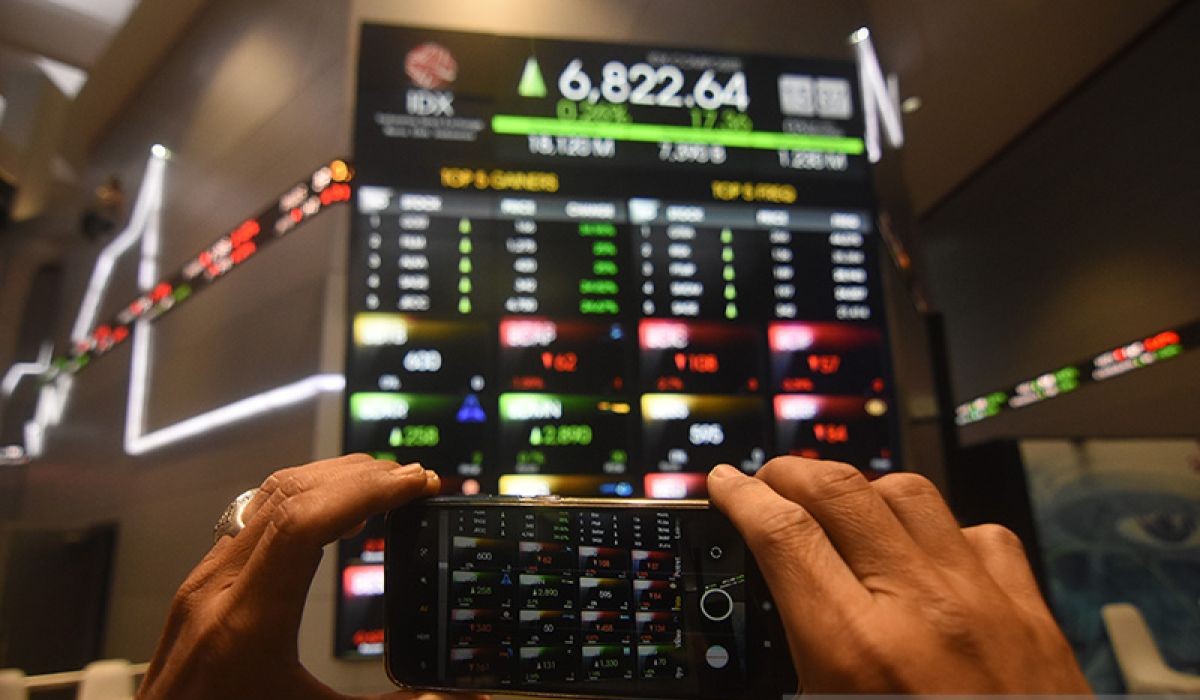
The Jakarta Composite Index (IHSG) strengthened by 0.71% at the opening of trading on Wednesday (24/6) at 09.00 WIB, rising 43.50 points to 6,144. This gain occurred after Indonesia was retained in the emerging market category in the 2026 Morgan Stanley Capital International (MSCI) Market Classification Review. Economist at Brawijaya University, Noval Adib, assessed that the MSCI decision was welcomed positively by market players. “The market responded positively to this MSCI announcement and now the IHSG is up 0.7%,” Noval said. He explained that the positive market response had actually been visible earlier, as the decision to retain Indonesia in emerging market status was deemed to have been priced in by market participants. This refers to the Global Market Accessibility Review announcement on 19 June 2026, which highlighted the need for improved transparency and information accessibility in the Indonesian capital market. “The official MSCI announcement certainly brings relief to the public; it is as if Indonesia has just won one round of the battle,” he said. Nevertheless, Noval assessed that the latest MSCI announcement still provides an important affirmation regarding the warning that Indonesia could potentially be downgraded to frontier market status if there is no progress on improving the accessibility and integrity aspects of the Indonesian capital market by the November 2026 evaluation. He noted that there remains significant homework for capital market authorities, particularly the Financial Services Authority (OJK) and the Indonesia Stock Exchange (BEI), before the next evaluation deadline. “This is not yet winning the overall war because there is still homework to continue improving the stock market,” he said. Similarly, Chief Economist of Trimegah Sekuritas Indonesia, Fakhrul Fulvian, assessed that MSCI’s decision to retain Indonesia in the emerging market category is positive news for the national capital market. According to him, the decision removes the risk of a downgrade in the short term while serving as recognition of the reform direction taken by regulators. “This is a constructive outcome. MSCI has retained Indonesia in the Emerging Market category and explicitly acknowledged the various reform measures that have been undertaken,” he said in an official statement. Fakhrul assessed that the 2026 Market Classification Review results show MSCI does not doubt Indonesia’s commitment to reform, but rather emphasises the importance of tangible implementation on the ground. The main focus has now shifted from policy formulation to the effectiveness of its execution. “If previously the challenge was designing reforms, now the challenge is demonstrating that these reforms truly work. Global investors want to see real improvements in transparency, healthy price formation, supervisory quality, and market integrity,” he stressed. He added that the issues highlighted by MSCI do not lie in Indonesia’s economic growth, but in the quality of capital market infrastructure. Therefore, he believes what is needed now is consistency in implementation, rule enforcement, and improved quality of market supervision. Regarding the deadline until November 2026, Fakhrul assessed that there is still sufficient time for Indonesia to demonstrate convincing progress. He stressed that the main reform frameworks are already in place and the process is not starting from scratch. “Indonesia is not starting from zero. What is needed now is consistency in implementation and the ability to show measurable results to global investors,” he explained. According to him, the Indonesian capital market is currently in a relatively better position because uncertainty over the reform direction has diminished and regulators have shown a rapid response to feedback from global investors. However, he cautioned that the risks have not completely disappeared. He assessed that November 2026 will be a crucial evaluation point that determines the sustainability of Indonesia’s capital market reforms. Investors, he said, will directly assess improvements in ownership transparency, supervisory effectiveness, consistency of law enforcement, and the credibility of stock price formation. “Ultimately, what is assessed is not the number of new regulations, but the trust that is successfully built through the implementation of those regulations,” he said. Fakhrul emphasised that successfully retaining emerging market status not only impacts the stock market but also the overall perception of Indonesia’s financial ecosystem. He concluded that the period leading up to November 2026 is an important opportunity to prove the effectiveness of the reforms that have been undertaken. “MSCI is now asking Indonesia to prove that the reforms that have been made truly work,” he said. “If this momentum can be maintained, I am optimistic that Indonesia can retain its position as an emerging market and strengthen its attractiveness in the eyes of global investors,” Fakhrul concluded.