
Mark Zuckerberg and Elon Musk Are Wealthy, But Not Yet as Powerful as the Fords?
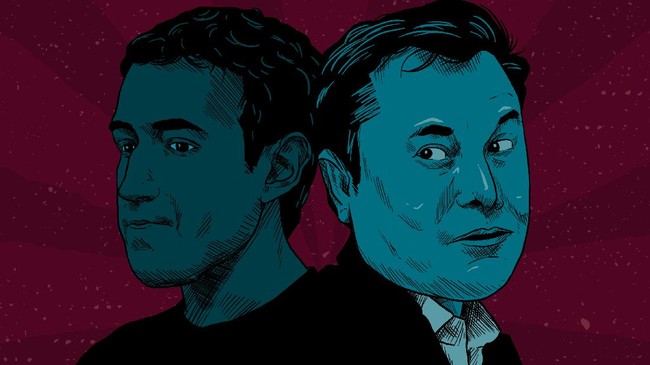
Names like Sam Altman, Dario Amodei, Demis Hassabis, Elon Musk, and Mark Zuckerberg have become the primary faces of the artificial intelligence (AI) revolution. Their influence is so profound that they are often regarded as shapers of the global technology future. However, behind this spotlight, an important question arises: do these “famous five” truly possess economic power on the scale of past industrial giants? AI Is Big, But Has Not Yet Produced “Conglomerates” It is undeniable that artificial intelligence (AI) is one of the most advanced technologies today. From entertainment to military needs, its impact is beginning to be felt across various sectors. However, unlike previous technological waves, AI has not yet fully given birth to “conglomerates”—massive companies that absorb large numbers of workers, generate stable profits, and dominate economic structures. To date, the AI sector has not created a massive industrial ecosystem like those produced by the automotive, oil, or steel sectors. As a comparison, ten years after its founding, Ford Motor Company achieved profits of around US$1 billion (in current value), while OpenAI, of similar age, is still far from profitability. The AI business model heavily relies on high-cost computing, limited talent, and continuously swelling investment needs. This situation means the economic power generated is not yet comparable to classic industrial technologies. With these constraints, it will take years for these AI figures to reach the peak of their power. Compare with Old Conglomerates In the history of capitalism, true power is not only born from innovation but from the ability to distribute technology on a mass scale, thereby transforming societal ways of life. The technologies they promoted were not only innovative but also created millions of jobs, generated substantial profits, and left a legacy that is still felt today. Elon Musk and Mark Zuckerberg are indeed active in the AI sector, but their businesses are not entirely centred there. Both are still supported by larger empires (Musk with Tesla and SpaceX, and Zuckerberg with Meta). In contrast, business players who truly make AI their core business have not yet shown comparable levels of success. When States Begin to Restrict the Tech Kings In the history of capitalism, the relationship between big entrepreneurs and the state has never been truly neutral. In the 19th century, tycoons had far greater freedom of movement than today. Andrew Carnegie was even known for harshly suppressing labour actions. J. P. Morgan wielded such great influence that he effectively acted as a central bank during the 1907 financial crisis. Andrew Mellon was able to serve as Secretary of the Treasury while still controlling his business empire. However, entering the 20th century, states began to take a more active role in limiting such power. In theory, capitalism is impersonal and decentralised. But in practice, development directions are often determined by a handful of influential individuals. Something similar could occur in the AI era; figures like Sam Altman or Elon Musk may not yet be as powerful as past conglomerates, but looking at history, the emergence of equivalents to Henry Ford or John D. Rockefeller is only a matter of time.
Source: jawawa.id (https://jawawa.id/newsitem/mark-zuckerberg-and-elon-musk-are-wealthy-but-not-yet-as-powerful-as-the-fords-1776844294)
Originally published by CNBC Indonesia (https://www.cnbcindonesia.com/research/20260422110145-128-728814/mark-zuckerberg--elon-musk-kaya-raya-sih-tapi-belum-sehebat-ford-cs), translated from Indonesian