
Maritime workers on the front line safeguarding energy supplies
From upstream to downstream, we are the initial support. When a ship cannot berth, there is no unloading at the refinery, and production can be affected.
Indramayu (ANTARA) – On land, crude oil is processed into a range of fuel products. But long before it reaches a refinery, the valuable liquid first arrives at offshore floating facilities, places that often escape the attention of the general public.
It is out at sea that Maman Suherman carries out his daily routine. On Thursday afternoon (22 October), as the sun beat down on the coast and the heat drew sweat from his skin, his gaze remained fixed on the open water.
At precisely 1.34 pm Western Indonesian Time, he prepared to head out to sea. Maman was going to inspect the condition of the Single Point Mooring (SPM), a vital link in the energy supply chain for the Balongan Refinery in Indramayu, West Java.
“The vessel is moving towards the 35,000-deadweight-tonne (DWT) SPM. It is slowly leaving the jetty,” he said, speaking to port staff on a black landline telephone.
The 57-year-old, who is from Kuningan, West Java, sat at the helm, looking ahead as he worked the controls and monitored the navigation panel.
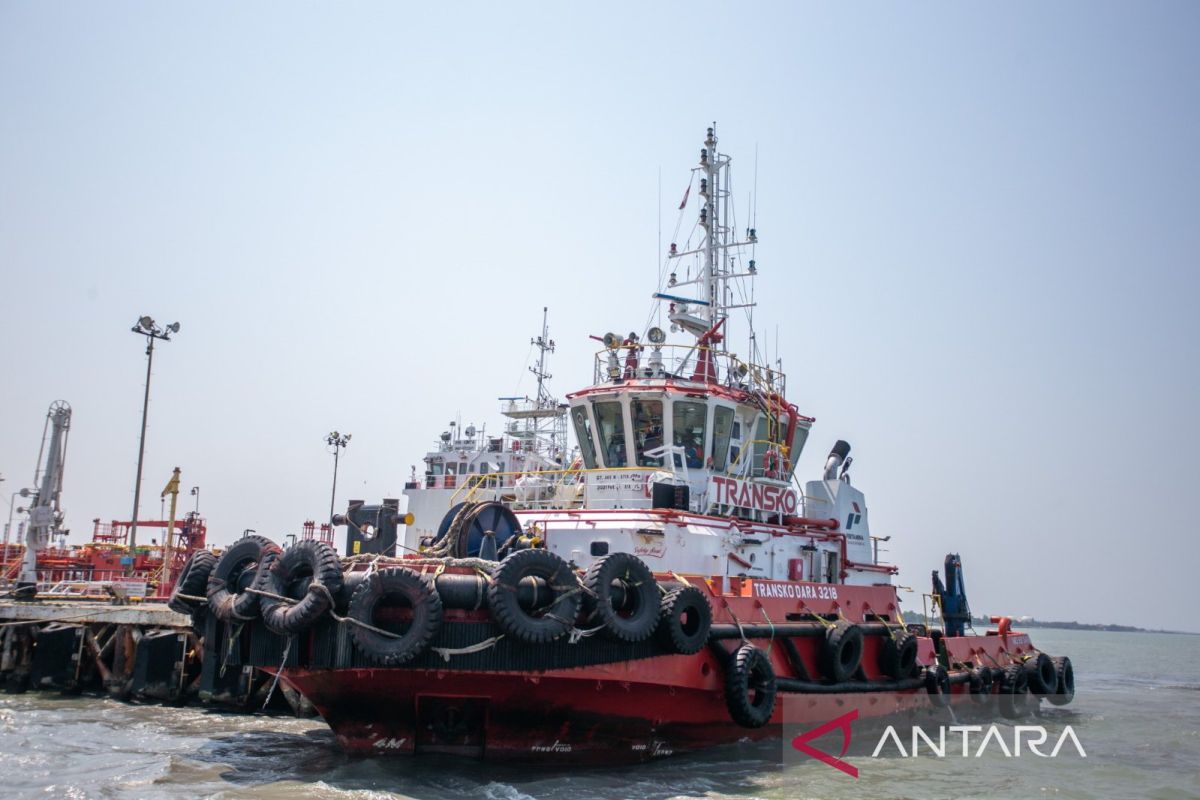
The vessel he was operating was the Transko Dara 3218. Owned by PT Pertamina Trans Kontinental (PTK), the tugboat is 33.36 metres long, 11 metres wide and has a gross tonnage of 465 GT.
The vessel is equipped with an azimuth stern drive (ASD) system, which allows its propulsion units to rotate through 360 degrees. This makes it more manoeuvrable in confined waters, particularly when assisting tankers to berth or leave their moorings.
As well as helping move tankers, the Transko Dara 3218 transports personnel to offshore facilities, for example when staff need to reach the SPM.
Slowly, the tugboat piloted by Maman moved away from the port. The expanse of sea opened up, while activity around the dock appeared to shrink as the distance grew.
Amid the day-to-day operations in the area, the 2,000-metric-tonne tanker PIS Cinta was seen alongside the jetty. It was loading aviation fuel to meet demand from the aviation sector, while Maman continued towards the SPM facility.
Before approaching the SPM, the tugboat can head to a standby anchorage about 10–15 nautical miles from the facility. From there, vessel movements are adjusted according to operational needs and conditions at sea.
Source: jawawa.id (https://jawawa.id/newsitem/maritime-workers-on-the-front-line-safeguarding-energy-supplies-1793227842)
Originally published by Antara (Indonesian) (https://www.antaranews.com/berita/5818283/dedikasi-insan-maritim-di-garis-depan-mengawal-pasokan-energi), translated from Indonesian