
Marie Elka: "Investing in Women is Good Economics and Good Business"
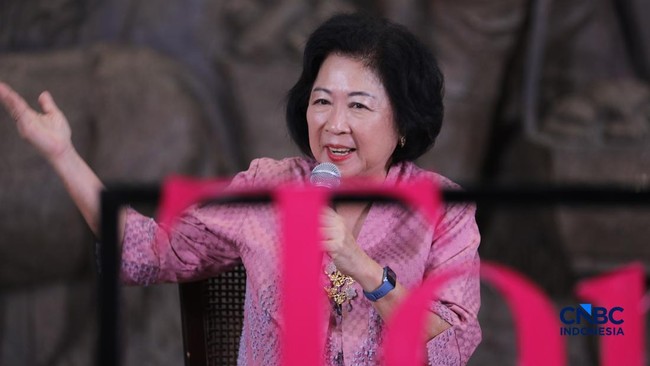
Jakarta, CNBC Indonesia - Vice Chair of the National Economic Council Marie Elka Pangestu emphasised that increasing women’s roles in the workforce is not merely an equality issue. It has also been proven to directly impact business performance and the economy.
The statement was delivered by Marie during a discussion on women’s roles in various industry sectors at the Top Woman Fest 2026, an initiative by CNBC Indonesia, last Saturday. She assessed that although there has been progress compared to the era of R.A. Kartini, the challenges for women to reach leadership positions remain significant.
Marie, who has had a career spanning more than four decades, stated that data shows companies with more diverse leadership, including women, tend to perform better. “Investing in women is good economics and good business,” she said, quoted on Thursday (20/4/2026).
She explained that empirically, companies with female representation at the board level record higher profits, better compliance and workplace safety rates, and a stronger long-term orientation. According to her, women in strategic positions tend not only to focus on short-term profits but also to consider business sustainability, research, and innovation development.
Nevertheless, data in Indonesia shows that women’s participation at leadership levels remains low. Marie revealed that only around 4% of CEOs in companies listed on the stock exchange are women.
“Moreover, nearly half of the companies have no women in leadership positions, meaning that in terms of the workforce, women’s participation rate is only around 56%, far below men who reach around 85%,” said the former Minister of Trade.
This means, she continued, that the potential of female human resources has not yet been optimally utilised in the national economy. Marie also outlined four main barriers that make it difficult for women to rise to top positions.
The first is the burden of the care economy, where women still bear a significant responsibility for family care. She noted that women on average spend more than 13 hours a day on domestic work, much higher than men.
“The second is what is called a mentor. Women not only need mentors but also sponsors who truly push them to higher levels,” she said.
The third is the limited leadership pipeline, where women are not yet sufficiently prepared from mid-level to advance to strategic positions. Meanwhile, the fourth barrier stems from cultural norms that still influence perceptions of women’s roles in the workforce.
In addition, Marie highlighted challenges in the digital era. She assessed that women still tend to lack confidence in utilising technology, thus requiring special attention to enhance digital capacity.
Companies are expected to provide support for women’s needs, including flexible work policies and career development. Meanwhile, the government needs to introduce policies that encourage a more inclusive work ecosystem.
“So if asked ‘then what needs to be done on all four, that might be asked to each one, but the point is everyone plays a role, the business world, government, and society,’” she said. “All parties must play a role, including families and society.”
She emphasised that strengthening women’s roles is not just about justice. But, she firmly stated, it is also an important strategy to drive more sustainable economic growth.