
Mari Elka: ASEAN Must Remain Open Amid Geopolitical Tensions
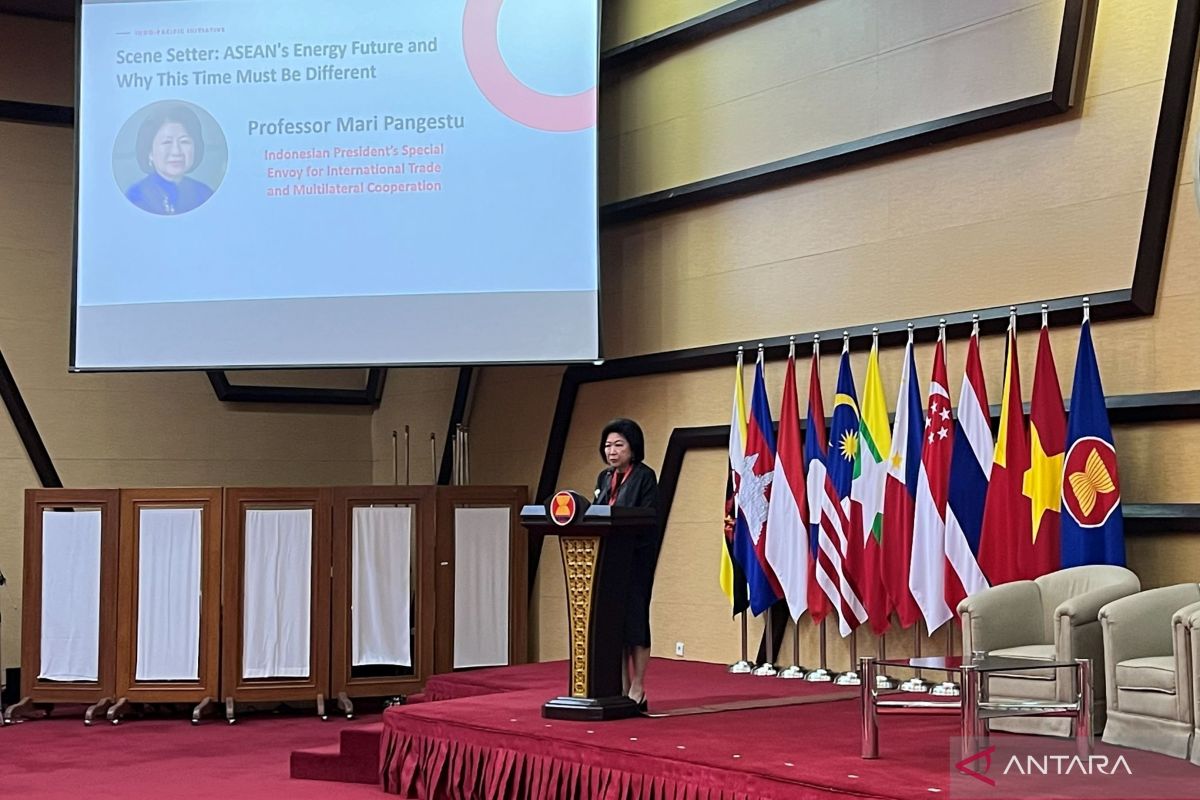
The Special Envoy of the President for International Trade and Multilateral Cooperation, Mari Elka Pangestu, has emphasised the importance of ASEAN remaining open and not withdrawing from multilateralism amidst current geopolitical tensions.
“Our task at this time is not to withdraw from openness, but to build resilience as an open system and to bridge the gap between our ambitions and our capacity for realisation,” said Mari Elka during an ASEAN-Canada strategic dialogue regarding energy security in Jakarta on Tuesday.
She explained that over the last 40 years, the ASEAN development model has utilised openness as a foundation, manifested through open markets, predictable rules, and stable relations with external powers.
However, the former Minister of Trade noted that ASEAN is currently facing a ‘polycrisis’—a condition where various global crises, including economic, environmental, geopolitical, and technological issues, occur simultaneously and interact to reveal vulnerabilities within the region.
These crises, according to her, range from the COVID-19 pandemic and the climate crisis to the decline of multilateralism.
Furthermore, regarding energy security, the former Minister of Tourism and Creative Economy encouraged ASEAN to accelerate the development of the ASEAN Power Grid and to optimise sustainable alternative resources, such as solar, hydro, and geothermal energy.
“Let us pursue energy diversification and not allow a single disruption to bring such significant consequences to our economies,” she stated.
Mari Elka acknowledged that ASEAN is known as a region that emphasises preparedness, as demonstrated by the ASEAN Petroleum Security Agreement (APSA) since 1986, which remains essential today.
She expressed satisfaction in seeing these principles still being followed, noting how ASEAN leaders focused their efforts on responding to the impacts of the crisis in the Strait of Hormuz with responsibility and a clear timeline.