
Marhaenism and the Relevance of Bung Karno's Thought
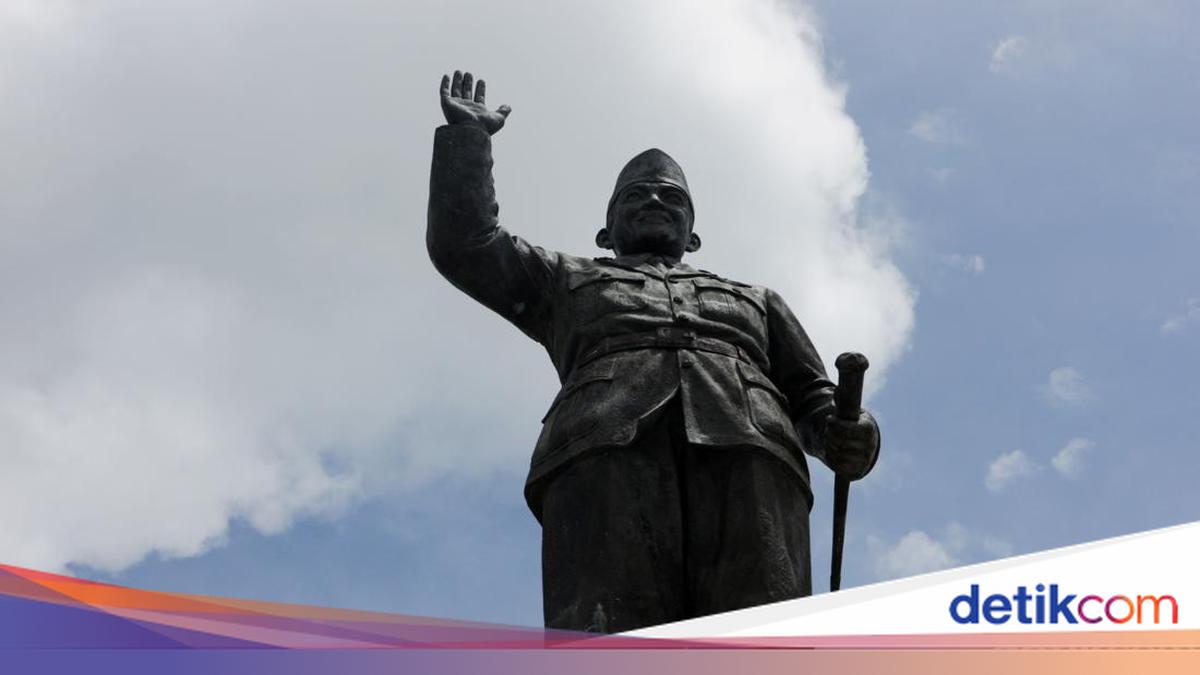
There was an interesting section in President Prabowo Subianto’s speech at the Nusantara Building, Parliament Complex, Senayan, Jakarta on Friday (14/8/2026). When discussing the direction of Indonesia’s economy, the President mentioned Marhaenism, an idea born almost a century ago from Bung Karno’s intellectual struggle over the fate of ordinary people.
The mention is interesting because it brings an old concept back to the centre of Indonesia’s economic problems today. The question then is no longer whether we still recognise the term Marhaenism, but whether Bung Karno’s way of thinking remains relevant when society, technology and economic structures have changed so profoundly.
For some in today’s generation, the word Marhaen may sound like a term from a history book or a political speech from the past. Yet the story of its birth is simple and humane, beginning with Bung Karno’s encounter with the daily life of the Indonesian people.
From Farmer Marhaen to Digital Worker
In Bung Karno: Penyambung Lidah Rakyat Indonesia, the autobiography written with Cindy Adams, Bung Karno recounts his encounter with a farmer when he was young and living in Bandung. Bung Karno asked about the land being worked, the farming tools used, and the harvest. The land was his own, as were the tools and the produce. When asked his name, the farmer replied: Marhaen.
The conversation left a deep impression because standing before Bung Karno was a person who owned the means of production and worked with his own labour, yet remained poor. From that experience Bung Karno found a picture he considered more suitable for reading Indonesian society than the proletariat image that developed in industrial Europe.
Many Indonesians at that time owned the means of production on a small scale. Farmers owned land and hoes, fishermen owned boats, traders owned stalls, while craftsmen owned their own tools. They worked and produced something, but the economic structure meant their output could not yet bring them a prosperous life.
Almost a hundred years later, the story still feels close. Farmers may now use small tractors, fishermen use motorised boats, stalls accept digital payments, while ride-hailing drivers own motorcycles and smartphones. The tools of production have changed, but the fundamental problem remains recognisable: someone works hard and owns their tools, yet their bargaining position is weak within an economic structure far larger than themselves.
Today’s Marhaen can be a farmer who owns rice fields but continually faces production costs and uncertain harvest prices. It can be a fisherman who owns a boat but whose income is eroded by fuel prices and long trade chains, or an MSME actor who works every day but struggles to obtain capital and expand their market.
The digital economy even presents a new face of Marhaen. An app-based driver owns a vehicle and a mobile phone, but fares, algorithms and access to consumers are determined by a system beyond their control. Bung Karno certainly never knew algorithms or the platform economy, but his question can still be applied: who holds the greatest power in an economic relationship and how much do working people enjoy the value they produce?
That is where the relevance of Marhaenism should be located. Every era has different forms of inequality and production relations, so each generation has the task of identifying who the Marhaen of its time is and what forces make it difficult for them to develop.
Independence and the Capability of the People
This perspective is closely related to how Bung Karno understood independence. In Mencapai Indonesia Merdeka, written in 1933, Bung Karno described an independent Indonesia as ‘a bridge—even a golden bridge’. Independence opens the way for the Indonesian nation to build its own society, while the longer work begins only after the bridge has been crossed.
Bung Karno posed the question of what would happen on the other side of that bridge: whether the nation would move towards the salvation of Marhaen or return to the misery of Marhaen. The question of who enjoys independence was thus already present in his thinking long before the Republic of Indonesia was established.
From this we can understand why Bung Karno spoke of socio-nationalism and socio-democracy. The terms may sound from a distant era, but their substance is easy to grasp. Nationalism must have consequences for the lives and welfare of Indonesian people, while democracy must give the people the opportunity to have a better economic life.
In his speech of 1 June 1945, Bung Karno spoke of politieke-economische democratie, political democracy as well as economic democracy. He also referred to Jean Jaurès, the French socialist, when explaining the limitations of parliamentary democracy if political equality runs alongside economic inequality.
A worker and a company owner may have equal political rights when in the voting booth, but once they leave the booth their economic capabilities are very different. One has capital, technology, banking access and networks, while the other mainly has labour and skills. A mature democracy therefore needs to provide opportunities for as many citizens as possible to have an increasingly strong economic position.
Interestingly, several decades later there is a convergence with modern development economics thought. Amartya Sen in Development as Freedom views development as the expansion of the real freedoms that people possess, including the capability to obtain education, health and economic opportunity.