
Mapping the SOE Insurance Consolidation: Who are the Survival Entity Candidates?
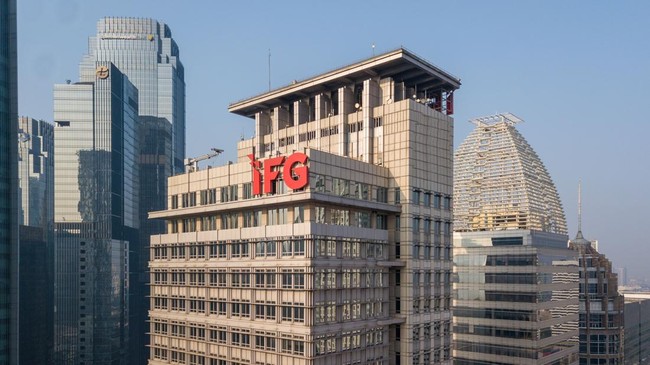
The consolidation of State-Owned Enterprise (SOE) insurance companies is currently underway, with execution targeted for the end of this year or early next year at the latest. The process is presently in the due diligence and valuation stage, conducted by independent consultants.
Under the streamlining scheme commanded by Danantara, there is no definitive explanation regarding the exact number or which specific entities will become the ‘survival entities’. Initially, it was suggested that SOE insurance companies would be merged into three entities: general insurance, life insurance, and credit insurance. However, recent discussions suggest the streamlining could expand to eight entities, covering general insurance, life insurance, Sharia general insurance, Sharia life insurance, guarantees, Sharia guarantees, reinsurance, and Sharia reinsurance.
CNBC Indonesia Research has analysed the probability of potential survival entities across nine business lines in the insurance industry. The assessment is based on factors such as financial performance, capital capacity, business scale and positioning, and infrastructure readiness. Two scenarios were tested in this research. Scenario 1 involves only the IFG and Indonesia Re ecosystem entities, including Jasindo, Askrindo, Jamkrindo, IFG Life, Inhealth, Asei, Jasaraharja Putera, Jasindo Syariah, Askrindo Syariah, Jamkrindo Syariah, Indonesia Re, and Nasional Re. Scenario 2 adds Pertamina’s insurance subsidiaries, Tugu Insurance and Tugure, to the consolidation.
Regarding General Insurance, Jasindo and Askrindo are strong candidates in Scenario 1, but both would face competition from Tugu Insurance, which has a high probability in Scenario 2. In 2025, Jasindo recorded assets of IDR 13.92 trillion, equity of IDR 2.61 trillion, and a profit of approximately IDR 459 billion, with growth in strategic lines such as property, energy, engineering, marine, and cargo. Askrindo operates on a larger scale, recording assets of IDR 22.23 trillion, equity of IDR 8.68 trillion, and a profit of IDR 1.04 trillion in 2025. While Askrindo is financially superior, its strength relies heavily on credit insurance and guarantees. If credit insurance is separated into its own entity, Jasindo could potentially serve as the survival entity for general insurance.
If Tugu Insurance is included in Scenario 2, it possesses a larger consolidated capacity to become the survival entity for general insurance. Throughout 2025, Tugu Insurance recorded assets of approximately IDR 27.71 trillion, equity of IDR 10.17 trillion, and a net profit of IDR 762 billion. However, Danantara’s recent appointment of three directors to Jasindo—positions that had been vacant for a long time—signals that Jasindo is intended to be maintained. Conversely, because 41.49% of Tugu Insurance is owned by the public and private sectors, integrating it into the IFG ecosystem may prove difficult.
For Life Insurance, IFG Life is the sole strong candidate, unless other SOE subsidiaries like BNI Life or BRI Life are included. However, involving BNI Life and BRI Life is unlikely due to the involvement of non-SOE shareholders. As the only SOE-owned life insurance provider, IFG Life has shown impressive performance, recording a profit of IDR 482.12 billion in 2025, up from IDR 183.41 billion the previous year. Consolidated premiums rose from IDR 6.26 trillion to IDR 6.77 trillion, with an RBC solvency ratio of 180.16%. Furthermore, the 2024 integration of Inhealth’s health insurance business has strengthened IFG Life’s portfolio.
In the Reinsurance sector, if streamlining only involves the IFG Group and Indonesia Re, Indonesia Re holds a very strong position. If Tugure is included, the landscape may shift. Tugure possesses a superior capital buffer, with a solvency ratio of 201% compared to Indonesia Re’s 133.38%, and a liquidity ratio of 192% compared to Indonesia Re’s 114.77%. However, Indonesia Re leads in terms of asset scale, equity, and business volume. Indonesia Re, which consolidates the performance of Asei and Reindo Syariah, recorded assets of IDR 12.52 trillion, equity of IDR 1.85 trillion, and insurance service revenue of IDR 6.80 trillion, whereas Tugure recorded assets of IDR 6.03 trillion, equity of IDR 1.55 trillion, and revenue of IDR 3.56 trillion. Additionally, Indonesia Re holds an advantage in terms of franchise and institutional status as an established SOE (Persero), unlike Tugure, which is a subsidiary of Tugu Insurance.
Source: jawawa.id (https://jawawa.id/newsitem/mapping-the-soe-insurance-consolidation-who-are-the-survival-entity-candidates-1790067285)
Originally published by CNBC Indonesia (https://www.cnbcindonesia.com/research/20260922122822-128-769860/membaca-peta-konsolidasi-asuransi-bumn-siapa-kandidat-survival-entity), translated from Indonesian