
Many State Elementary Schools in Yogyakarta Lack Pupils, Deputy Minister Reveals Causes
The issue of pupil shortages in a number of state elementary schools has drawn the government’s attention. This phenomenon is not confined to one area but is also found in various regions, including the Special Region of Yogyakarta. The Ministry of Primary and Secondary Education is therefore opening discussions on restructuring state schools experiencing a lack of pupils. One option deemed necessary for consideration is regrouping or merging schools.
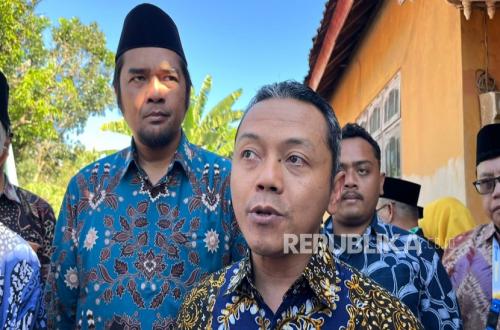
Deputy Minister of Primary and Secondary Education Fajar Riza Ul Haq did not deny that the shortage of pupils in state schools is influenced by various factors. He stated that this issue needs to be viewed comprehensively. ‘I heard that state elementary schools in Yogyakarta City and Sleman are experiencing the same thing. So, many regions are experiencing similar cases where state elementary schools, including some private schools, are short of pupils,’ Fajar said after laying the first stone in the revitalisation programme for the Aisyiyah Pembina Banguntapan Kindergarten in Yogyakarta last weekend.
‘There are many factors, demographic factors. Secondly, there is indeed a trend of parents choosing private schools that are considered to have quality. They want to enrol their children, even if they have to pay. Thirdly, there is a trend of parents enrolling their children in faith-based schools,’ he explained.
According to him, several regions have taken the initiative to restructure through school regrouping. This policy can be an option to adjust the number of educational units to demographic conditions and the distribution of learners. Regrouping is carried out by merging schools that are located close to each other or have very small numbers of pupils. Thus, the number of pupils can be consolidated.
Fajar gave an example: a school with only five pupils and a school with 50 pupils essentially require the same educational management. Therefore, when the number of pupils is very small, the effectiveness of education delivery needs to be reconsidered. ‘I think this is healthier, because the operational burden of a school with 5 pupils or 50 pupils is the same,’ he said.
He stressed that the regrouping discourse is not solely aimed at reducing the number of schools. The government is also looking at opportunities to redistribute teachers so that the placement of educators is more in line with the needs of schools.