
Many People No Longer Trust Doctors and Teachers, Here's Why
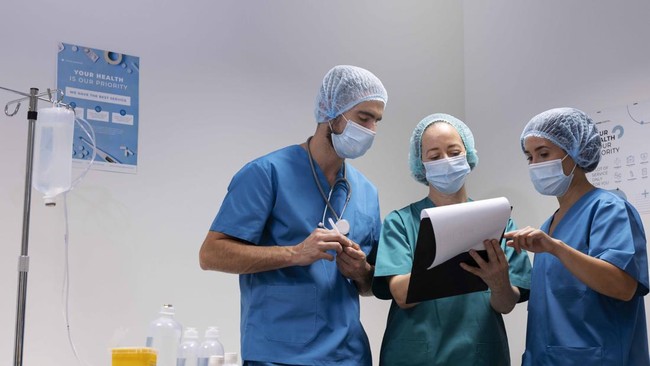
The presence of artificial intelligence (AI) is now beginning to erode public trust in professional experts, such as doctors and teachers. In today’s fast-paced digital era, people are increasingly accustomed to conducting their own research rather than directly trusting professional opinions.
According to the latest research from Use.AI, advice from professionals such as doctors and teachers is no longer taken at face value. The survey results recorded that almost two-thirds (64%) of respondents now feel far more confident to debate or question information provided by experts.
This phenomenon has given rise to what is called an ‘expertise recession’. The condition describes a shifting trend in which the value of professional expertise is beginning to fade in a world increasingly facilitated by AI. This is because AI tools are able to summarise information, present context, and provide complex answers in a simpler and more easily understood manner within seconds.
The survey, which involved 15,428 adult respondents, also mapped a number of other professions that are increasingly questioned by the public, ranging from managers and journalists to economists. Interesting findings also emerged from the generational gap. As many as 70% of respondents in the 18 to 34 age group admitted they were more comfortable posing confrontational or critical questions to experts after validating them through AI chatbots. Conversely, the figure dropped sharply to 49% among those aged over 45.
Overall, 53% of people now use AI to verify answers from experts before deciding whether they agree or not. In addition, almost half of respondents (46%) bluntly stated that professional credentials or degrees no longer carry the same prestige as before. The ease of access to data verification has placed the reputation of experts under public scrutiny.
Credentials still represent experience and flying hours, but they are no longer a guarantee for the public to accept a statement without counter-confirmation, which now generally comes from AI.
Responding to the report, Use.AI highlighted a trend of declining automatic deference towards professionals who have undergone years of education. ‘AI has democratised confidence much faster than it has democratised knowledge,’ said Ihor Herasymov, Co-Founder & CEO of Use.AI. ‘Someone can now use AI to formulate sharper questions, without actually having the competent qualifications to judge the correctness of the answers.’
Use.AI warned that this ‘gap between confidence and competence’ will continue to widen, as public dependence on AI as an instant information search and fact verification engine becomes more massive.