
Many Indonesians Are Downgrading Their Lifestyles: What Are They Cutting Back On?
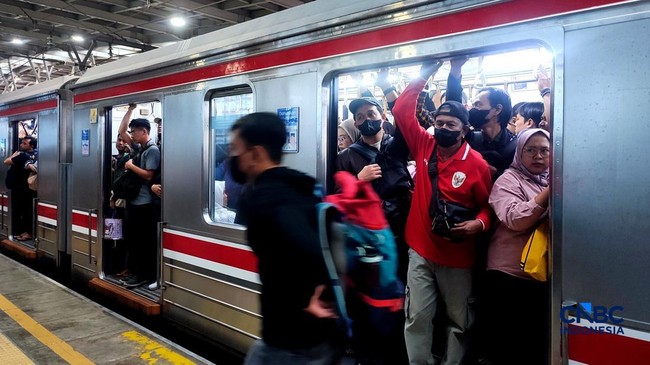
Jakarta, CNBC Indonesia – The trend of downgrading one’s lifestyle has recently become a topic of widespread discussion on social media. It comes as more people opt for a simpler way of life to protect their finances.
Lifestyle downgrading means cutting back on discretionary habits: cooking at home more often instead of eating out, switching to cheaper transport and limiting visits to cafés. The trend has emerged in conversations among users on the social media platform Threads.
“In this economy, what have you downgraded? Me: I used to own a Cortez car and a home in a gated estate; now I live at my in-laws’ house and ride an old Shogun motorbike to work,” one user wrote in a post in late September 2026.
The account @wulan_as17 described a similar experience, saying she had sold her Honda HR-V and replaced it with a more affordable low-cost green car (LCGC).
The account @fun_funny28 said they had switched rice brands, from one costing Rp470,000 to one priced at Rp370,000 for a 20-kilogram pack. Meanwhile, @eveedesu said they had previously bought coffee from outlets such as Tomoro, Fore and Starbucks, but had now switched to instant coffee sachets.
Another user, @psychefeb, said they no longer took part in pilates, yoga or padel, and more often sought out products and services offering discounts.
Is purchasing power weakening?
Economist and Next Policy director Yusuf Wibisono said the growing number of people lowering their lifestyle standards was linked to pressure on purchasing power, particularly among the middle class. Signs of weakening purchasing power, he said, had become increasingly visible in recent years, even as Indonesia’s economy continued to grow.
“In recent years, while the economy has continued to grow strongly, we have increasingly seen signs of weakening purchasing power: shopping centres becoming quiet or even closing, malls attracting plenty of visitors but few customers at the tills, traditional markets seeing lower turnover, and middle-class people willing to ‘downgrade’ their lifestyles to save money,” Yusuf told CNBC Indonesia on Monday.
Yusuf said the pressure was affecting not only lower-income people but was increasingly being felt by the middle class.
He warned that the weakening of the middle class could become a serious problem for Indonesia’s economy in the long term. Yusuf noted that the number of middle-class people fell from 60.8 million, or 23% of the population, in 2018 to 46.7 million, or 16.6%, in 2025. By contrast, the share of people considered economically vulnerable or aspiring to the middle class rose from 68.5% in 2018 to 74.5% in 2025.
Yusuf said the middle class played an important role in supporting consumption and economic growth. When this group comes under pressure, people’s ability to buy goods and services beyond basic necessities is also constrained.
Not necessarily a worsening economy, but a warning sign
Meanwhile, Syafruddin Karimi, an economist at Andalas University, cautioned that lifestyle downgrading discussed on social media could not, by itself, be taken as proof that economic conditions were worsening for all Indonesians. Accounts from social media users, he said, should be treated as an early signal and tested against national economic data.
“The lifestyle-downgrading phenomenon should be read as a micro-level signal that needs to be tested against macroeconomic data, rather than immediately taken as proof that conditions are worsening for everyone,” Syafruddin told CNBC Indonesia.
He explained that people switching to cheaper brands, selling vehicles or accepting lower-paid jobs reflected adjustments to consumption in response to expectations about their long-term incomes. Syafruddin noted that Indonesia’s economy grew by 5.29% year on year in the second quarter of 2026. The Consumer Confidence Index also remained in optimistic territory in September 2026, at 118.1.
However, these conditions coincided with pressure in the labour market. He said 63,789 workers had been laid off between January and September 2026, while retail sales growth in September was forecast at just 1.4% year on year.
“So, this phenomenon does not yet prove a contraction in national consumption, but it is an early warning of pressure on some households,” he said.
Syafruddin also said middle-class households were particularly vulnerable to cost-of-living pressures because they faced various fixed expenses, including loan instalments, education costs and housing needs. At the same time, they were often not included among the government’s social assistance recipients.
He said household economic pressure was caused not only by rising prices, but also by limited wage growth, the risk of job losses and increasing spending on various needs.
Source: jawawa.id (https://jawawa.id/newsitem/many-indonesians-are-downgrading-their-lifestyles-what-are-they-cutting-back-on-1793177507)
Originally published by CNBC Indonesia (https://www.cnbcindonesia.com/lifestyle/20261028140915-33-780212/ramai-warga-ri-downgrade-lifestyle-apa-saja-yang-sudah-dihemat), translated from Indonesian