
Many Hospitals Damaged After NTT Earthquake, Government Accelerates Health Facility Recovery
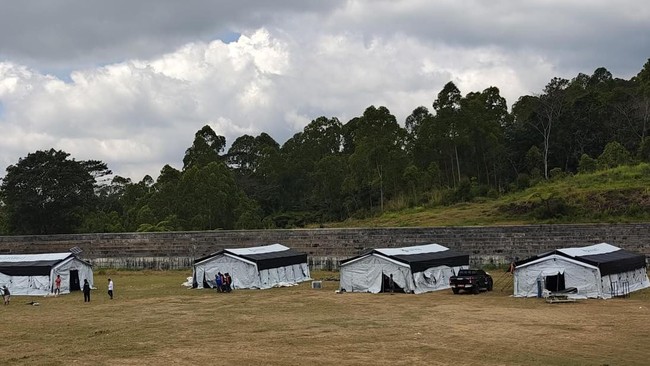
Health Minister Budi Gunadi Sadikin has detailed the progress of handling and restoring health services for communities affected by the disaster in Nusa Tenggara Timur (NTT). The government is now moving from the patient-handling stage towards the recovery of damaged health facilities.
Budi conveyed this during a working meeting of Commission IX of the Indonesian House of Representatives with the Health Minister on Thursday (27/8/2026). He also expressed appreciation to Commission IX members who had visited the affected areas in NTT directly.
“I would also like to thank my colleagues from Commission IX who have had the opportunity to visit Nusa Tenggara Timur. We have also been there twice and seen the conditions,” said Budi.
Based on data from the National Disaster Management Agency (BNPB) presented by Budi at the meeting, the disaster affected around 1.9 million people. A total of 105 people were recorded as having died and around 179,000 people were displaced across 444 evacuation points.
Budi said the Ministry of Health has divided the response into three stages. The first stage ensures all affected patients are identified and receive treatment, followed by reactivating health facilities. The final stage is restoring health facilities that suffered damage due to the disaster.
“In the initial phase, the government prioritised identifying patients with severe conditions through a triage system. Red and yellow category patients must be referred immediately, while green category patients can be treated at community health centres or evacuation sites so as not to burden referral facilities,” Budi explained.
However, the process faced challenges. A number of health facilities could not operate, while limited health personnel meant some patients with severe conditions were still receiving treatment independently at home.
Budi noted that more than 95% of red and yellow category patients have now been identified. They were then referred using various modes of transport to facilities capable of providing further care.
Budi said seven of the eight regencies/cities in the disaster response area were affected. Only East Flores was said to be unaffected.
Of the seven hospitals in the area, two could not operate due to damage. The government then deployed field hospitals, and within less than a week, services for red and yellow category patients were able to resume.
The majority of patients requiring treatment suffered trauma from the earthquake, including head and chest trauma as well as broken arms and legs. The Ministry of Health also adjusted the medical personnel sent based on the characteristics of the disaster, such as orthopaedic and surgical doctors to treat earthquake victims.
The government also deployed helicopters, land vehicles and ships to evacuate patients. In the helicopter evacuation process, health workers were first taken to villages to find red and yellow category patients, then brought the patients back on the return flight.
The Ministry of Health is now working to ensure all community health centres resume services. Budi said one of the problems found was not only building damage, but also the fear of the public and health workers about re-entering buildings after the earthquake.
Within two weeks, almost all community health centres had received large tents. The government also sent medicines and health equipment and prepared the delivery of generators to community health centres still providing services outside their buildings.
The Ministry of Health also sent more than 300 health workers within about one week. In addition to working in hospitals, they were assigned to enter villages to assist with the triage process and find patients needing immediate treatment or referral.
After emergency services were running, the government began identifying health facilities based on categories of light, moderate and heavy damage. Budi is targeting the identification and verification process to be completed soon so that budget requirements can be submitted.
He hopes that documents from the Ministry of Health regarding recovery needs can be completed by September 2026 to be processed further by the government.
Budi estimates that two hospitals with heavy damage will likely need to be rebuilt. The budget requirement for the two hospitals is estimated at Rp150 billion to Rp200 billion.
“Actually, for all lightly damaged facilities, I would like it if possible to be resolved in one or two months. Moderately damaged, three to six months. Heavily damaged, six to twelve months,” said Budi.
He said the recovery process using government funds could take quite a long time. Therefore, the Ministry of Health is also open to assistance or donations to accelerate the procurement of equipment needed by affected health facilities.
Source: jawawa.id (https://jawawa.id/newsitem/many-hospitals-damaged-after-ntt-earthquake-government-accelerates-health-facility-recovery-1787827920)
Originally published by CNBC Indonesia (https://www.cnbcindonesia.com/lifestyle/20260827160042-33-762822/banyak-rs-rusak-usai-gempa-ntt-pemerintah-kebut-pemulihan-faskes), translated from Indonesian