
Many Families Delay Child Circumcision Due to Cost
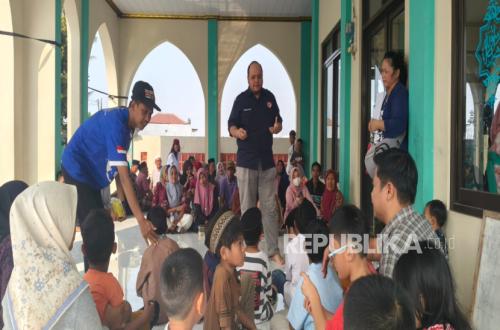
The Central Executive Board of the Indonesian National Youth Committee (DPP KNPI), through its Health Division, collaborated with the Alumni Association of the Faculty of Social and Legal Sciences at Universitas Negeri Jakarta (IKA FISH UNJ) to hold a mass circumcision for children in Sukajadi Village, Bekasi Regency. Seventeen children aged between 4 and 12 took part in the event, which ran in an orderly and smooth manner on Saturday (17/7/2026).
The event formed part of efforts to broaden access to health services for the community while strengthening the spirit of mutual cooperation through collaboration between youth organisations, university alumni, health workers and village government.
The head of the DPP KNPI Health Division, dr. Fachrurozy Basalamah, said the mass circumcision provided not merely health assistance but also a form of long-term investment in improving children’s health quality.
“Circumcision has widely proven medical benefits, from maintaining the hygiene of the reproductive organs to reducing the risk of infection and instilling clean living habits from an early age. Therefore, this activity is not solely about fulfilling tradition or religious values, but is also part of promotive and preventive efforts in public health development,” Fachrurozy said in a written statement on Saturday (18/7/2026).
According to him, many families still postpone circumcision because of limited finances as well as limited access to health services. This situation, he said, needs to be addressed through a social movement involving various elements of society.
“Through this activity we want to ensure that every child has an equal opportunity to obtain safe, quality health services. The presence of youth organisations must be able to deliver tangible benefits, especially for those in need. Social care such as this is the foundation of building healthy, high-quality human resources,” he said.
Meanwhile, the Chairman of IKA FISH UNJ, Dr. Rasminto, viewed the event as a concrete implementation of the Three Pillars of Higher Education, particularly in the aspect of community service.
He said community service must not stop at seminars or academic discussions, but must be translated into actions that address society’s real needs.
“Universities have a moral responsibility to ensure that knowledge delivers direct benefits to people’s lives. Therefore, alumni must be present as part of the solution to the social problems faced by communities, including in the health sector. Community service acquires meaning when its impact is genuinely felt by the community itself,” Rasminto said.
In his view, the synergy between alumni, community and youth organisations, village government and health workers exemplifies how social capital can be optimised to produce wider benefits.
“Collaboration such as this shows that the values of the Three Pillars do not end within the campus environment, but live on through the contributions of its alumni. When academic networks are combined with social care, universities truly become part of the solution to community development,” he said.
The Secretary of Sukajadi Village, Acep Sunasep, expressed appreciation for the event. He judged the mass circumcision to be of great help to the community, particularly families facing economic hardship.
“We thank DPP KNPI and IKA FISH UNJ for their care for the residents of Sukajadi Village. This programme is very beneficial and has been welcomed enthusiastically by the community. Alhamdulillah, the entire series of activities ran smoothly and the children received good health services,” Acep said.
He expressed hope that similar social activities can continue so that more people benefit from the collaboration of various elements of the nation.