
Manufacturing’s Rise: From Pandemic Recovery to a Stronger Economy
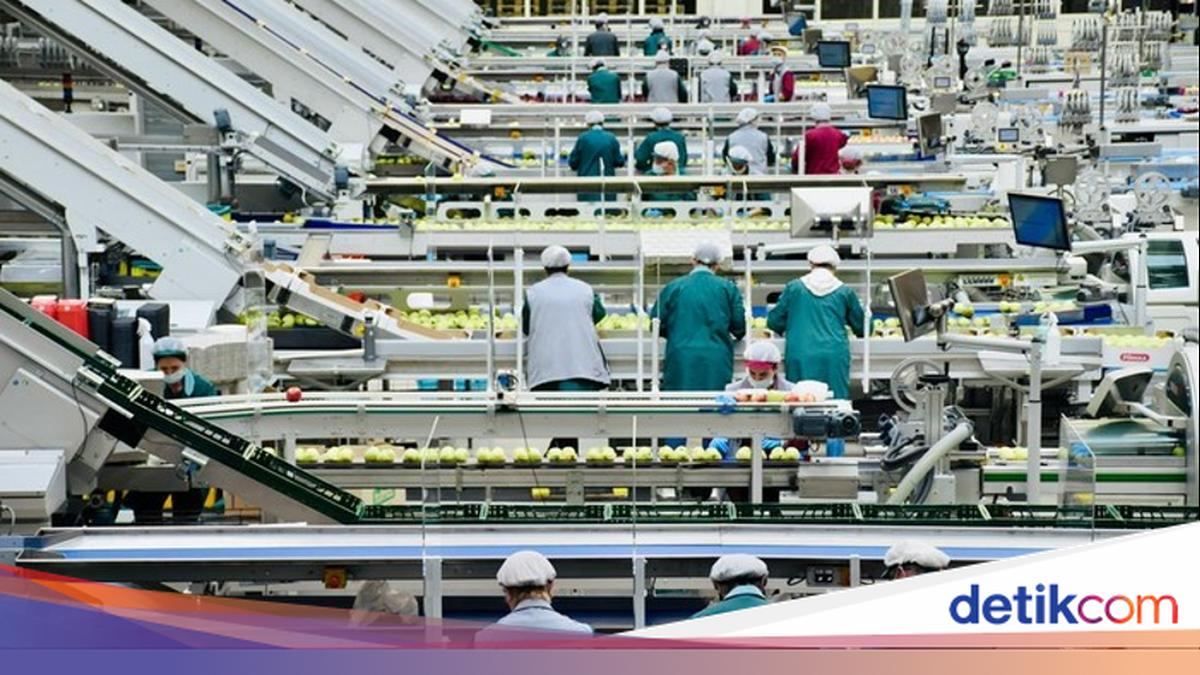
Manufacturing was the largest contributor to Indonesia’s economic growth in the second quarter of 2026. Statistics Indonesia (BPS) recorded growth of 5.32% in the sector, above national economic growth of 5.29%.
Accounting for nearly a fifth of the national economy, manufacturing has continued to recover after contracting in 2020 as a result of the COVID-19 pandemic.
The improved performance has coincided with a 169% increase in investment between 2020 and 2025. In 2025, the sector accounted for 80% of total national exports and employed 20.26 million people.
Keeping industry productive during the COVID-19 pandemic
The foundations of the sector’s recovery were laid when the COVID-19 pandemic constrained economic activity. Three policies introduced during the pandemic by Industry Minister Agus Gumiwang Kartasasmita (AGK) helped safeguard Indonesia’s manufacturing industry, enabling it to recover faster than manufacturing industries in other ASEAN countries.
The three policies were IOMKI, the government-borne luxury goods sales tax (PPnBM DTP), and the consolidation of domestic industry through stronger domestic content requirements (TKDN).
When large-scale social restrictions (PSBB) were introduced in 2020, AGK took the significant step of issuing the Industrial Activities Operating and Mobility Permit (IOMKI).
Under the scheme, factories could continue operating provided they implemented strict health protocols.
By mid-June 2020, 17,466 IOMKI permits had been issued. The Ministry of Industry (Kemenperin) said the policy helped protect around 4.9 million workers from the risk of redundancy.
Enforcement included revoking permits from companies that breached health protocols.
“Indonesia was one of the first countries to establish a policy instrument to safeguard the continuity of manufacturing industry from the impact of the pandemic,” AGK said in a written statement on Tuesday (27 October 2026).
Keeping factories running meant protecting the livelihoods of many people, sustaining supply chains and opening the way to economic recovery.
To revive market demand, Kemenperin and the Ministry of Finance introduced a government-borne luxury goods sales tax (PPnBM DTP) incentive for the automotive sector.
The sector was chosen for its multiplier effects and extensive links with the steel, rubber, glass, plastics and electronic components industries. With around 1.5 million workers across its value chain, an automotive recovery was expected to boost thousands of supplier industries as well.
A month after the incentive was introduced, national car sales rose by 88%. From March to November 2021, sales reached 487,000 units, up 71.02% on the same period a year earlier.
Policies to maintain production and stimulate demand also supported the recovery in manufacturing. In the second quarter of 2021, manufacturing grew by 6.91%, making it the largest source of growth in an economy that expanded by 7.07%.
The result marked the end of four consecutive quarters of economic contraction and Indonesia’s emergence from recession.
BPS chief at the time, Margo Yuwono, also linked higher car sales to the PPnBM tax relief, noting that “transport equipment recorded fairly high growth”.
AGK also succeeded in consolidating domestic industry, particularly producers of medical equipment such as ventilators, personal protective equipment (PPE), medicines, oxygen and masks, to meet the needs of the pandemic response.
Domestic manufacturers were able to meet pandemic-response needs independently. This also helped increase capacity utilisation and employment in manufacturing.
Employment
Employment in Indonesia’s manufacturing sector has continued to rise, from 17.44 million people in 2020 to 18.65 million in 2021, 19.11 million in 2022, 19.29 million in 2023, 19.96 million in 2024 and 20.26 million in 2025.
The addition of around 2.82 million workers over the period demonstrates manufacturing’s role in expanding job opportunities.
In February 2026, the sector employed 13.57% of the country’s 147.67 million working people. The positive trend was also reflected in the September 2026 PMI survey, which recorded factory hiring at its fastest pace since February 2025.
AGK said manufacturing remained a major source of employment.
“The increase in manufacturing employment is due to rising capacity utilisation and investment,” he said.
Investment and Indonesia’s position in manufacturing
According to BPS, investment in manufacturing rose from Rp259 trillion in 2020 to Rp307 trillion in 2021, Rp457 trillion in 2022, Rp565 trillion in 2023 and Rp697 trillion in 2024.
Kemenperin, meanwhile, recorded Rp1,002 trillion in new investment in manufacturing over 2024–2026. This investment supported the construction of nearly 3,500 new production facilities.
The rising investment trend indicates that policies introduced during Agus Gumiwang’s seven-year leadership of Kemenperin (2020–2026) have been effective in attracting investment to manufacturing.
Globally, Indonesia’s manufacturing value added (MVA) rose from US$210.4 billion in 2020 to US$265.07 billion in 2025.
World Bank data put Indonesia 13th globally and first in ASEAN, ahead of Thailand at US$128.04 billion and Vietnam at US$116.38 billion.
The figures demonstrate that AGK succeeded in raising the economic value added by Indonesia’s manufacturing supply-chain ecosystem to more than the combined total for Thailand and Vietnam.
Contribution to the national economy
In 2025, manufacturing grew by 5.15%, exceeding national economic growth of 5.11%. It was the first time in 13 years that manufacturing growth had outpaced the national economy.
The result points to a significant increase in manufacturing’s influence on the national economy. AGK has frequently emphasised the direction he wants the sector to take.
“It is not the economy that should attract manufacturing; manufacturing should attract the economy,” he said in a presentation on 2025 year-end performance.
The nominal GDP value of manufacturing rose steadily from Rp2,761 trillion in 2020 to Rp2,947 trillion in 2021, Rp3,228 trillion in 2022, Rp3,499 trillion in 2023, Rp3,799 trillion in 2024 and Rp4,117 trillion in 2025. Annual additions generally grew larger, with the biggest increase—Rp318 trillion—recorded in 2025.
Over five years, manufacturing added more than Rp1,350 trillion to nominal economic output. This reflects the sector’s growing contribution to national GDP and underlines its scale and role in Indonesia’s economy.
Manufacturing’s contribution to national economic growth remained consistently in the 18–20% range from 2021 to 2025, peaking at 20.94% in 2025.
This means that around a fifth of Indonesia’s economic growth in 2025 came from manufacturing, reaffirming the sector’s position as one of the country’s main economic engines.
Manufacturing was also the backbone of Indonesia’s exports, accounting for 80.27% of the national total in 2025. Its average share of total exports over 2020–2025 was 76%.
The three largest export shares came from a range of palm oil derivative products, iron and steel, and machinery and electrical equipment. This underscores manufacturing’s role in supporting foreign trade and generating foreign exchange for the national economy.
Measuring industrial confidence through data
Business confidence is an important indicator of the manufacturing sector’s direction.
Before the Industrial Confidence Index (IKI) was launched in November 2022, S&P Global’s Purchasing Managers’ Index (PMI) was one of the main measures used to monitor conditions. Kemenperin, however, considered a more detailed instrument necessary to provide a picture of each subsector.
At AGK’s initiative, the IKI was developed to monitor conditions in Indonesia’s 23 manufacturing subsectors. The diversity of the industry requires detailed analysis so that pressures in each area can be met with an appropriate response.
The IKI is compiled from reports by around 3,000 companies through the National Industrial Information System (SIINas), covering small, medium-sized and large industries.
Its methodology was developed by statistics experts from IPB University and validated by economists at the University of Indonesia. Published towards the end of each month—earlier than the PMI—the IKI helps the government identify changes in orders, production and inventories in each subsector.
The information provides a basis for detecting pressures early and designing more targeted policies. Alongside S&P Global’s PMI and Bank Indonesia’s Prompt Manufacturing Index, the IKI completes the picture of national industrial conditions. The earlier pressures are identified, the sooner the government can prepare a response.
Since November 2022, the IKI has consistently remained in expansion territory, above 50, and reached a record 54.12 in January 2026.
In September 2026, the index remained in expansion territory at 51.93. The orders component rose to 53.40, while 15 of the 23 subsectors monitored were expanding. The results indicate that industrial confidence remains firm, although conditions are not yet uniform across subsectors.
Strengthening signals were also evident in Indonesia’s manufacturing PMI, which rose from 49.8 in August to 52.4 in September 2026, returning to expansion territory.
New orders and domestic production recorded their fastest growth since February, while export orders increased at their strongest pace since May 2022.
Trevor Balchin, director of economics at S&P Global Market Intelligence, said September’s performance was supported by higher exports and was the strongest since February.
With confidence holding up and orders rising, the industry is on a firmer footing to sustain growth.
A foundation for the next chapter
The recovery since 2020 has returned manufacturing to its position as the largest source of growth. Policies to keep factories operating, revive demand and monitor industrial conditions have all formed part of that process.
These achievements show the significant role manufacturing plays in connecting economic growth with production activity and the livelihoods of millions of workers.
Sustained investment and demand, together with effective policy responses, will determine whether manufacturing can maintain its role as a growth driver while expanding job opportunities.
Esther Sri Astuti, an economist at INDEF, said Indonesia had been relatively successful in safeguarding the performance of its manufacturing industry.
“Although it has not fully recovered, this is reflected in the PMI, which has mostly remained in expansion territory after the pandemic,” she said.
APINDO chairwoman Shinta Kamdani said manufacturing accounted for 82% of national exports.
“Manufacturing is indeed the backbone of national exports,” Shinta said, responding to a question about the sector’s export share.
Source: jawawa.id (https://jawawa.id/newsitem/manufacturings-rise-from-pandemic-recovery-to-a-stronger-economy-1793101946)
Originally published by detikcom (https://news.detik.com/adv-nhl-detikcom/d-8726615/bangkitnya-manufaktur-dari-pemulihan-pandemi-hingga-penguatan-ekonomi), translated from Indonesian