
Manufacturing Industry Performance Remains Resilient, Reflected in PMI Achievement
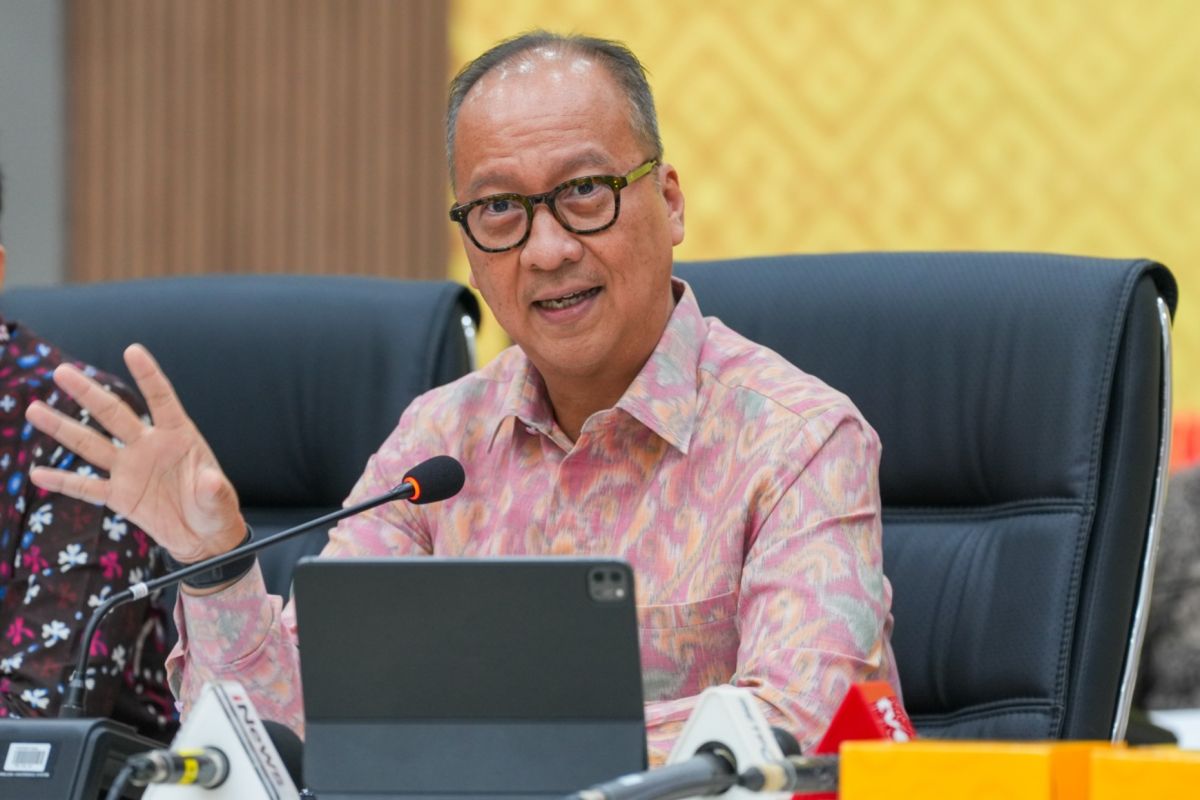
Minister of Industry Agus Gumiwang Kartasasmita stated that the performance of the manufacturing industry continues to show resilience amid global pressures, as reflected in the Purchasing Managers’ Index (PMI) for March 2026, which remains in the expansion zone at 50.1.
“We are surprised yet grateful that, amid extremely challenging conditions both globally and domestically, Indonesia’s average manufacturing PMI is still above 50. This indicates strong resilience from the domestic manufacturing sector,” the Minister said in a statement in Jakarta on Wednesday.
Throughout the first quarter of 2026, Indonesia’s manufacturing PMI performance has consistently been in the expansion phase, at 52.6 in January, rising to 53.8 in February, before moderating to 50.1 in March. Although there has been a slowdown, the index’s position above 50 indicates that industrial activity is still growing.
The Minister emphasised that this achievement is inseparable from the strength of the national industrial structure, supported by relatively stable domestic demand.
Compared globally, Indonesia’s PMI position remains competitive. Several major countries also experienced a slowdown in manufacturing activity in March 2026. Japan, for instance, recorded a PMI of 51.6, down from the previous month, though still in the expansion zone.
In the ASEAN region, Indonesia remains among the countries with expansive PMIs, alongside Thailand at 54.1, Malaysia at 50.7, Myanmar at 51.5, and the Philippines at 51.3. However, not all countries have managed to maintain expansion momentum consistently, indicating that global pressures are occurring evenly in some regions.
Globally, PMI surveys show increasing inflationary pressures and disrupted supply chains due to geopolitical conflicts, particularly in the Middle East, which have impacted rising energy and raw material costs.
In March 2026, there was a decline in output and new orders, in line with disruptions in raw material supplies and rising raw material prices.
Additionally, raw material delivery times experienced the sharpest delays since October 2021. Cost pressures also increased significantly, with raw material price inflation reaching the highest level in the past two years, prompting producers to adjust selling prices.
Nevertheless, industry players continue to show optimism about future prospects.
His side, he said, continues to implement various strategic measures to maintain the resilience of the manufacturing sector, including strengthening the industrial structure, increasing production capacity utilisation, and optimising the domestic market as the main pillar of growth.
In addition, the government is also focused on ensuring the smooth supply of raw materials and industrial logistics, as well as creating a conducive business climate so that the manufacturing sector remains competitive amid global dynamics.
“We, together with relevant ministries and institutions, will continue to ensure that the domestic industry remains moving, adaptive, and competitive. This resilience must be maintained because the manufacturing sector is the backbone of the national economy,” the Minister stated.