
Manufacturers' Association Urges Cancellation of Plain Packaging Proposal
Jakarta (ANTARA) - The Indonesian Association of Tobacco Manufacturers (Gappri) has requested that the proposed plain packaging policy within the Draft Ministerial Regulation of Health (Permenkes) be cancelled, arguing that it threatens the survival of the Tobacco Products Industry (IHT) as a strategic national sector.
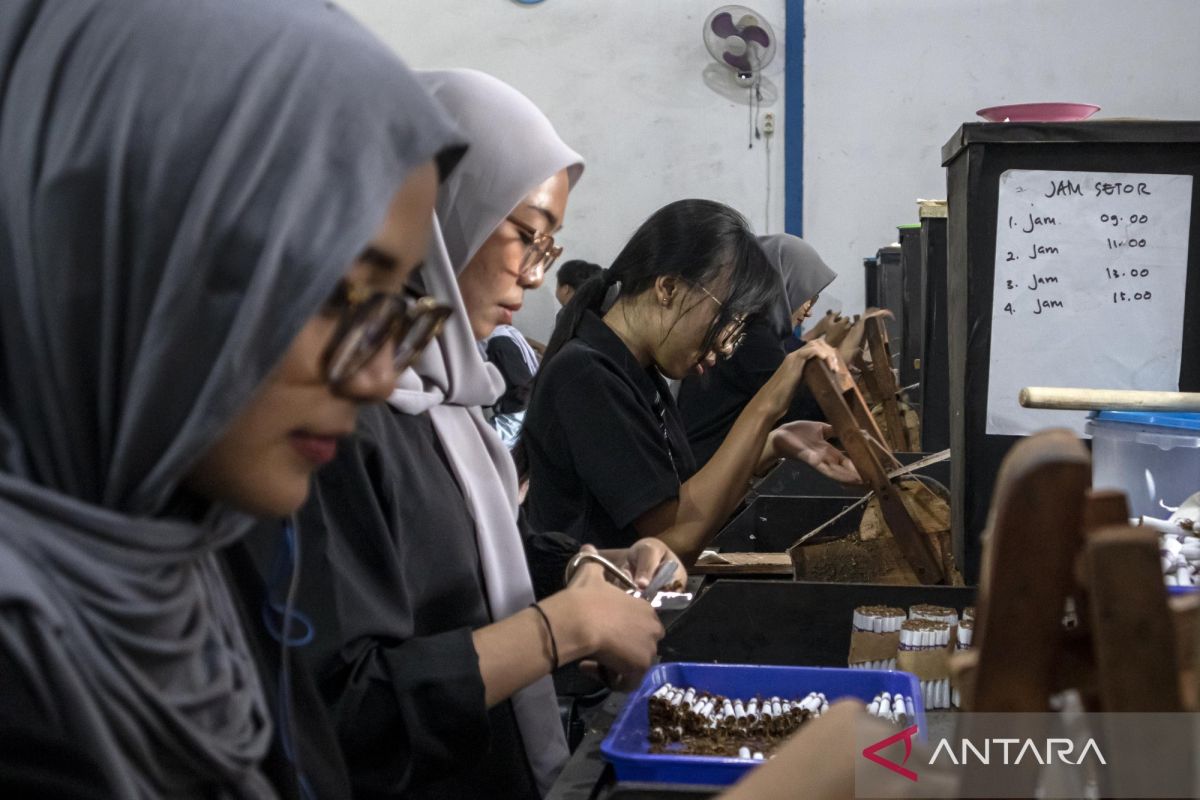
Gappri Chairman Henry Najoan stated that the IHT contributes significantly to employment absorption from upstream to downstream, while also supporting state revenue through excise payments. “The impact of this policy on the industry affects not only factories but also workers, farmers, and their families. Therefore, the policy needs to be formulated comprehensively, considering both social and economic aspects,” he said in a statement in Jakarta on Monday.
This non-fiscal policy towards the tobacco industry threatens the livelihoods of millions of workers dependent on the national tobacco ecosystem. According to Najoan, approximately six million people earn a living in the tobacco sector, ranging from agricultural labourers and factory workers to the retail trade chain. “Policy formulation should consider the overall social and economic impact to maintain social stability,” he added.
Naojan further noted that pressure on the industry is evident from the declining trend in cigarette production volumes in recent years. In 2019, when excise rates did not increase, national cigarette production reached 357 billion sticks. However, throughout the 2020-2025 period, production figures have continued to shrink, including a 3 per cent decrease occurring in 2024-2025.
“Increasingly strict regulations have the potential to drive the circulation of illegal cigarettes. Ultimately, this condition will disadvantage the state and create market distortions,” he said.
He explained that the rules within the draft ministerial regulation are a serious concern for all business players, as they burden industry players who are already facing significant pressure from the implementation of other Government Regulations (PP) Number 28 of 2024. The combination of various derivative regulations—such as the proposed plain packaging being pushed by the Ministry of Health, nicotine and tar limits being drafted by the Coordinating Ministry for Human Development and Culture (PMK), and additive regulations—will disrupt the operational stability and production processes of the national tobacco industry.
He explained that the tobacco industry ecosystem is currently surrounded by numerous overlapping regulations, with hundreds of rules at both central and regional levels targeting the tobacco business line. The proliferation of restrictive regulations, he continued, is feared to create legal uncertainty on the ground and risks destroying the sustainability of the industry ecosystem from upstream to downstream. “We request the Ministry of Home Affairs (Kemendagri) to deregulate regulations issued by local governments so that they can be standardised,” he concluded.