
Manta Ray-Inspired Chinese Submarine Can Dive 2,000 Metres to Guard the Seas
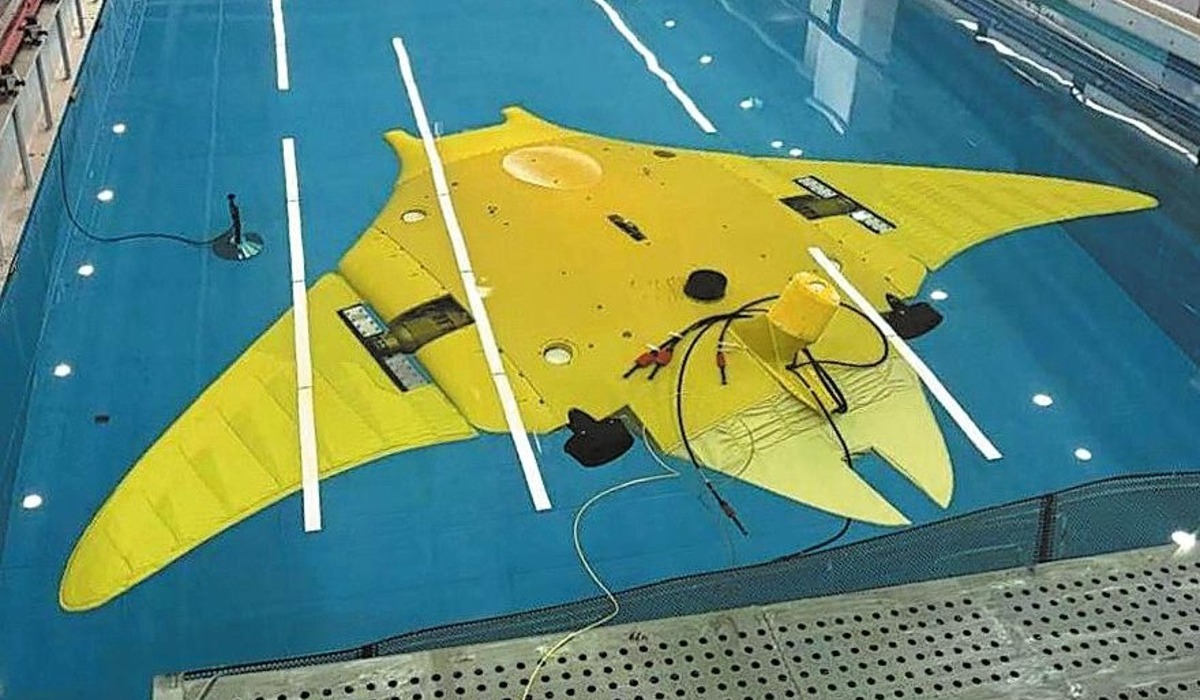
Researchers at Northwestern Polytechnical University in Xi’an, China, have successfully designed an underwater vehicle or submarine that adopts the anatomy and movement of the manta ray. According to China Daily, the underwater robot, which uses smart electric power and is remotely controlled, can penetrate the darkness of the sea to a depth of two kilometres. This innovation is projected to replace traditional propeller-driven submarines that are noisy and often disrupt marine habitats. Besides disturbing wildlife, the water vortex from conventional propeller systems also often stirs up seabed sediment, which can cloud the view of exploration cameras. To create an environmentally friendly vehicle, scientists dissected the swimming mechanics of manta rays for application to the robot’s propulsion system. The main advantage of this bionic robot is its ability to balance long-range cruising power with manoeuvring agility—a classic problem in the maritime world. This is achieved thanks to the adoption of variable buoyancy technology, similar to that used in underwater gliders. In glide mode, the robot moves up and down energy-efficiently to map the ocean over thousands of kilometres. Conversely, in flapping mode, its pectoral fins flap slowly so it can manoeuvre nimbly, such as turning on the spot, diving instantly, and hovering silently with precision. Coupled with its flat belly shape, the robot is very stable when landing on the seabed and can even be programmed into sleep mode to conserve energy during long-term assignments. To avoid being crushed by extreme hydrostatic pressure in the deep sea, the submarine is coated with a special protective layer that allows it to withstand pressures of up to 200 atmospheres, enabling operation at depths of up to 2,000 metres. In addition to being robust, the robot is equipped with smart sensor technology based on hierarchical recognition to accurately distinguish target objects, coral reefs, or shipwrecks in the darkness of the sea. The development of this bionic robot involved lengthy research analysing tens of thousands of videos of manta ray movements and breeding cownose ray species in the laboratory. The research team also collaborated with Ningbo University to conduct 3D scanning and CT X-rays to accurately map the bone structure and muscle tissue of manta rays to perfect the robot. In the future, this silent bionic submarine is projected to preserve ecosystems by monitoring sensitive areas without stressing marine life. In the aquaculture sector, the tool can be used for early disease detection, precision feeding, and monitoring escaped fish. The vehicle is also expected to serve as a safe platform for underwater archaeological missions. The research team now plans to embed artificial intelligence and swarm algorithms so that a fleet of these manta ray robots can coordinate and swim together autonomously underwater, even in conditions with very limited communication signals.