
Manpower Ministry modernises training to strengthen labour services
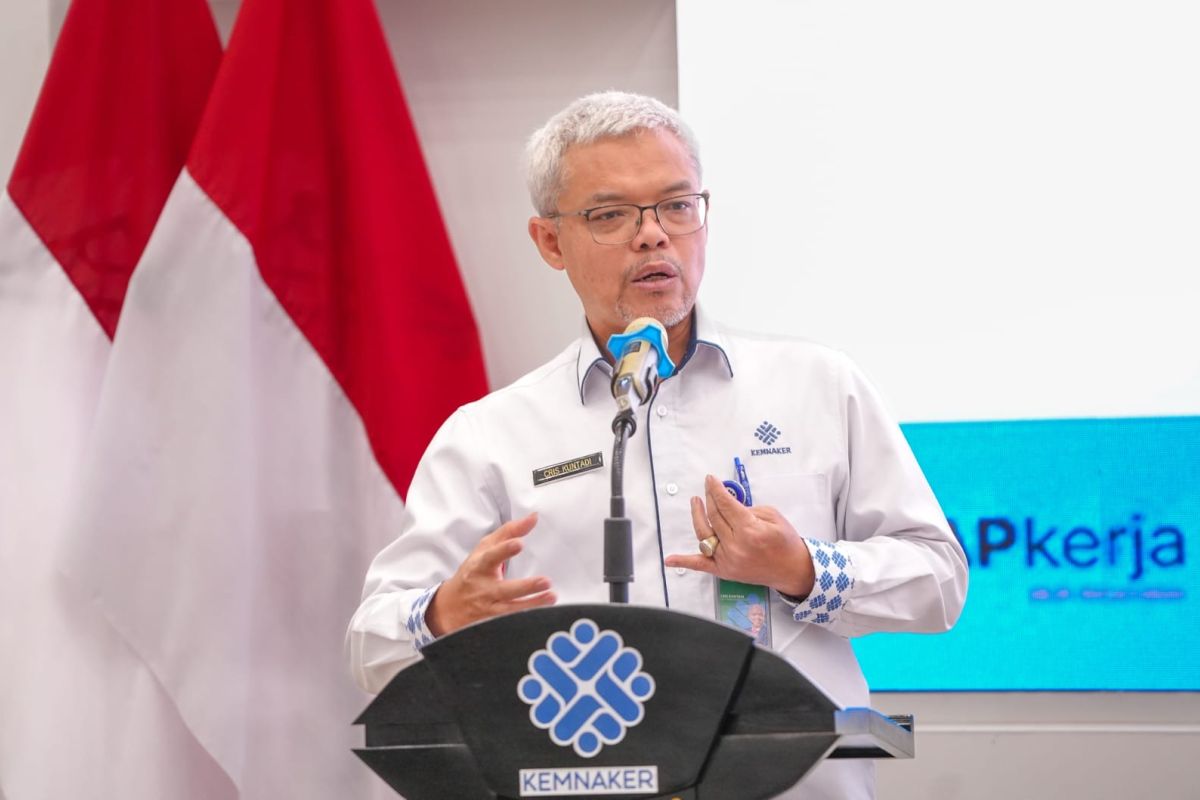
The Ministry of Manpower (Kemnaker) is updating the training pattern for the formation of functional labour officials to strengthen the quality of services to the public. Through a competency-based training curriculum, the training is now designed to be more adaptive, effective, and aligned with the needs of the working world to produce increasingly professional apparatus in delivering labour services. Secretary General of Kemnaker Cris Kuntadi, in a statement in Jakarta on Wednesday, said the transformation of the training pattern is a strategic step to ensure functional labour officials possess competencies relevant to the needs of public service and developments in the world of work. These functional labour officials include Labour Inspectors, Instructors, Industrial Relations Mediators, Job Placement Officers, and Occupational Safety and Health (K3) Examiners. “Functional labour officials are the front line of public service. The quality of services in the fields of inspection, industrial relations mediation, job placement, vocational training, and K3 guidance is largely determined by their competence,” said Cris. Through this new pattern, Kemnaker is implementing the Massive Open Online Course (MOOC) method, which is online learning that allows participants to study conceptual material independently. Meanwhile, face-to-face learning is focused on practice, case studies, simulations, and competency strengthening. “The learning process is also strengthened through on-the-job training or direct learning in their respective work units so that the competencies acquired can be directly applied in the execution of duties,” he said. Cris emphasised that the change in training duration will not lower competency standards. On the contrary, this new approach is designed so that the learning process becomes more effective and efficient, while producing apparatus ready to provide public services. This transformation is also part of the development of the Kemnaker Corporate University as a learning system for employee competency development. He called this step important to answer the high demand for competency improvement, reflected in the approximately 2,600 proposed training candidates from various ministries, institutions, and local governments. “Training is no longer just an activity in the classroom, but continuous learning integrated with the work environment. Its success depends on the commitment of participants, the support of leadership, and the role of mentors in accompanying participants,” said Cris.