
Manpower Ministry: MagangHub Alumni Most Absorbed in Financial Sector
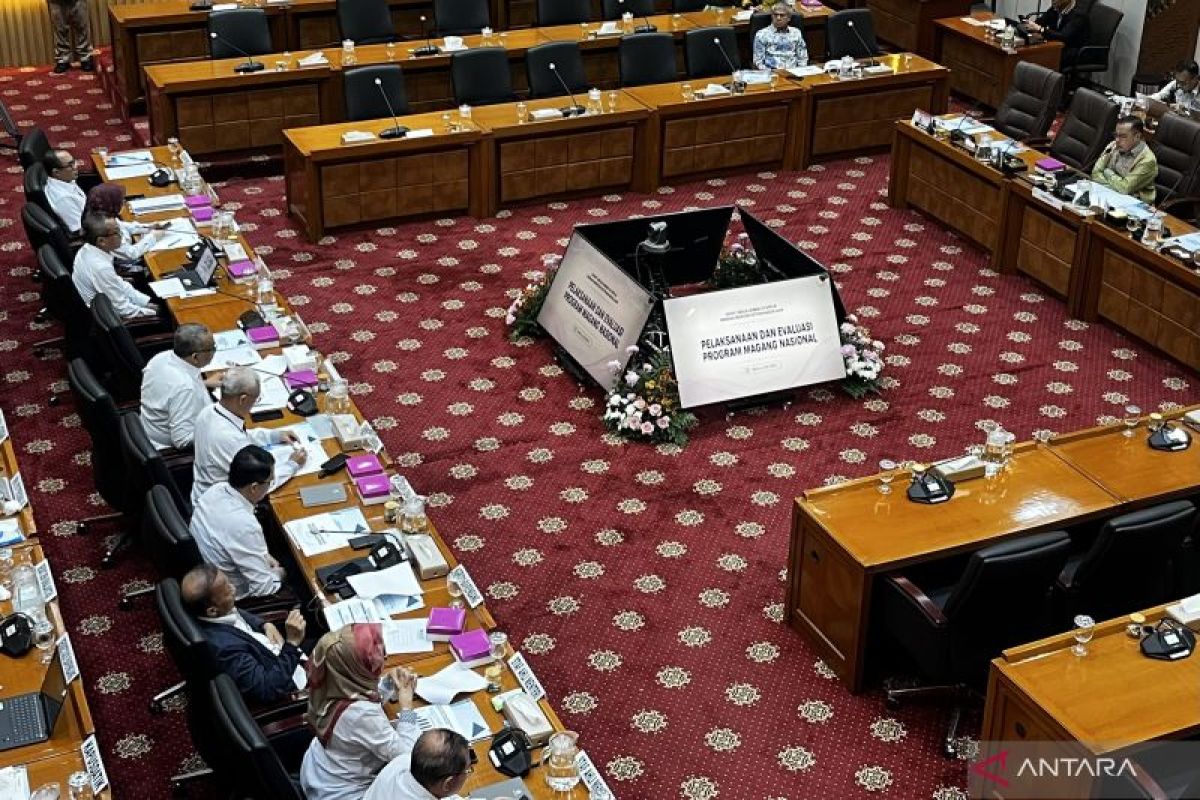
Jakarta (ANTARA) - The Ministry of Manework (Kemnaker) has noted that alumni of the National Internship programme (MagangHub) are most frequently receiving job offers or being absorbed into the financial sector.
“We can see participants receiving job offers based on sector. We see finance, wholesale trade, manufacturing, health, and accommodation. The largest is the finance sector,” said Deputy Minister of Manpower Afriansky Noor during a working meeting with Commission IX of the Indonesian House of Representatives (DPR RI) at the Parliament Complex in Senayan, Jakarta, on Monday.
According to Ministry data, the financial sector absorbed 23.4 per cent of the alumni from the 2025 National Internship programme. Meanwhile, the second position was held by the wholesale trade sector at 17.9 per cent, followed by the manufacturing sector, which absorbed 16.5 per cent of the alumni.
Furthermore, the health and accommodation sectors ranked fourth and fifth, with percentages of 10.3 per cent and 5.2 per cent, respectively.
Overall, 30 per cent of National Internship alumni have already been offered positions by the companies where they gained six months of work experience. “From our survey data, the interns we prepare—on average, 30 per cent of them are accepted by the companies where they worked after their internship,” said Deputy Minister Afriansyah.
Additionally, 34 per cent of the first batch of alumni have not yet been offered positions by companies, though there are indications of potential recruitment. The remaining 36 per cent were not offered jobs after the programme concluded.
For the implementation of the 2026 National Internship, or the second batch, Afriansyah stated that the Ministry of Manpower targets 150,000 participants, divided into three periods (batches).
Furthermore, the Ministry will focus on ensuring a more even distribution of regions and internship fields, expanding targets for more inclusive participation, providing certification for all National Internship participants, and conducting better and more comprehensive monitoring and evaluation.
“The improvement in monitoring and evaluation that we are undertaking involves monitoring from the beginning to the end, evaluating the quality of implementation and mentors, and tracking post-programme results,” said Deputy Minister Afriansyah.
Meanwhile, the participant quota for the first batch of the 2026 National Internship is set at 50,000 people, with registration scheduled to open from 15 to 28 July.