
Manpower Minister: Multi-Stakeholder Collaboration Can Address Skills Gaps
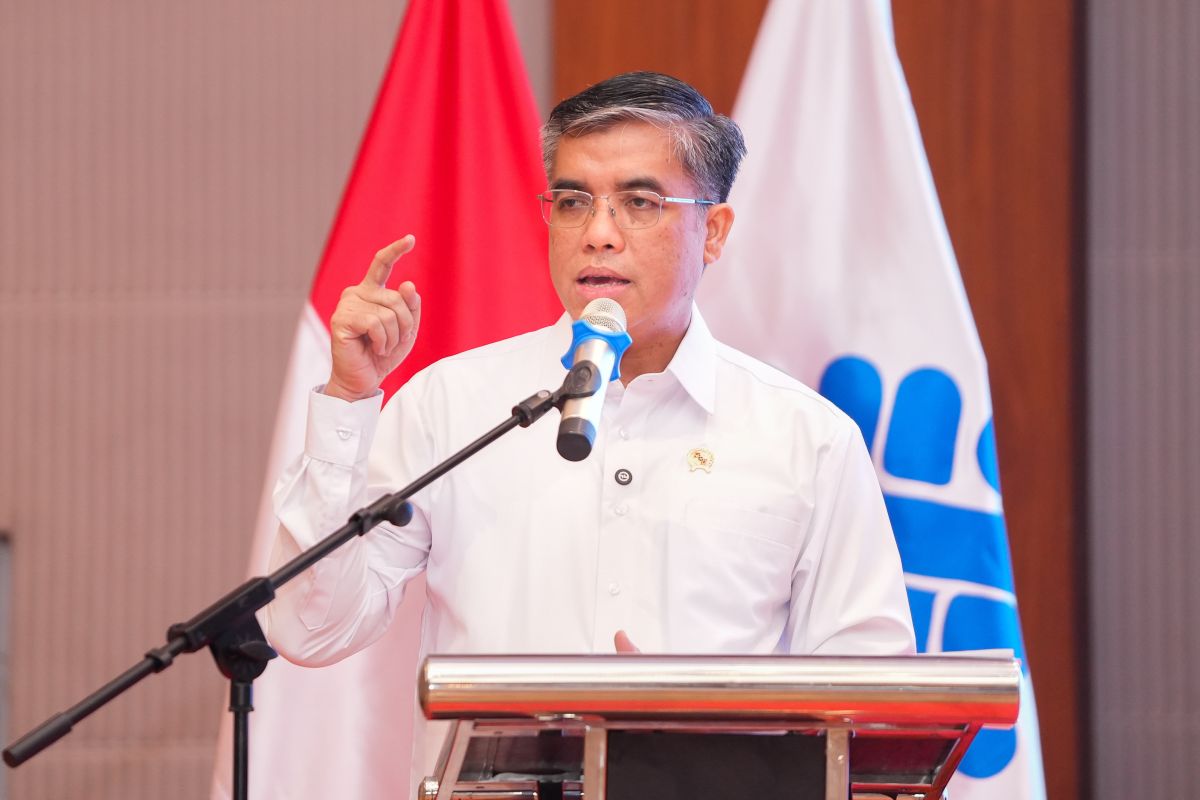
Jakarta (ANTARA) – Manpower Minister Yassierli said collaboration between the government, industry, associations and academics could address skills gaps and produce a competent, certified workforce able to compete.
“The gap between industry needs and graduates’ skills can only be bridged through genuine collaboration,” Yassierli said in Jakarta on Thursday.
He said cooperation among the government, industry, associations and academia could produce a skilled and competitive workforce.
The minister welcomed an initiative by PT Panasonic Gobel Indonesia, APITU Indonesia and Darma Persada University (UNSADA), which signed a tripartite memorandum of understanding (MoU) as part of the 2026 National HVAC-R Seminar.
The event, themed “Building the Future of Smart and Green Buildings: Industry, Academia and Professionals Working Together to Develop a Skilled and Competitive Workforce”, responds to the need to improve the quality and capabilities of technical workers amid rapid advances in heating, ventilation, air conditioning and refrigeration (HVAC-R) technology.
Yassierli added that under the MoU, the three parties had agreed to build a “link and match” collaboration ecosystem covering upskilling, research, industry internships, professional certification and recruitment of technical workers.
UNSADA will prepare adaptable, work-ready engineering graduates; APITU Indonesia, an association of refrigeration and air-conditioning practitioners, will promote occupational competency standards; and Panasonic Gobel Indonesia will provide technology transfer from industry.
“Tripartite partnerships like this are a concrete example of link and match, with industry, professional associations and universities working together to develop a competent, certified workforce that is ready to compete,” Yassierli said.
He added that the air-conditioning and refrigeration sector offered significant employment opportunities, as demand for HVAC-R technicians would continue to grow, from smart and green buildings to cold-chain services for food and logistics.
“This is an opportunity for which we must prepare the workforce while students are still at university,” he said.
“For UNSADA, this partnership gives students access to hands-on learning with industry technology and standards. We want our graduates not only to have a strong theoretical grounding—for example, understanding refrigeration cycles and cooling-load calculations—but also to be skilled in the field and ready to work or start a business,” said Agus Salim Sadikin.
M. Arif Rachmat Gobel of PT Panasonic Gobel Indonesia said the Training Centre demonstrated the company’s commitment to developing Indonesia’s national workforce, particularly as air-conditioning technology continued to advance towards more efficient and environmentally friendly systems.
“Through this Training Centre, we want students and technicians to gain knowledge of the latest products and technologies, so Indonesia has experts ready to support the development of smart and green buildings,” he said.
APITU Indonesia chairman Agus Susilo stressed the importance of competency standards for air-conditioning technicians, saying work in refrigeration and air conditioning required standardised skills and occupational safety.
“Through this partnership, APITU practitioners are ready to share field experience, build professional networks and support certification, so students and technicians can respond to technological developments and regulations, including cold-chain quality standards,” Agus Susilo said.