
Manpower Minister: Employment Development Must Focus on Productivity
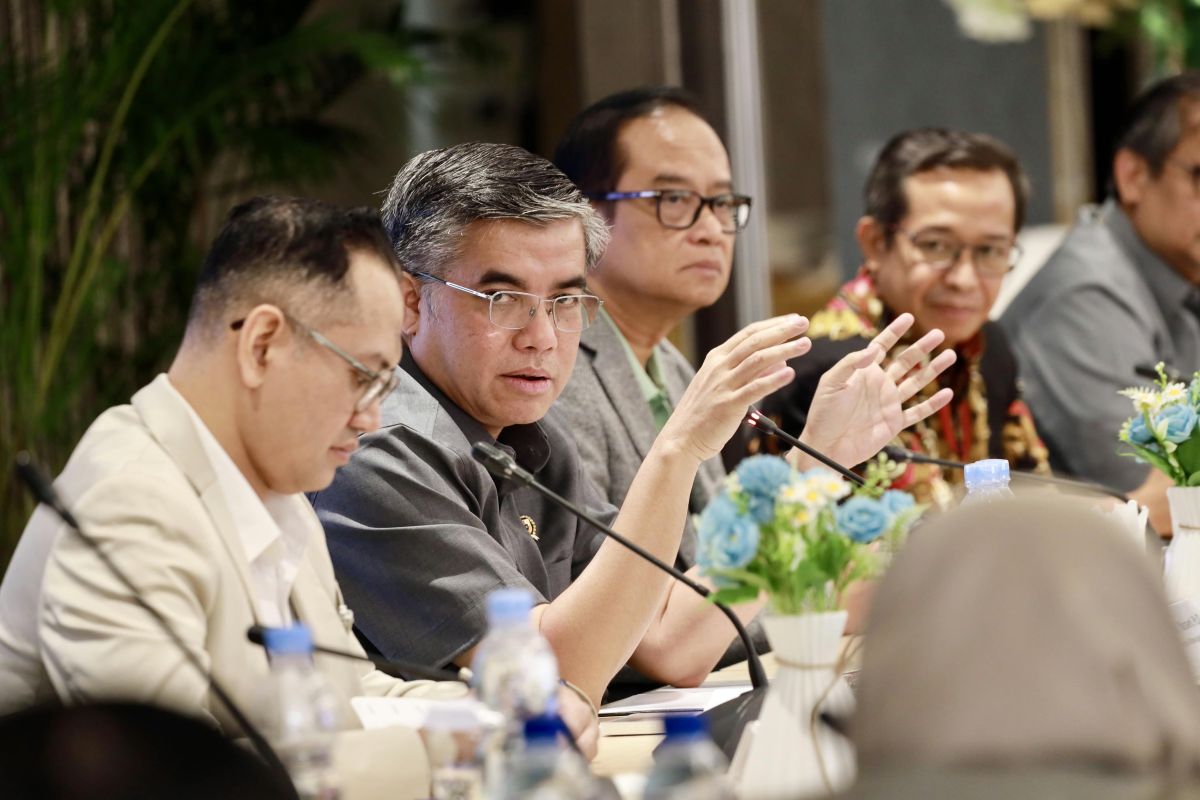
Jakarta (ANTARA) – Manpower Minister Yassierli believes employment development needs to focus on productivity, rather than solely resolving industrial relations issues.
“Employment development must be able to address real challenges on the ground by expanding the scope of cooperation—not merely resolving industrial relations problems, but focusing on raising productivity,” Yassierli said in a statement in Jakarta on Saturday.
The minister explained that workforce skills requirements are continually changing with developments in artificial intelligence (AI), information technology and the green economy. Training programmes therefore need to adapt to the demands of available jobs.
In addition to academic qualifications, a person’s skills are also a consideration in assessing their suitability for industry needs.
According to Yassierli, companies can meet new skills requirements through joint learning and knowledge-sharing.
This approach enables companies to make use of available resources and experience without having to build their own learning platforms at considerable cost.
“Future skills are a shared challenge across sectors. Rather than every company setting up its own costly platform, let us bring together existing potential and knowledge in a collective learning forum,” Yassierli said.
The Ministry of Manpower is also finalising an integrated labour-market information system.
The system is designed to map workforce availability and industry demand. This information will provide the basis for developing training and skills policies in line with labour-market conditions.
The system’s development includes updating the Indonesian Standard Occupational Classification (KBJI), compiling a list of critical occupations that are important to industry, and integrating the SIAPKerja portal with Statistics Indonesia (BPS) databases.
Yassierli said these measures were expected to help the government identify workforce needs and the skills that must be developed.
He added that the government was ready to provide supporting infrastructure and regulations so that various parties could participate in skills development.
A partnership with the National Movement for a Competent Indonesia (GNIK), among other initiatives, is expected to bring together government support and practitioners’ experience in developing workforce skills in response to changing industry needs.
“The government is ready to facilitate the infrastructure and supporting regulations so that the competencies of the younger generation can develop optimally,” he said.