
Manpower Minister Boasts Government-Funded National Internship Programme Exists Only in Indonesia
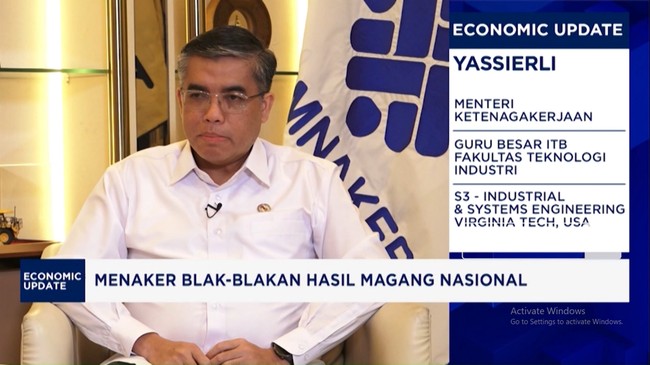
Manpower Minister Yassierli has stated that the government’s National Internship Programme operates under a unique scheme that may not exist in other countries. Participants receive full government funding for six months, including a stipend and support throughout the programme. According to Yassierli, the scheme was initially designed as part of an economic stimulus. However, the government has since observed that the programme’s benefits extend far beyond providing participants with pocket money. “This internship programme probably does not exist in other countries, a full six months covered by the government,” Yassierli said during CNBC Indonesia’s Economics Update on Friday. He noted that during the six-month internship, participants not only gain work experience but also engage directly in various company activities. Based on the government’s evaluation, this six-month period has a significant impact on participants’ work readiness. “It turns out that during their six months of interaction, they learn many things, build a portfolio, and get involved in problem-solving projects. This six-month period has proven to be extraordinary,” he said. Yassierli added that the response from companies to the programme has also been very positive. According to the Ministry of Manpower’s evaluation, the majority of companies expressed satisfaction with the implementation of the national internship programme. “The response we received from companies, 86 per cent said they were satisfied and very satisfied. About 13 per cent were quite satisfied. So, almost 98 per cent said they were satisfied,” he explained. He explained that the internship programme was initially prepared as an economic stimulus package to boost participants’ purchasing power through the provision of a stipend. However, as it progressed, the government saw that the programme also addressed persistent issues in the labour market, ranging from skill mismatches to workforce competitiveness. “Actually, this programme is an economic stimulus package. So, we must understand that it was initially designed to stimulate the economy through the stipend. But it turns out, this six-month exposure to the work environment provides many answers to questions we have long had regarding skills, skill mismatches, labour competitiveness, productivity, and so on,” Yassierli clarified. He believes that the internship programme serves as a bridge between new graduates and the needs of the working world. Direct exposure to the work environment for six months is considered to help participants understand work rhythms, build portfolios, and enhance the competencies required by industry. “And it turns out that the internship programme can answer these challenges,” he asserted. Furthermore, the government’s evaluation also showed a tangible impact on labour absorption. Based on data from all first-batch alumni who completed the six-month internship, 30 per cent were directly offered employment by the companies where they interned. “Even the first batch that has finished, this is not sample data, but data from all alumni who completed the six-month internship, 30 per cent of them were offered jobs at their internship placements,” he concluded.