
Mangrove Sustainability Extends Beyond Ecology, BRIN Researchers Emphasise Role of Local Spirituality
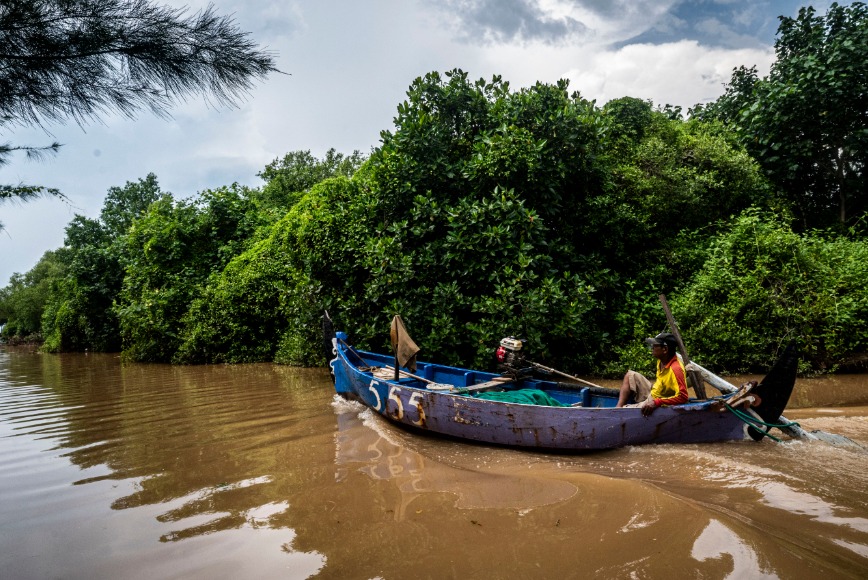
Mangrove ecosystem sustainability is not solely determined by ecological and economic factors, but also by communities’ relationships with spiritual values, oral traditions, and local beliefs passed down through generations. Lead Researcher at BRIN’s Centre for Research on Society and Culture (PRMB), Dedi Supriadi Adhuri, stated that certain mangrove areas in Indonesia have survived for centuries because local communities view mangroves not merely as natural resources, but as part of their social and spiritual lives. ‘What is fascinating is how mangroves in some areas remain intact despite centuries of exploitation,’ Dedi said. The findings are part of research published in the international journal Entangled Ecologies: Oral Traditions, Spirits, and the Sustainability of Mangrove Landscapes in Southeast Seram Island, Indonesia. According to Dedi, the more-than-human approach views humans, nature, and non-human entities as an interconnected whole. In this perspective, nature is not just an economic resource but also has moral and spiritual dimensions that shape community behaviour in environmental management. He cited coastal communities in Maluku, Papua, and North Sulawesi who possess local knowledge for preserving mangroves. Practices include bans on uprooting mangroves, rotating usage areas, and harvest calendars aligned with seasons and natural conditions. He added that mangroves are linked to origin stories, mythology, and customary regulations that bind coastal community life. ‘Mangroves are not just trees but part of the community’s living story, with customary rules and usage methods that bind them,’ he said. Dedi added that the concept of entanglement reveals complex relationships between humans, plants, animals, materials, and spiritual entities within an ecosystem. In this relationship, nature actively shapes human behaviour. ‘Nature regulates too, not just humans regulating nature,’ he said. He noted this approach aligns with the global ‘30 by 30’ conservation agenda aiming to protect 30% of land and sea by 2030. However, he stressed modern conservation policies must accommodate local knowledge that has sustained environments for centuries. Meanwhile, Senior Researcher at PRMB BRIN, Ari Nurlia, said research on mangrove management in East Seram shows that connections between humans, nature, and non-material entities are vital for environmental sustainability. ‘Community ecological knowledge is passed down through folktales, rituals, songs, and daily practices that shape ethical resource management,’ he said. Ari believes such studies can enrich social and environmental sciences while strengthening recognition of local knowledge as part of solutions to global ecological crises. He added that interdisciplinary approaches combining modern science, anthropology, and indigenous ecological practices can foster more inclusive research collaborations and support sustainable environmental conservation. PT PLN Energi Primer Indonesia (PLN EPI) continues to strengthen decarbonisation and sustainable energy transition through nature-based solutions. BRI Insurance, in partnership with Permodalan Nasional Madani (PNM), is implementing a Corporate Social and Environmental Responsibility (TJSL) programme by planting 7,000 mangrove saplings in coastal areas. The rare mangrove species Camptostemon philippinensis has been found in Balikpapan Bay. However, its threatened status risks disrupting the habitat of proboscis monkeys. Secretariat Director of FCLP Emelyne Cheney hopes Indonesia will join FCLP, citing its strategic position in global forest leadership. Indonesia still harbours undiscovered biodiversity. BRIN has revealed significant potential for discovering new plant species. BRIN is developing technology to harvest methane gas from landfills for use as cooking fuel and local electricity. BRIN reported that at least 29 new Indonesian plant species have been scientifically described between 2025 and early 2026.
Source: jawawa.id (https://jawawa.id/newsitem/mangrove-sustainability-extends-beyond-ecology-brin-researchers-emphasise-role-of-local-spirituality-1780015952)
Originally published by Media Indonesia (https://mediaindonesia.com/humaniora/894668/keberlanjutan-mangrove-tak-hanya-ditentukan-faktor-ekologi-peneliti-brin-soroti-peran-spiritualitas-lokal), translated from Indonesian